
Alexis & Matthew
Alexis & Matthew
Venue
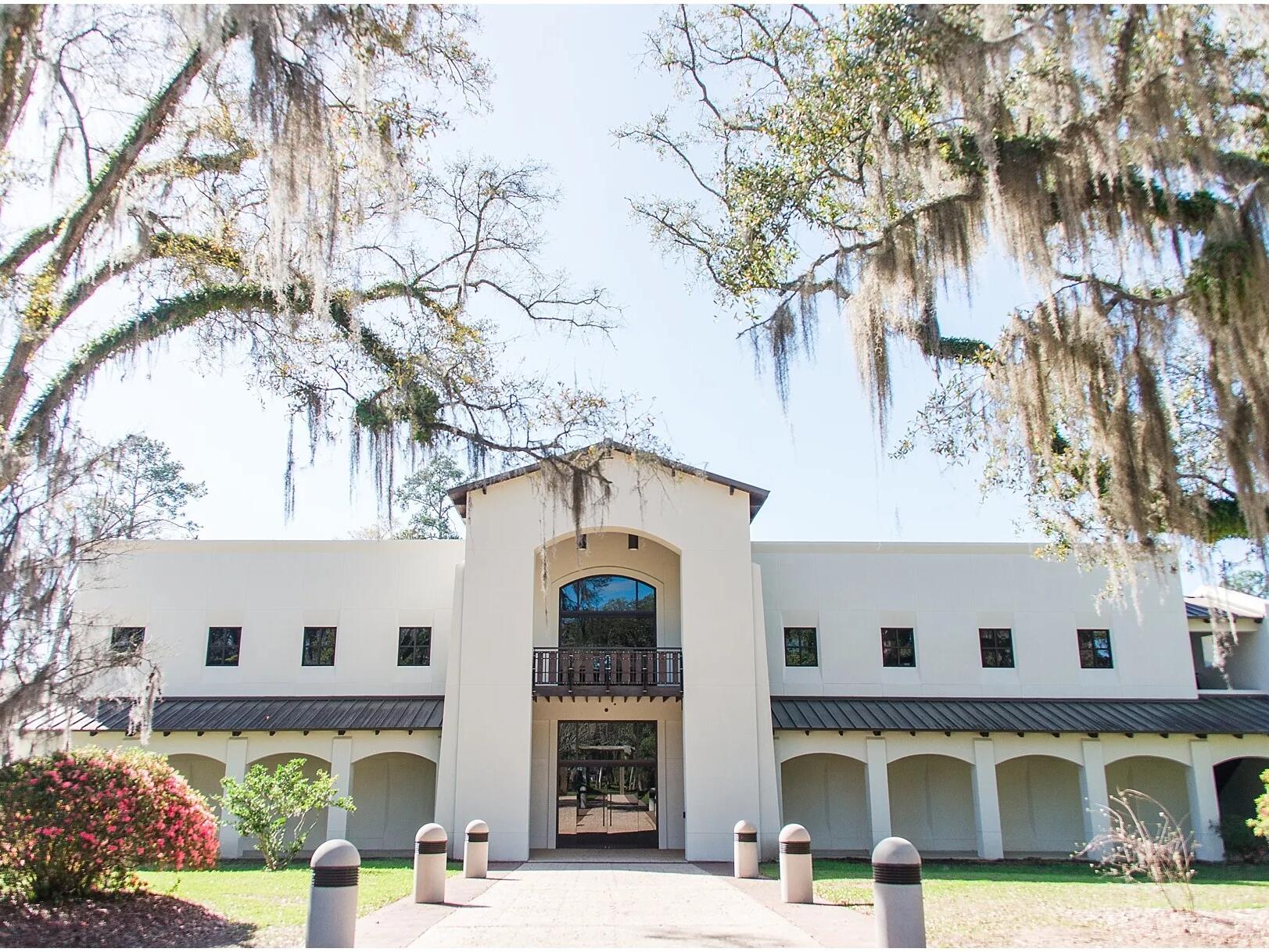
Our Venue - Mission San Luis
Our memories of Mission San Luis date back to the day we met. Every day we would take our dogs to the San Luis Mission Dog Park, which is attached to the trails leading off of our venue. After a while (and definitely on purpose) we began taking our dogs to the park at the same time so we would happen to run into each other.
The San Luis Mission Park was where Matt asked to go on our first date, and where Matt proposed we spend the rest of our life together.
These grounds hold a meaningful place in both of our hearts, and we're excited to share the history of this area with you so we can all make lasting memories here together.
The History of Mission San Luis
The Apalachee Native Americans, who lived in the area around present-day Tallahassee, were among the most advanced and powerful of the Florida tribes that were met by early explorers.
Before contact with Europeans, the Apalachee planted corn (maize), beans, and squash, adding to this diet wild game, fish, wild fruits, berries, and nuts.
These farmers built groups of palm-thatched huts close to agricultural fields where men, women, and children tended crops. In fact, the word Tallahassee is derived from the Muskogean language's word for "old fields."
Apalachee chiefs traced their inherited positions of power through their female relatives. When a chief died, his oldest sister's oldest son inherited the position of chief. This custom granted more cultural status to Apalachee women than European women. Before their Christian conversion, chiefs might also have been the religious leaders of their people. The Apalachee chiefs governed villages and nearby fields and forests. The chief of San Luis was one of the most important in the province. Europeans described the size of San Luis as extending for miles around.
The King of Spain and the Catholic Church ruled Spanish settlements throughout its empire. Both government and religion increased power by collecting great wealth from Spain's many colonies worldwide and converting the natives of those lands to the Catholic faith.
In 1607, some Apalachee Natives asked for Catholic friars to minister among the native peoples. By 1633, two Franciscan friars, Pedro Munóz and Francisco Martínez, founded the first two permanent missions in the province, and five years later the first Spanish soldiers arrived.
San Luis, originally named San Luis de Inhayca, was among the first missions to be founded. The twin powers of church and state set about converting the province's native peoples to Christianity and collecting wealth in the form of food grown in Apalachee to feed St. Augustine's soldiers and settlers.
It isn't known why, but in 1656 Mission San Luis was moved to the second-highest hill in present-day Tallahassee. Seeking to continue his political and military alliance with the Spanish, the chief of San Luis agreed to move his village and also to build a fortified house (casa fuerte) for a small garrison of soldiers. By 1675, this secondary location of the mission was called San Luis de Talimali.
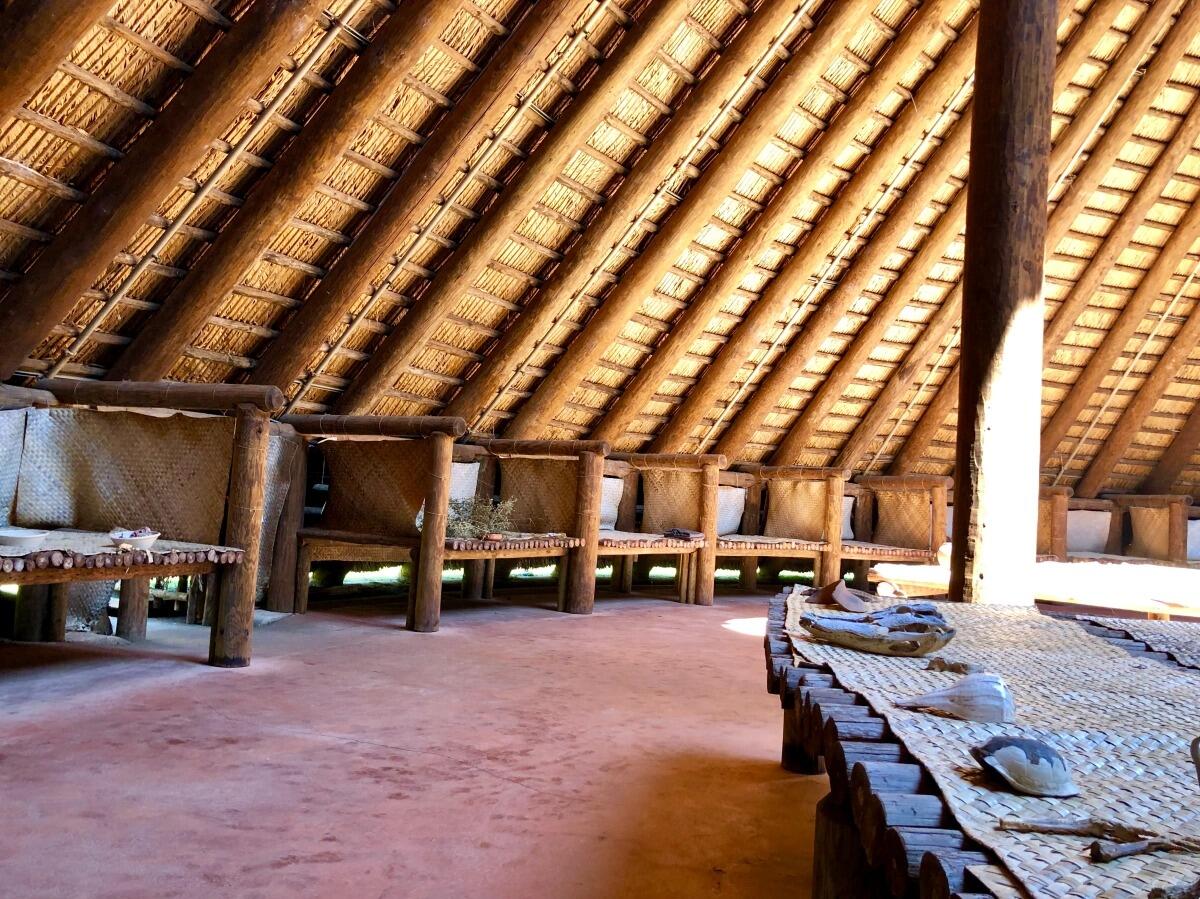
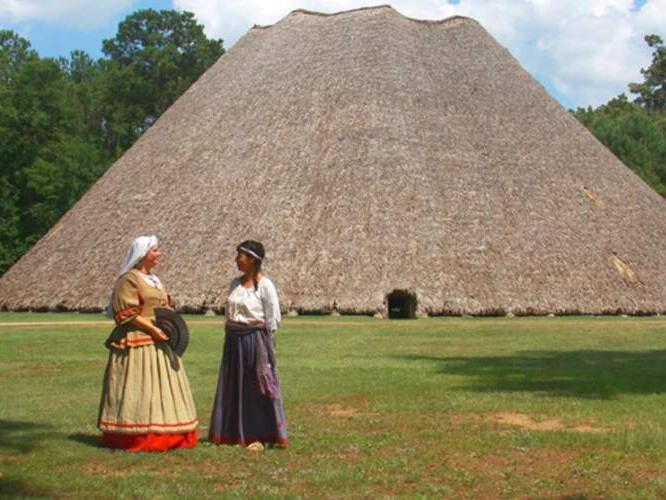
When San Luis was built in 1656, the village resembled those that existed before Europeans arrived. The Apalachee leaders and their families lived in round, palm-thatched houses bordering the central plaza where ceremonies, business dealings, and ballgames were held. The largest Apalachee building by far was the council house that could hold 2,000 to 3,000 people. In the council house, the Apalachee and their chiefs met to govern the village, consider complaints, administer justice, conduct traditional rituals, and receive visitors.
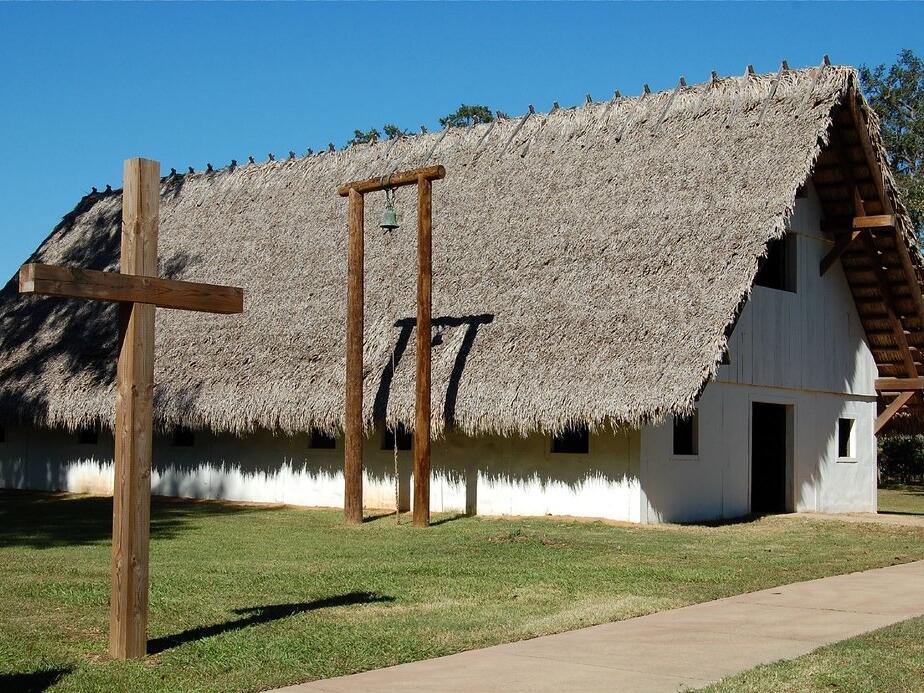
Spanish families, who began to arrive in significant numbers after 1675, lived in small, rectangular houses made of wattle-and-daub or wood planking with palm-thatched roofs. The Hispanic settlers built these two-room cottages (casitas) closer to the central plaza than the Apalachee dwellings. The Apalachees spent most of their time outdoors, using the huts mostly for sleeping. The Hispanic settlers spent more time indoors. Both probably often cooked outdoors over open fires. Only the friary had an indoor kitchen.
Mission San Luis became the capital of the western Spanish missions and the Apalachee nation in La Florida from 1656 to 1704. Mission San Luis was one of early Florida's largest colonial outposts.
Mission San Luis was the only settlement beyond St. Augustine where several hundred Spanish residents lived among Florida's native peoples for three generations. The Spanish deputy governor and one of the most powerful Apalachee chiefs were among more than 1,400 residents. Spanish and Indian farmers, ranchers, merchants, and other tradespeople worked to survive and thrive in frontier Florida.

Battles between the American colonies of La Florida and Carolina nearly wiped out the Indians of Spanish Florida and southern Georgia and destroyed Spain's network of over 100 missions. Five hundred English militiamen and 300 of their Indian allies attacked St. Augustine in 1702, burning the town, but failing to capture the Castillo de San Marcos. Most of the Spanish villagers and mission Indians survived inside the fort.
By July 31, 1704, the English had marched very near Mission San Luis. Rather than allow the fort to be captured, the Spanish and Apalachee villagers burned all the buildings and fled. A few Apalachees traveled with the Spanish families to St. Augustine. About 800 Apalachees fled west from Mission San Luis to Mobile, a French village where they settled for a time.
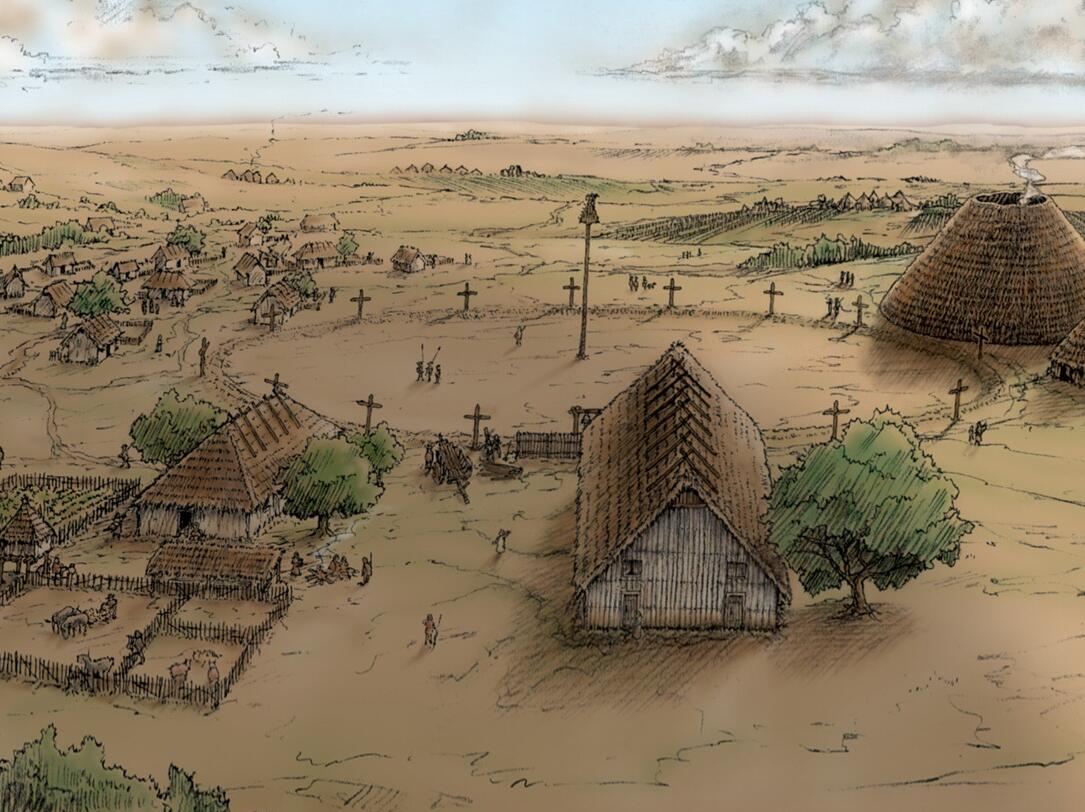
At Mission San Luis, meticulous reconstructions of Apalachee Native and Spanish structures re-create a community that disappeared three centuries ago. At 120 feet in diameter, the council house is among the largest Native American structures ever built in the Southeast. It wasn’t uncommon for the council house to hold 1,500 or more people in the 1690's. We believe that you will find the council house and all the other reconstructed buildings just as magnificent today.