

Bridget & Ryan
Bridget & Ryan
The Venue
Rocky Neck State Park
The Pavilion

A Unique History
Construction of the Pavilion began in 1934 and was completed three years later, in 1937. Designed by the state parks engineering department, it was brought to life through the efforts of the Works Progress Administration (WPA), a federal jobs program created during the Great Depression.
The structure itself is a tribute to the land it stands on. Every cobblestone was gathered from stone walls found within the park’s interior. The impressive tree trunk pillars, found on both floors, were sourced from each state park in the system at the time—anywhere from one to six pillars per park. Look closely, and you'll find each one stamped with a Roman numeral, marking its park of origin.
The flat fieldstones that make up the terrace were transported from Devil’s Hopyard State Park, where a new highway was being constructed through the ledges.
The terrace’s capstones, upper deck walls, and chimneys were crafted from stone quarried just east of the pavilion. This quarry had been abandoned long before the state acquired the land, leaving behind piles of rock that were repurposed for the build.
On the lawn near the water once stood an old concrete fish mill. During construction, it was demolished and its remains—concrete rubble and 12-inch steel I-beams—were used as fill between the front wall and terrace, and to support the Pavilion’s first floor.
The entire project, now honored on the National Register of Historic Places, was carried out by WPA labor, under the guidance of WPA engineers.
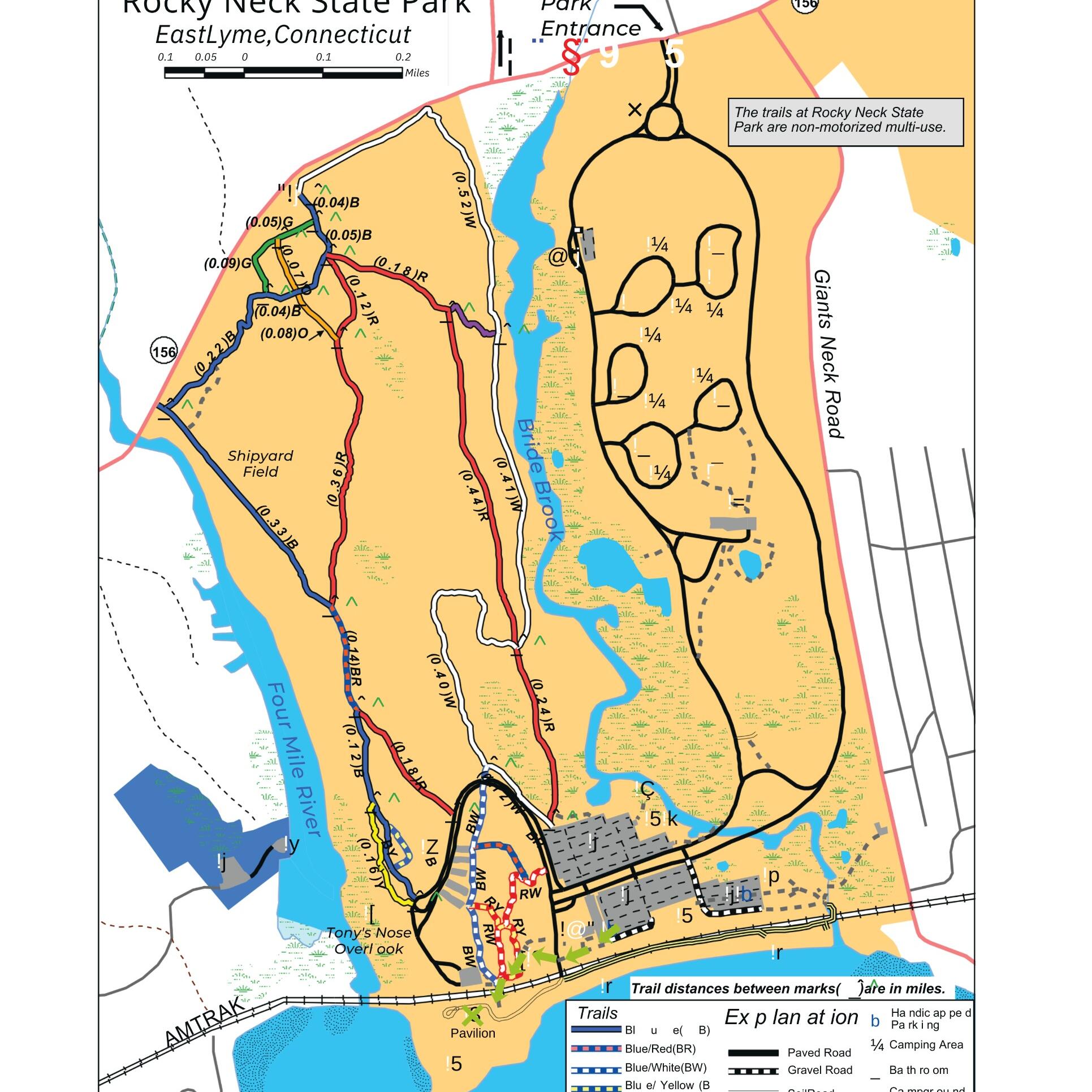
Click HERE for Park map