

Deesha and Evan
Deesha and Evan
Gujarati 101
Introduction
Welcome to Gujarati 101! Gujarat is the westernmost state in India, and Gujaratis are the people from the region. Here we have laid out lots of information about Gujarati wedding customs for those who may not be familiar. Our intent is to be thorough, but if you are looking for answers that aren't on this page, you can also check our Q & A page or email us at get2patelplace@gmail.com. We are so grateful for your respect and appreciation for the Gujarati roots that mean so much to the couple. We can't wait to celebrate with everybody!
Mehndi
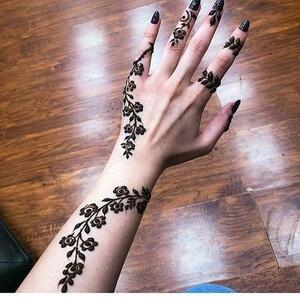
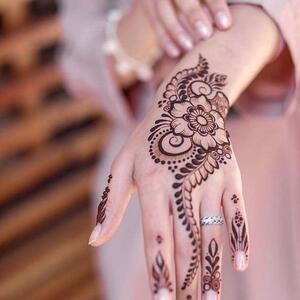
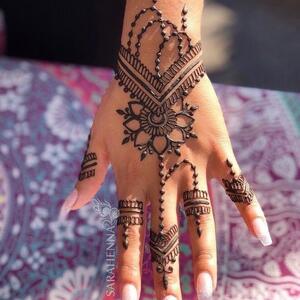
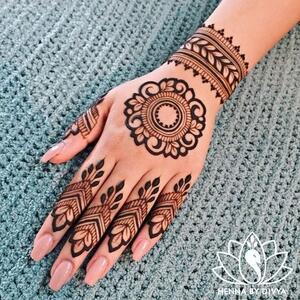
This process is traditionally reserved only for women but we fully intend to throw that tradition out the window! Individuals of all gender identities are welcome to take part. Mehndi is a beautiful, natural way to temporarily decorate your hands, usually applied to the front and sometimes the back of one's hands. It usually disappears after about two weeks. Below are examples of designs and motifs you can use to inspire your own pattern! Also please note that these examples were completed by a professional mehndi artist, and also the mehndi is still on the subject's skin, actively yet gradually causing the skin underneath to darken. Yours may not look picture-perfect and that's okay!
There is an old wives tale that the darker your mehndi comes out, the more your beloved loves you. For this reason, all the hopeless romantics in India have found ways to keep your mehndi on longer and allow the color to darken. First, be sure to be careful with your hands so as to not ruin the design. Second, keep the mehndi on your hands as long as possible. Third, if your mehndi starts to dry and flake off, dab on sugar water using a cotton ball to make it stick longer. Finally, don't get soap or sugarless water on your hands. The color will continue to darken for a while if you follow these steps. Failing all else, many an Indian woman has covered her design in a plastic bag overnight. Not my favorite but heavens forbid I go to a wedding with light mehndi!
Note: If you have sensitive skin, we recommend consulting an allergist about the ingredients. If you'd like to experiment with design in preparation, you can find mehndi cones at your local Indian store. Cut off the tip of the cone and give it a go! Mehndi is not recommended for children under one year of age. Please consult their doctor before attempting. A possibly safer alternative is mehndi-patterned temporary tattoos, which we can provide upon request, if it is safe for your baby.


Vidhi & Haldi
The Vidhi and Haldi ceremonies, though distinct, are commonly held consecutively. The Vidhi is an opportunity for a selection of close family members to formally bless the wedding, and symbolically clear obstacles for the couple. To top it all off, you'll get to smear yellow paste on the bride or groom during the Haldi.
Garba
Garba is a traditional Gujarati festival dance, and the groom's favorite way to celebrate! Everyone from little children to the eldest of our elders can do this simple dance, so please give it a try. We have linked below a short instructional video of one of the most common forms of garba.
Wedding Ceremony
Welcome to the main event! This traditional ceremony begins with the baraat, which is the groom's procession. All his friends and family dance their way to the bride's family, who are waiting to welcome the groom at the doorway, where the procession ends. The groom makes his way to the mandap, and this is where the trap is sprung. The entire wedding is a whimsical escape room for the groom. He and his groomspeople will be closely guarding his shoes, winning prizes of gold, and bribing the bride's sisters for the privilege to leave with the bride.
Reception
The reception will be familiar in concept to many non-Gujarati family and friends, apart from all the choreographed dance performances. We can't wait to see everyone's best moves as we dance the night away!