
Imani & Osikhenai
Imani & Osikhenai
Traditional Edo Wedding
The Edo Wedding
Our celebration begins with our Edo traditional wedding— a vibrant and colourful fusion of ancestral customs and a demonstration of undying love and unity. This beautiful gathering of our families is a celebration of a convergence of a shared heritage that was once separated by time, distance and ancestral histories.
Like many Nigerian ethnicities, family plays a central role in the traditional wedding, with elders from both families playing key roles. Prior to the traditional wedding day, both families would have met to know each other better and to agree to a union. They would negotiate and agree to a ‘bride price’– a token given by the groom’s family to the bride’s.
Usually, this token is less than a dollar but symbolizes that the bride becomes a member of the groom’s wider family. Both families also agree a list of items to be provided by the groom’s family including yams, palm wine, palm oil, kola nuts, salt, rice and clothing for the bride’s family. Many of these items are symbolic and the exchange is accompanied with prayers for a successful, happy and fruitful union.
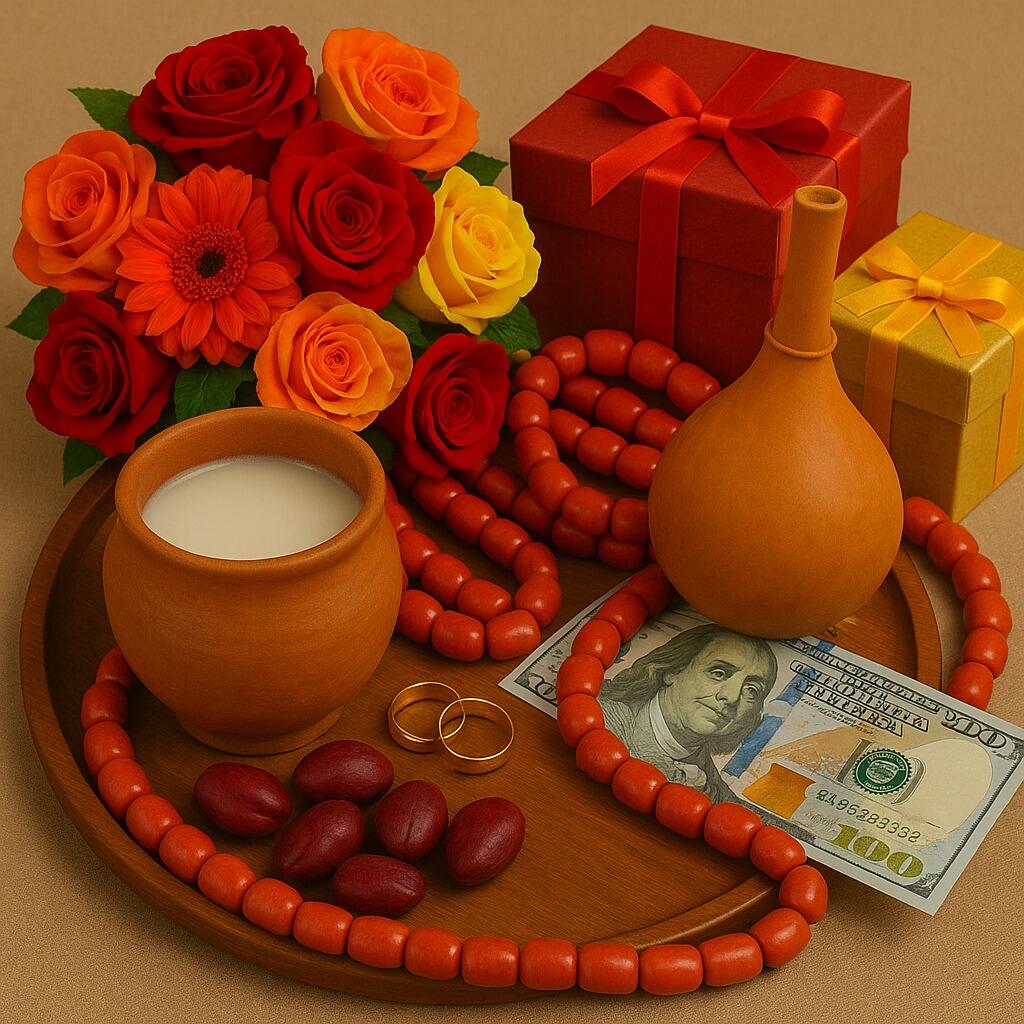
The Afemai people of Edo, in southern Nigeria, place a lot of import on women’s independence and choice. On the day of the wedding, the bride-to-be is given a bottle of palm wine (a potent alcoholic beverage), which she offers only to the man she chooses to be her husband. This reinforces the belief in a woman’s choice and autonomy both at the inception of and throughout the marriage.
It is said that none rivals a queen like an Edo bride. Dressed in her regal red dress, the bride is adorned in coral beads and her okuku. As a symbol of royalty and cultural heritage, the okuku is the traditional Edo bridal hairstyle and headwear, often featuring coral beads and other decorative elements.
Following the bride's presentation of palm wine, the bride’s father presents the beautifully-adorned bride to the father of groom who in turn presents the bride to the groom. This involvement of family illustrates the responsibility of family in promoting harmony and love in the nascent relationship. The ceremony culminates with the giving of heartfelt blessings and prayers. Family and friends celebrate the union with exchange of gifts and displays of wealth thought to foreshadow success for the couple. Next stop- party central!
We welcome guests to celebrate with us in traditional or formal attire. Ladies are encouraged to wear vibrant colors or traditional African fabrics like Ankara or lace, while gentlemen can opt for native wear or dressy formal outfits. Don’t worry—dancing shoes are highly recommended!