
Kellie & Harry (Bobby)
Kellie & Harry (Bobby)
Greek Traditions - What to Expect
Ceremony
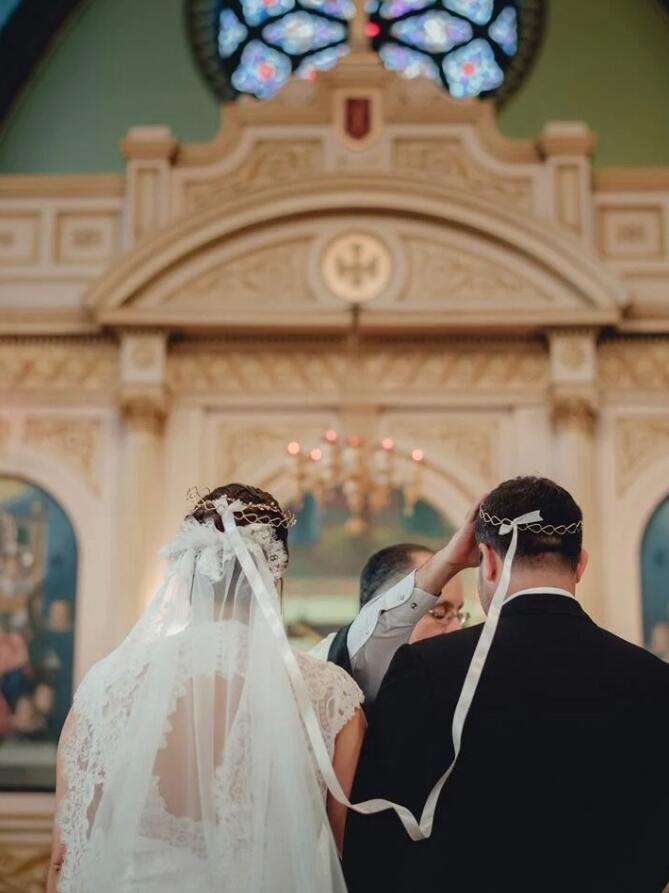
Why a Sunday? Traditionally, marriages were performed as part of the service on Sundays!
Is the date special? This is just two mathematicians having fun. 6, 27, and 21 are all divisible by 3, and the religious service is a binding union between the new couple and God (3). It’s also a very important number in the church- representing the Holy Trinity. You will see many things repeated 3 times throughout the service.
Everyone is facing away from the congregation... good thing the backs of wedding dresses are pretty! The couple is facing the altar (facing East) to stand before God. The priest at times will also face this way when addressing God.
Why are rings exchanged at the beginning? Originally, there was a separate service for the betrothal of the couple where rings were exchanged. This represents a promise to be wed, unlike in Western culture where the rings represent becoming wed. This is now part of the wedding sacrament for convenience. The Koumbaro will move the rings three times between the couple’s hands to signify that exchange of strength between the couple (the weakness of one will be compensated by the strength of the other).
What is the role of the Koumbaro (best man)? He is essentially the sponsor of the wedding (in a religious sense). He plays a role in the exchanging of the rings and the crowns. He will also later be the godfather of the couple’s first child.
The Readings and the Common Cup- There are two typical readings (one of the joining of two people and the other of the miracle of turning water into wine). The second reading will be tied into the sharing of the common cup. Each will take 3 sips from the unconsecrated cup, symbolizing the sharing of all that life will bring.
Wedding Crowns (Stefana) - crowns are placed on their heads to symbolize the glory and honor bestowed on the couple by God. The bride and groom and crowned as King and Queen of their home which they will rule with wisdom, justice, and integrity.
When is the couple wed? After the crowning.
Why do they walk around three times? The couple walks around the table to take their first steps as a married couple in the presence of God, family and friends.
No vows? There is no “contract” to the marriage in a Greek Orthodox Church. That is, rather than promising themselves to each other, God is present in the sacrament and unites the couple in one mind and weds them in one flesh. The sacrament is a union not a contract.
Reception
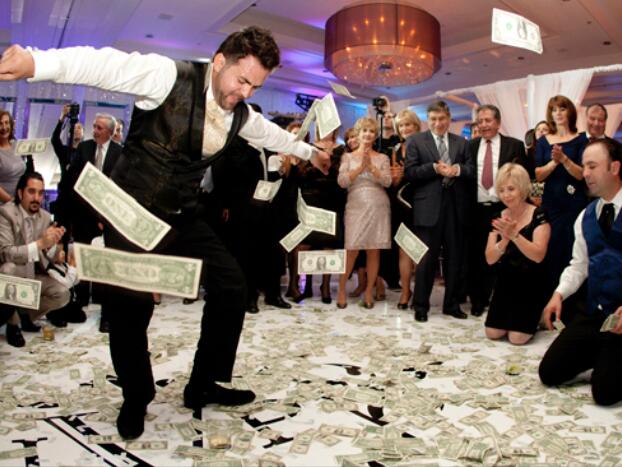
There are 3 main types of Greek dancing performed at Greek weddings (though even if you don’t know them- you are encouraged to join in and try your best!).
During the Greek dances, it is customary to throw money (typically singles) onto the bride and groom to represent good luck and good fortune. The money is collected and given to the couple.
Kalamatianos - this dance is typically led by the bride with her bridal party in tow. It is a fast paced, festive dance that moves in a circle while holding hands.
Tsamiko - this dance is typically led by the groom (and previously reserved only for the men). It is usually slower than the kalamatianos, but the lead dancer can add more flourish.
Zeibekiko - typically led by the groom or Koumbaro after the night has gone on... it is typically a solo dance where “anything goes”. Others are encouraged to kneel around the dancer and clap to the beat of the music.