Please RSVP by November 15th and reserve your hotel stay before January 20th / Por favor RSVP antes de el 15 de Noviembre y reserve su estancia en el hotel antes del 20 de Enero


Paula & Edward
Paula & Edward
Things to Do
Coyoacán
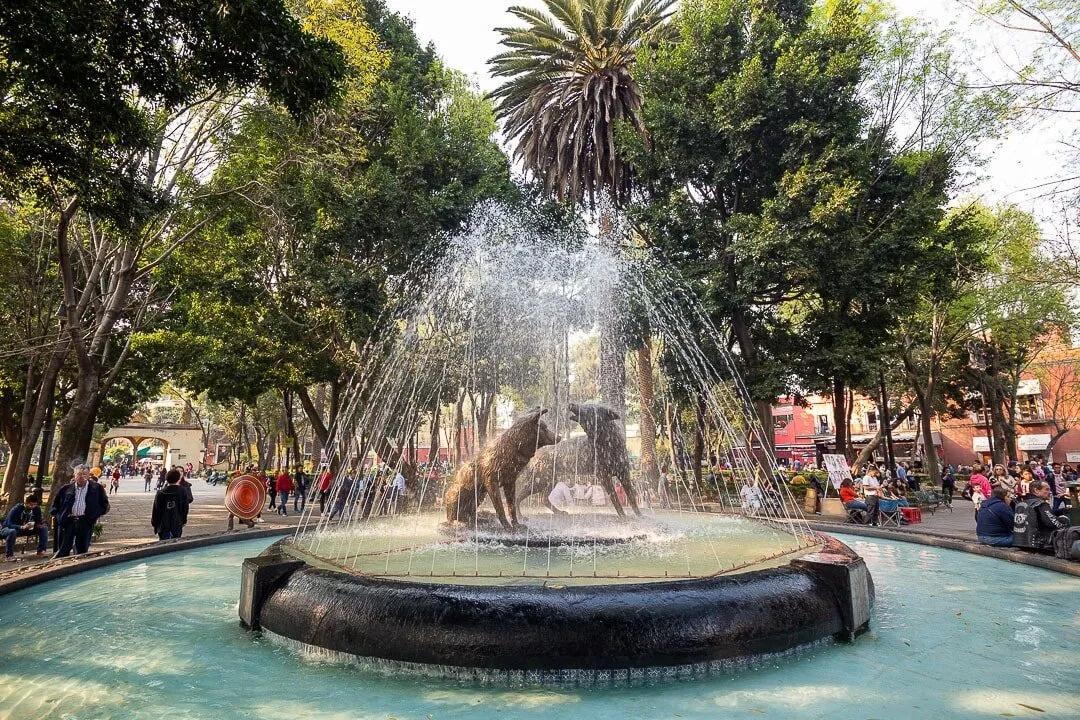
Coyoacán is one of Mexico City’s most charming neighborhoods—a former colonial town that still feels like a colorful, artistic village inside the big city. With its cobblestone streets, leafy plazas, vibrant houses, and creative energy, it’s long been a favorite of artists, writers, and visitors alike.
Why visit:
Plazas & atmosphere: The heart of Coyoacán lies in Jardín Allende and Plaza Hidalgo, two tree-shaded squares filled with fountains, benches, and colonial architecture. They’re the perfect places to relax, people-watch, and enjoy street performers.
Artisan shopping: Coyoacán is a hub for authentic Mexican crafts. You’ll find embroidered textiles, pottery, jewelry, alebrijes (painted wooden animals), masks, and folk art in markets and stalls.
Special tip – Malintzin 155: On Saturdays, right across from the Mercado de Coyoacán, artists gather at Malintzin 155 to sell their work. It’s like a mini open-air gallery where you can buy unique pieces directly from local creators—from paintings and prints to handmade crafts.
Food & cafés: The neighborhood is full of traditional flavors. Try tostadas, esquites, churros, or ice cream at local stands, or linger in cozy cafés around the plazas.
Culture & history: Home to the Frida Kahlo Museum (Casa Azul) and Leon Trotsky House, as well as streets lined with colorful colonial houses, Coyoacán blends history with a vibrant, bohemian present.
Good to know:
Weekends are the liveliest, with more markets, food stalls, and performances.
Bring cash for artisan stalls and local treats.
Plan for half a day—perfect to combine museum visits, shopping, and a relaxed stroll.
Frida Kahlo Museum

The Frida Kahlo Museum, also known as La Casa Azul (The Blue House), is the former home of the iconic Mexican artist Frida Kahlo. Located in the colorful neighborhood of Coyoacán, the house is where she was born, lived much of her life with Diego Rivera, and eventually passed away.
Why visit:
Personal glimpse into Frida’s life: Unlike a traditional museum, Casa Azul feels intimate—it preserves her studio, kitchen, bedroom, and personal belongings.
Art & artifacts: Visitors see paintings, sketches, photographs, and folk art that inspired her.
Clothing & medical devices: Frida’s traditional Tehuana dresses and the orthopedic corsets she wore after her accident are on display, offering insight into how her health struggles shaped her art.
Garden & architecture: The vibrant blue walls, lush courtyard, and pre-Hispanic artifacts give the house a distinct Mexican charm.
Experience highlights:
Touring the preserved rooms where Frida and Diego lived.
Viewing a rotating collection of her works alongside works by Rivera and other artists.
Enjoying the serene garden dotted with sculptures and artifacts.
Learning about her political activism, resilience, and enduring influence on art and culture.
Good to know:
Tickets must be booked online in advance (they often sell out days ahead).
Closed on Mondays; busiest on weekends.
Small bags only—larger items must be checked.
Chapultepec Castle & Park

Chapultepec Castle sits atop Chapultepec Hill in Mexico City’s vast Chapultepec Park. It’s the only castle in North America that was ever used as a residence by royalty. Built in the late 18th century, it has served as a military academy, imperial palace, presidential residence, and now a museum.
Why visit:
History & grandeur: Once home to Emperor Maximilian and Empress Carlota, later presidents of Mexico.
National Museum of History: Inside, visitors can see artifacts, paintings, and exhibitions that tell the story of Mexico’s past—from the Spanish conquest to the Revolution.
Architecture & décor: Lavish rooms, marble staircases, stained glass windows, and gardens reflect European elegance blended with Mexican heritage.
Panoramic views: From the terraces, you get some of the best views of Mexico City, stretching across Chapultepec Park and the city skyline.
Experience highlights:
Touring the ornate imperial chambers and salons.
Walking through the rooftop gardens and terraces.
Admiring murals by famous Mexican artists like José Clemente Orozco and David Alfaro Siqueiros.
Pairing the visit with a stroll through Chapultepec Park, one of the world’s largest urban green spaces.
Good to know:
Open Tuesday–Sunday; closed Mondays.
Wear comfortable shoes—there’s a bit of uphill walking to reach the entrance (shuttle service also available).
Lucha Libre (Mexican Wrestling)

Lucha Libre is Mexico’s version of professional wrestling—a mix of athleticism, theater, and tradition. Famed for the colorful masks, high-flying moves, and dramatic rivalries between “técnicos” (heroes) and “rudos” (villains), it’s one of the country’s most popular cultural spectacles.
Why visit:
Exciting atmosphere: The energy inside the arena is electric—crowds cheer, boo, and chant passionately.
Iconic masks: Each wrestler’s mask has symbolism, representing their identity and mystique.
Family-friendly & fun: It’s as much comedy and drama as it is sport.
Cultural tradition: Lucha Libre has been part of Mexican pop culture since the 1930s.
Experience highlights:
Matches at Arena México (the “Cathedral of Lucha Libre”), usually on Tuesday, Friday, and Sunday nights.
Street vendors outside sell masks, capes, and snacks so guests can get into character.
Inside, fans enjoy beer, tacos, and popcorn while shouting along with the crowd.
The wrestlers’ acrobatics—flips, dives, and exaggerated moves—make it entertaining even for non-wrestling fans.
Good to know:
Tickets can be bought online or at the arena; prices are reasonable.
Xochimilco
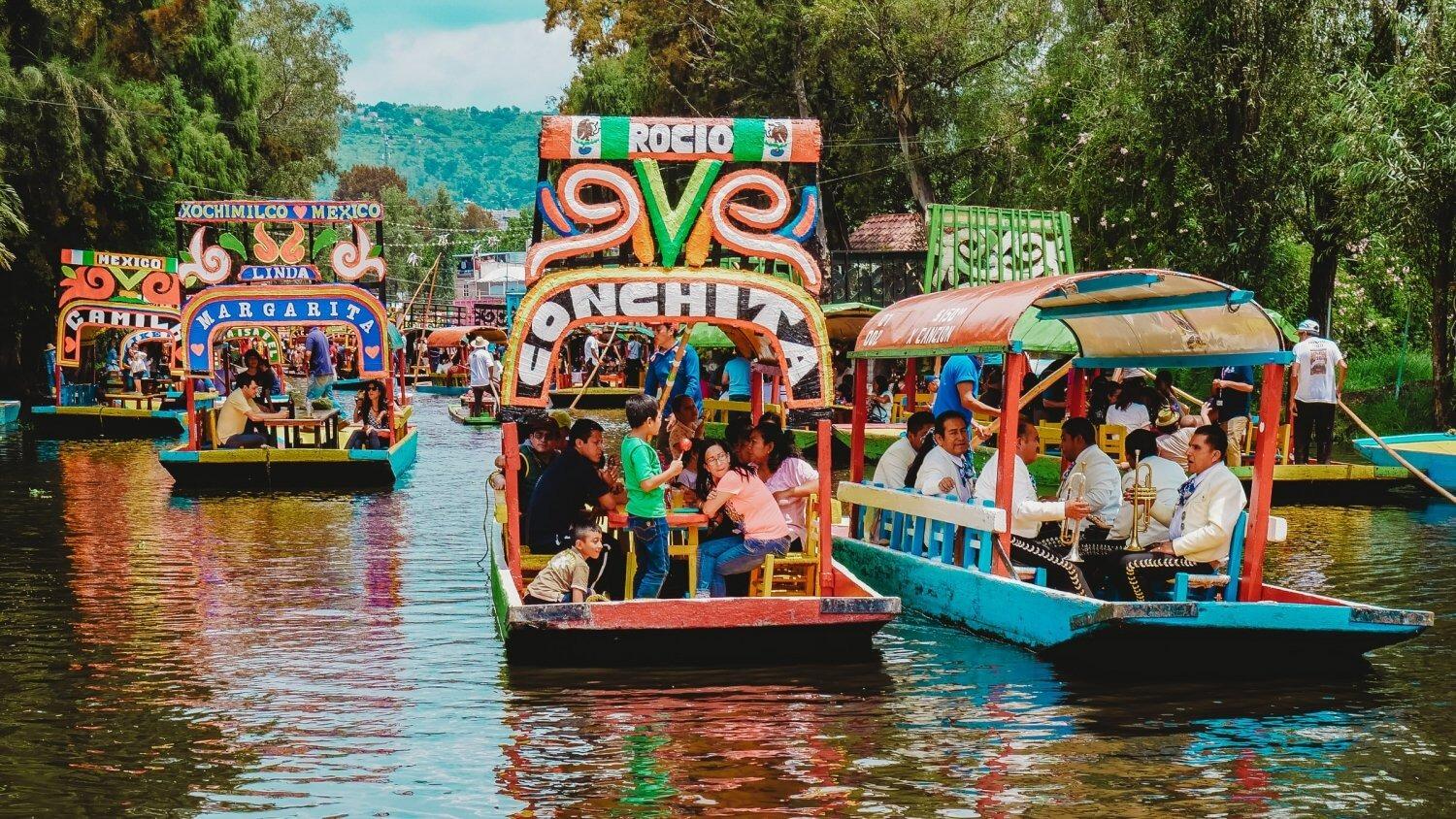
Xochimilco is a UNESCO World Heritage Site in the southern part of Mexico City, famous for its colorful trajineras (decorated wooden boats) that glide along a vast network of canals. These waterways are remnants of the ancient Aztec lake system that once covered much of the Valley of Mexico.
Why visit:
Canal rides: Groups rent a trajinera (usually by the hour),
Floating mariachi & vendors: Boats with musicians, flower sellers, and food vendors float by, adding to the lively, carnival-like atmosphere.
Cultural heritage: It’s a unique glimpse into both pre-Hispanic engineering and living Mexican traditions.
Chinampas (floating gardens): Originally used by the Aztecs for farming, many are still cultivated today, producing flowers and vegetables.
Experience highlights:
Renting a trajinera for 2–3 hours with friends/family.
Ordering traditional food and drinks—think elotes (corn), quesadillas, or micheladas—right from boats that pull up alongside.
Listening to live mariachi, norteño, or marimba bands as they float past.
Exploring quieter sections (like Cuemanco or ecological reserves) if you want a calmer, nature-focused ride.
Pyramids of Teotihuacan

Teotihuacán, known as the “City of the Gods,” is an ancient Mesoamerican city and UNESCO World Heritage Site about an hour from Mexico City. Built between the 1st and 7th centuries, it was once one of the largest cities in the world.
Why visit:
Pyramid of the Sun: The largest structure, towering 216 feet, offers breathtaking views of the archaeological site and surrounding valley.
Pyramid of the Moon: Overlooks the grand Avenue of the Dead and the plaza where rituals were once performed.
Temple of the Feathered Serpent (Quetzalcoatl): Decorated with intricate carvings of serpent heads.
History & mystery: Much about Teotihuacán’s culture remains unknown—its builders aren’t fully identified, adding to its intrigue.
Experience highlights:
Walking along the Avenue of the Dead, the main thoroughfare.
Exploring smaller temples, murals, and ancient living quarters.
Learning about the city’s religious, political, and economic significance at its height.
Option: Hot-air balloon ride at sunrise for a unique aerial perspective.
Good to know:
Bring comfortable shoes, sunscreen, hat, and water—the site is big and mostly unshaded.
Plan 3–4 hours to explore.
Arrive early to avoid crowds and midday heat.
Make sure to visit the restaurant nearby that is in a cave after touring the pyramids! It's called "La Gruta"
La Gruta

La Gruta is a famous restaurant built inside a volcanic cave near the Teotihuacán pyramids. Open since 1928, it combines traditional Mexican cuisine with a truly unique setting.
Why visit:
Atmosphere: The dining hall is inside a massive cavern, lit with colorful candles that create a magical and dramatic ambiance.
Cuisine: Classic dishes like barbacoa, mole, tamales, and handmade tortillas are served, along with regional specialties and drinks like mezcal and pulque.
History & culture: Famous figures including Frida Kahlo, Diego Rivera, and even foreign leaders have eaten here. A torch-lighting ritual honors the pre-Hispanic traditions linked to caves.
Good to know:
Located just a few minutes’ walk from the Pyramid of the Sun—perfect after a site visit.
Reservations are recommended, especially on weekends.
Prices are slightly higher than average, but the one-of-a-kind setting makes it worth it.
Zocalo

The Zócalo is the main square of Mexico City and one of the largest public plazas in the world. It has been a gathering place for centuries—first for the Aztecs in their capital of Tenochtitlán, and later for colonial and modern-day Mexico.
Why visit:
Historic heart of the city: Surrounded by landmarks like the Metropolitan Cathedral, the National Palace (with Diego Rivera murals), and the ruins of the Templo Mayor.
Cultural hub: Hosts festivals, political events, concerts, and traditional ceremonies.
Symbolic space: At its center flies a massive Mexican flag, raised and lowered daily in a ceremonial ritual.
Experience highlights:
Strolling through the square to admire the architecture.
Visiting nearby attractions: the cathedral, museums, and colonial-era streets.
Good to know:
The square is busiest during weekends, holidays, and cultural events.