

Steel Building & General
Steel Building & General
Our Story
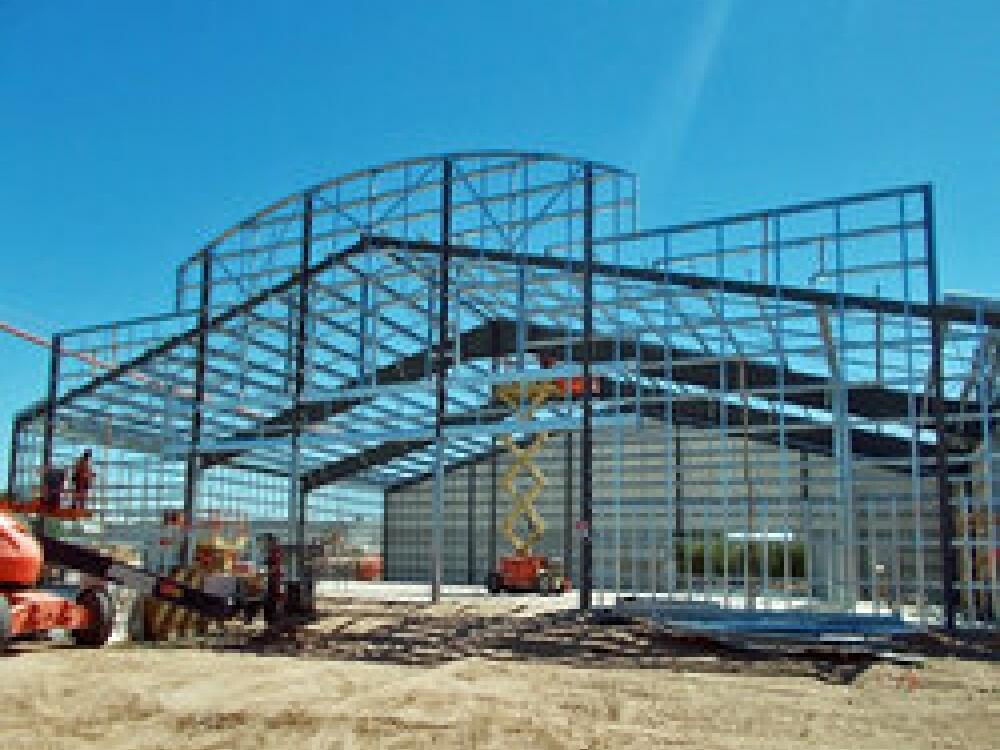
Recognizing Tilt up Structure Modern Technology
Tilt up building modern technology is a fairly current method to building wall surfaces and various other frameworks out of concrete. The tilt up building technique is in some cases referred to as tilt-wall or tilt-slab, as well as for big business centers (> 50,000 square feet) it can be specifically cost effective. This article goes over how everything works.
Turn up building obtains its name from the reality that the concrete for architectural aspects is put as well as healed flat (i.e., lying down), not vertically (or standing upright). The types for the columns, walls, as well as panels are built on the already-poured piece floor or independently on a momentary casting surface area. After healing and develop elimination, rigging is attached to each piece, a crane "tilts it up" up and down, and the component is set right into area.
Allow's consider this procedure in a lot more information. The initial step is to create and pour the casting pad, which could be an ad hoc momentary slab or the entire building's real concrete flooring. The pad needs to be allowed to treat completely before continuing to developing architectural aspects.
Type measurements for panels, columns, and also walls are the same as if put up and down; they are simply tilted down and also exist flat. Such positioning is helpful not only since insulation and/or rebar grids are extra easily ingrained, yet also because it makes it less complex to create windows and door openings. In this fashion the entire architectural style can be realized simultaneously.
Though the forms are sometimes constructed from aluminum or steel, the majority of typically the type products are dimensional lumber, fiberboard, or top quality plywood. Along with integrating windows and door openings, the kinds can suit any forms that the style contacts us to be built in the concrete. Additionally, it is straightforward to embed studs and add-on plates within the type for promoting indoor construction.
As if expected, there is a threat of the concrete aspects bonding with the spreading pad. Need to that happen it would certainly call for demolition and also re-pouring, a pricey prospect. Hence, preventative actions are taken including splashing the form surface areas with chemically reactive bond breakers.
Where rebar grids are needed, they are constructed within the kind, like preparing for a driveway pour. The grids obtain fixed right into placement with the aid of plastic spacers. This is the last action before loading the types with concrete and enabling healing.
Tilt up strategies are constantly performed onsite at the final location, even if a casting pad is used rather than the structure floor. Comparison this with prefabrication of structural aspects, which would certainly occur offsite, normally in the producer's plant. Prefab products are also apt to be steel, not concrete, and also the aspects need to be delivered to the construction website for setting up.
This suggests that there might be a trade-off in between the prefab as well as tilt up strategies to construction, and this is in reality the situation. Prefabrication provides better adaptability, while tilt up supplies onsite construction. From an expense perspective, these respective benefits have a tendency to even out at regarding 50,000 square feet of tenancy space; areas less than that support prefab, areas higher favor tilt up.
The primary reason this innovation doesn't repay for smaller sized locations is that there is a lot of overhead. The walls can weigh as long as 150 bunches, needing innovative tools such as cranes and also setting up to hoist them vertically and into location.
Most of the concrete wall surfaces are designed to be load-bearing. Roofing and also flooring connections are bolted or welded to the accessory plates. Interior walls intensify tightness as shear wall surfaces.
Plainly, success in using these methods relies on years of experience creating huge commercial frameworks. The viewers must now have a standard understanding of tilt up developing technology.