Please RSVP AS SOON AS POSSIBLE, notify us with any questions.


VishnuPriya & Rishi
VishnuPriya & Rishi
Wedding Program
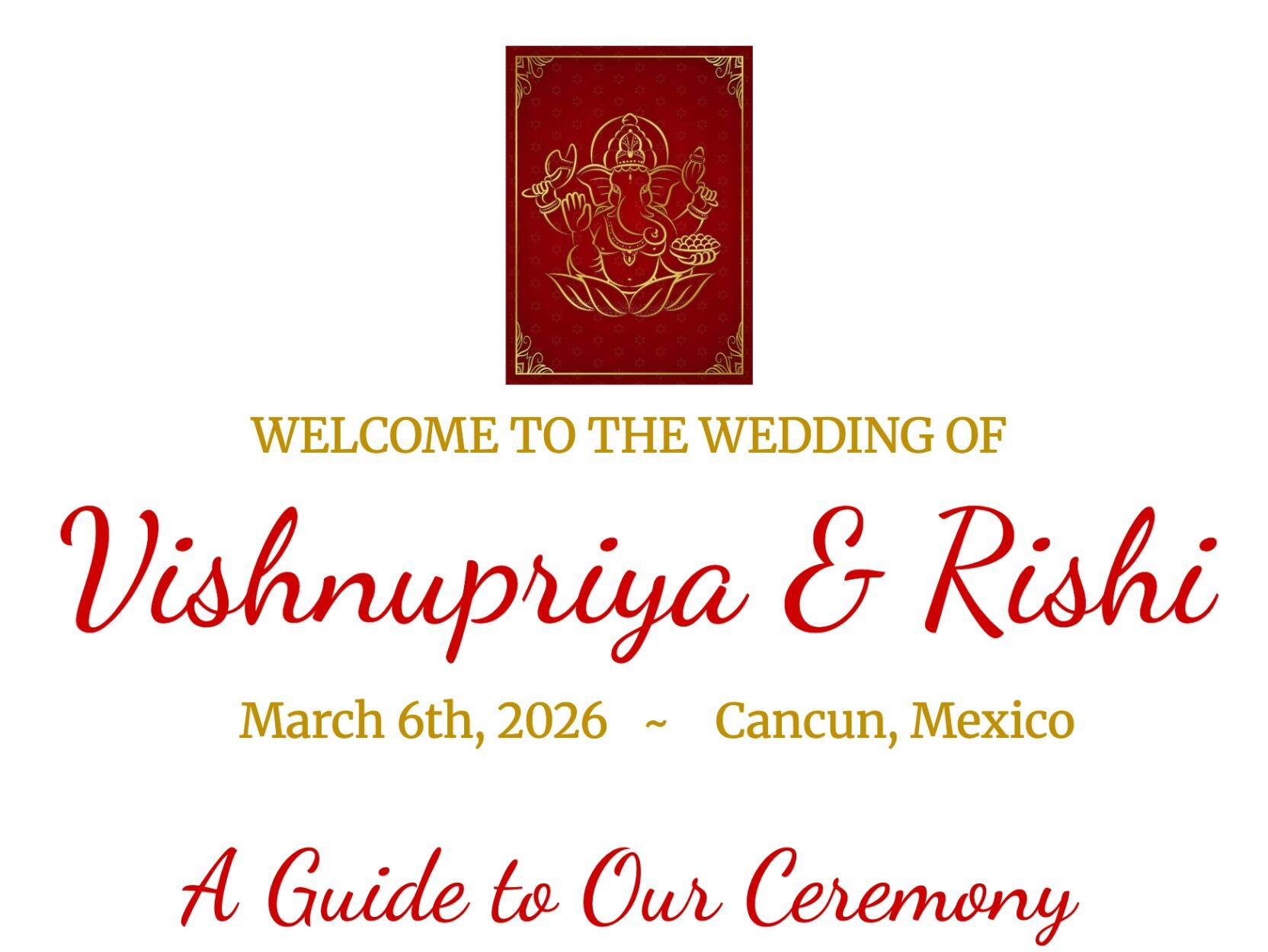
The Hindu wedding ceremony is a sacrament contained within the Vedas (Ancient Hindu scriptures), from the Vedic period, which historians place between 3000-5000 B.C.
The couple embarks on a new life enriched by their union with the blessings of God, their ancestors and elders, and the good wishes of all of their friends and relatives. The ceremony takes place in the Mandap (altar). The ceremony embraces the five elements of nature: fire, earth, water, air, and light. These elements play an integral part in the ceremony. The priest will read mantras from the Holy Scriptures in Sanskrit, the root of all modern Indian languages.
Ganesh pooja & kankana Dharana - The ceremony begins with a “pooja” (prayer) to Lord Ganesha, the remover of all obstacles, to ensure everything proceeds smoothly.
Bride’s Arrival - The bride arrives at the mandap where a curtain will separate her and the groom for the first part of the ceremony. The bride is escorted by her close family.
Kanyadaanam (giving away of the bride) - the brides parents give away their daughter by placing her hand in the grooms hand, symbolizing their blessings of this marriage.
Mangala astakalu - The bride and groom recite mangalashtakas and then pray that the entire planets and stars are aligned in the best way for the couple.
Sumuhurtam - The bride and the groom place a mixture of cumin and jaggery on the top of each others head with their right hands.
Mangalya Dharana - A special prayer is performed for the Mangalyam necklace (similar to a wedding ring). It is the most important insignia of marriage and the union of the bride and groom. The groom ties 3 knots to seal the bond between the bride and the groom forever. Legally, ethically and morally that moment is the sacred moment in the wedding when they become husband and wife.
Thalambralu - A ritual where the bride and groom shower each other with rice, symbolizing a blessed and prosperous union.
Garland exchange, ring exchange - The bride and groom will exchange garlands and rings, symbolizing their willingness to accept each other and their life together.
Lajahomam - Here, the brides brother pours puffed rice into her hands, which she then offers to the Homam (sacred fire).
Saptapadi (seven steps) - The couple will take seven steps together that represent the beginning of their journey in life together, symbolizing the wedding vows. With each step, they make a vow to each other that together they will nourish each other, grow together in physical and mental strength, seek prosperity and joy, build a loving family, care for each other’s health, and commit to a lifelong love.
Mangal Phera - Circling the Sacred Fire: The bride and groom circle the sacred fire, taking their first steps as a married couple. With each circle, they seek happiness and prosperity in their household.
Toe Rings - Referred to as mettelu, the groom places toe rings on the second toe of both feet, symbolizing marital status and invoking blessings for a prosperous married life.
Arundati Darsanam - Both the bride and the groom pray to the Arundhati star, named after the famed wife of Vasishta maharshi, whose marriage symbolizes the epitome of marital life.
Mangala Harathulu - an offering of good wishes to the bride and groom with lighted camphor.
Offering of Sweets - The couple feed each other sweets signifying their first meal together as husband and wife and demonstrating that they will share all things in life.
Aashirvad - The priest declares the bride and groom as husband and wife and blesses the newlyweds with a happy and prosperous life together, followed by the couple's family and friends as the ceremony concludes.