

Brooke & Thomas
Brooke & Thomas
Things to Do
Zwinger
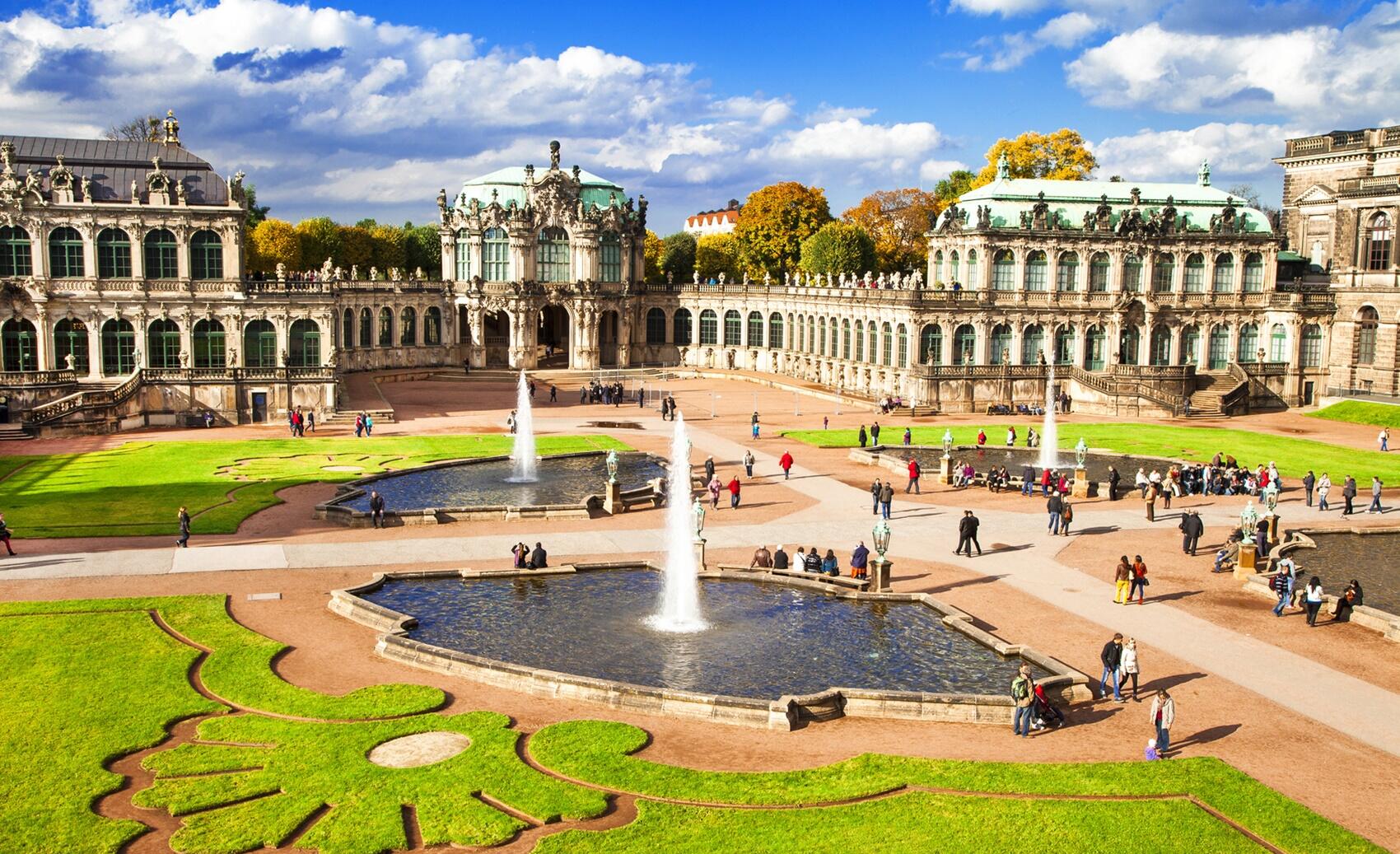
The Zwinger is a palace in the German city of Dresden, built in Baroque style and designed by court architect Matthäus Daniel Pöppelmann. It served as the orangery, exhibition gallery and festival arena of the Dresden Court. The location was formerly part of the Dresden fortress of which the outer wall is conserved. The name derives from the German word Zwinger (an enclosed killing ground in front of a castle or city gate); it was for the cannons that were placed between the outer wall and the major wall. The Zwinger was not enclosed until the Neoclassical building by Gottfried Semper called the Semper Gallery was built on its northern side.
Today, the Zwinger is a museum complex that contains the Gemäldegalerie Alte Meister (Old Masters Picture Gallery), the Dresden Porcelain Collection (Dresdener Porzellansammlung) and the Mathematisch-Physikalischer Salon (Royal Cabinet of Mathematical and Physical Instruments).
Altstadt, Dresden, Deutschland

Frauenkirche Dresden

This is our favorite square in Dresden. Visit the beautiful church then explore the square and people watch. The square has many delicious eateries.
The Dresden Frauenkirche , Church of Our Lady is a Lutheran church in Dresden, the capital of the German state of Saxony. An earlier church building was Catholic until it became Protestant during the Reformation, and was replaced in the 18th century by a larger Baroque Lutheran building. It is considered an outstanding example of Protestant sacred architecture, featuring one of the largest domes in Europe. It now also serves as a symbol of reconciliation between former warring enemies.
Built in the 18th century, the church was destroyed in the bombing of Dresden during World War II. The remaining ruins were left for 50 years as a war memorial, following decisions of local East German leaders. The church was rebuilt after the reunification of Germany, starting in 1994. The reconstruction of its exterior was completed in 2004, and the interior in 2005. The church was reconsecrated on 30 October 2005 with festive services lasting through the Protestant observance of Reformation Day on 31 October. The surrounding Neumarkt square with its many valuable baroque buildings was also reconstructed in 2004.
Semperoper Dresden
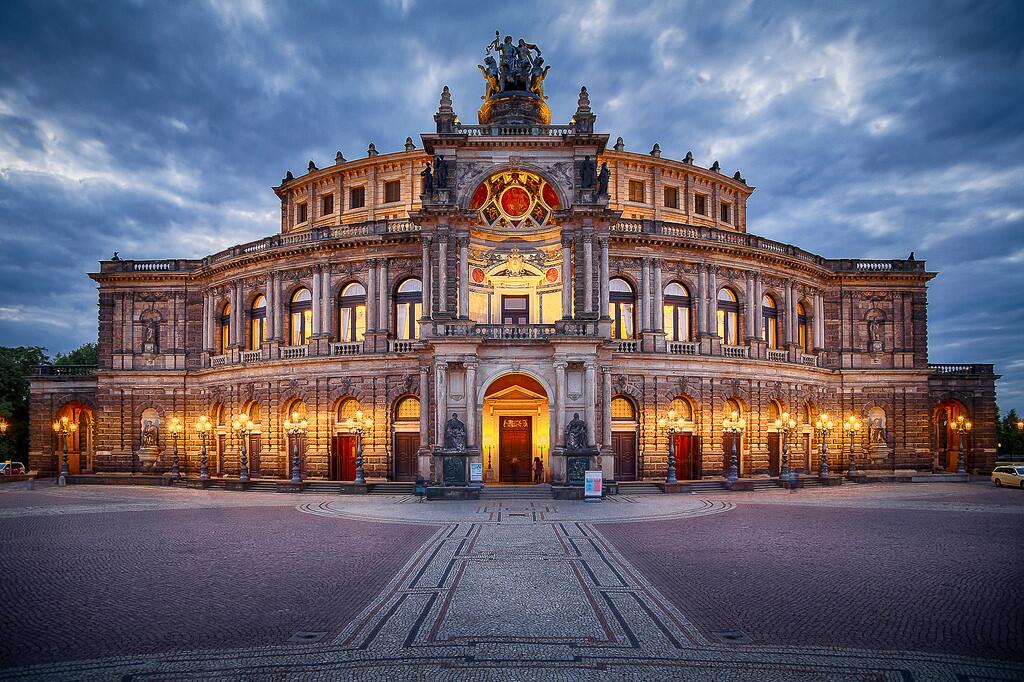
If you have the chance to see a ballet or opera here you won‘t regret it. This opera house is beautiful inside!
The Semperoper is the opera house of Sächsische Staatsoper Dresden (Saxon State Opera) and the concert hall of the Staatskapelle Dresden (Saxon State Orchestra). It is also home to the Semperoper Ballett. The building is located near the Elbe River in the historic centre of Dresden, Germany. The opera house was originally built by the architect Gottfried Semper in 1841. After a devastating fire in 1869, the opera house was rebuilt, partly again by Semper, and completed in 1878. The opera house has a long history of premieres, including major works by Richard Wagner and Richard Strauss.
Brühlsche Terrasse

Brühl's Terrace is a historic architectural ensemble in Dresden, Germany. Nicknamed "The Balcony of Europe", the terrace stretches high above the shore of the river Elbe in a city which is quite large as measured by area relative to its half a million inhabitants. Located north of the recently rebuilt Neumarkt Square and the Frauenkirche, is one of the favorite inner-city places of both locals and tourists for walking, people watching, and having a coffee.
Fürstenzug

The Fürstenzug (English: Procession of Princes) in Dresden, Germany, is a large mural of a mounted procession of the rulers of Saxony. It was originally painted between 1871 and 1876 to celebrate the 800th anniversary of the Wettin Dynasty, Saxony's ruling family. In order to make the work weatherproof, it was replaced with approximately 23,000 Meissen porcelain tiles between 1904 and 1907. With a length of 102 meters (335 ft), it is known as the largest porcelain artwork in the world. The mural displays the ancestral portraits of the 35 margraves, electors, dukes and kings of the House of Wettin between 1127 and 1904.
Sächsisches Staatsweingut Schloss Wackerbarth
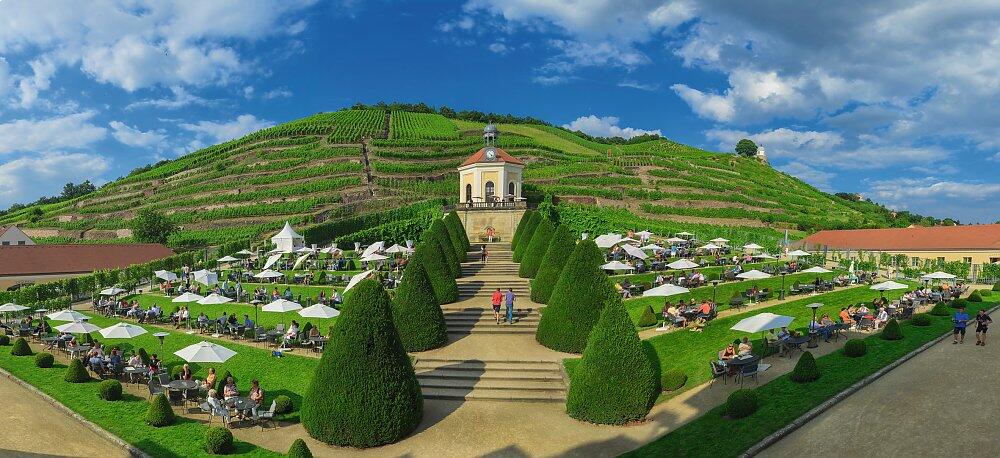
We love this winery. It is definitely one of our favorite wineries to visit during the summer.
The fine Saxon way of life is at home here at Schloss Wackerbarth, situated between Dresden and Meissen. Where Counts once resided and the court of Augustus the Strong used to hold glittering parties, today Europe's first discover and experience wine-growing estate awaits you.
Gemäldegalerie Alte Meister

Dresdner Molkerei Gebrüder Pfund GmbH

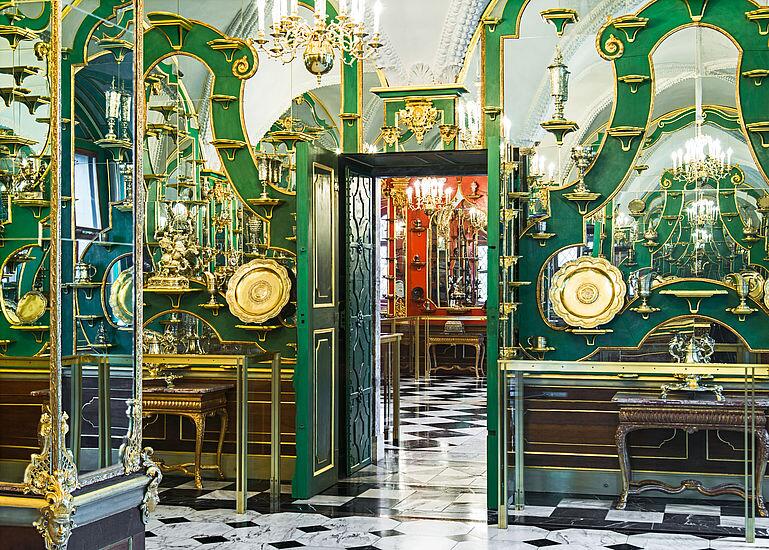
Neues Grünes Gewölbe
Großer Garten

The Großer Garten is a baroque style park in central Dresden. It is rectangular in shape and covers about 1.8 km². Originally established in 1676 on the orders of John George III, Elector of Saxony, it has been a public garden since 1814. Pathways and avenues are arranged symmetrically throughout the park. The Sommerpalais, a small Lustschloss is at the center of the park. Originally established outside the old walls of the city, the park was surrounded by urban areas by the second half of the 19th century. Dresden Zoo and Dresden Botanical Garden were added late in the 19th century. A miniature railway, known as the Parkeisenbahn, operates in the park from April to October. Volkswagen's Transparent Factory is the newest building in the park, completed in 2002. It is on Straßburger Platz, in the northwest corner of the park.
Old Town Square, Prager Altstadt, Prag, Tschechien
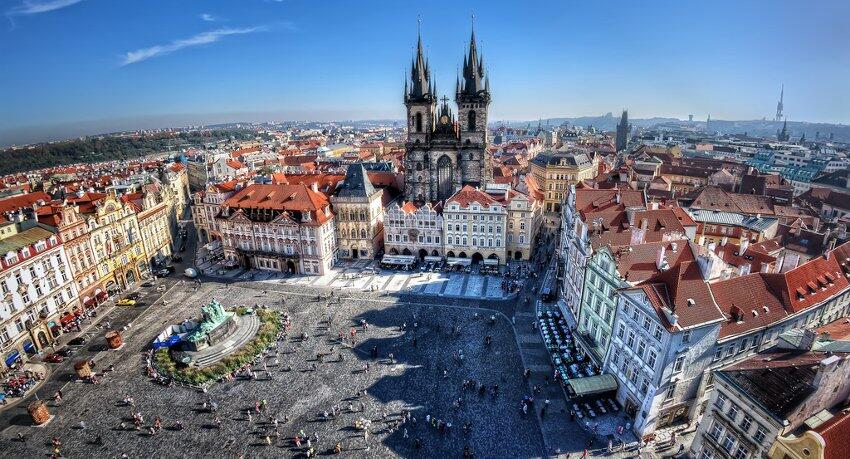
You can hop on a train for a day trip to Prague.
Berlin, Deutschland
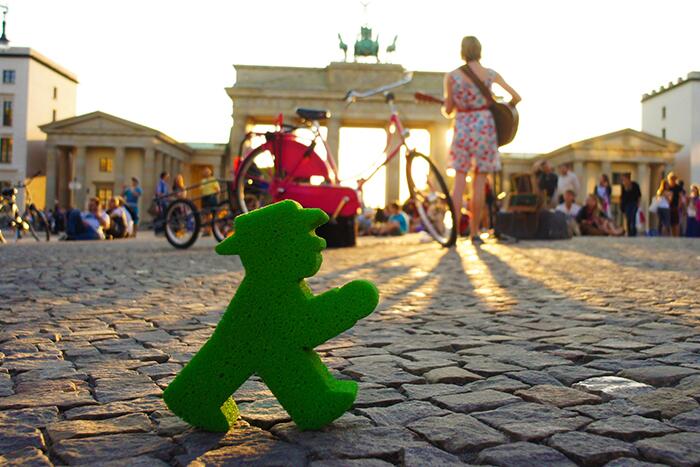
You can hop on a train for a day trip to Berlin.
Nationalpark Sächsische Schweiz

A day trip here is worth it if you want to rent a car.