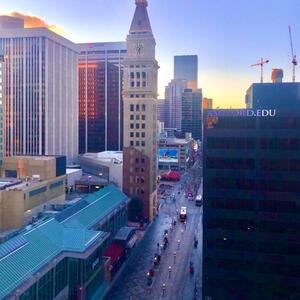
Join us as we ring in the New Year with love! Our New Year’s Eve 2026 wedding will take place at the historic clock tower in Downtown Denver, surrounded by city lights, laughter, and fireworks as we welcome a beautiful and exciting new year together.


Hannah & Saw
Hannah & Saw
About the Venue
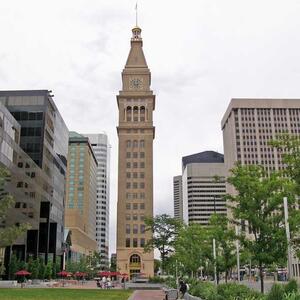
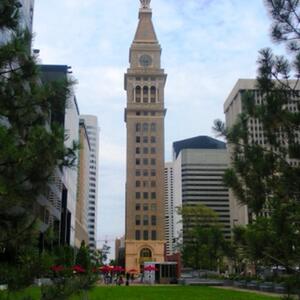
Daniels and Fisher Historic Clock Tower
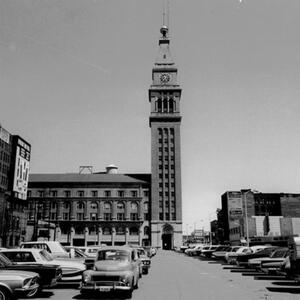
During the gold rush of the mid-1800s, Denver was a mining hot spot and was booming with miners. Those miners needed supplies (picks, shovels, boots, dry goods) so merchants would set up shop to provide these necessities. A merchant named William B. Daniels migrated to Denver in 1864 where he established the dry goods business. He started as a small shop that did very well and quickly expanded over the years. In 1872 Daniels took on a business partner names William Garrett Fisher and they became Daniels and Fisher.
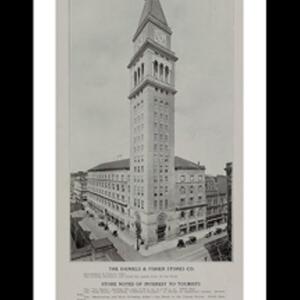
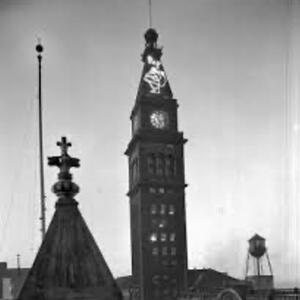
In 1975 William B. Daniels and William Fisher opened two 2-story dry goods department stores in Downtown Denver, one at the corner of sixteenth Street and one at the corner of Lawrence Street, they both expanded into 5-story establishments. By the 1890s, business was booming, and they had become the largest retailer in the state.

Daniels dies in 1890, and Fisher dies in 1897. Daniels’ son, William Cooke Daniels takes over the business at this time and spends a lot of his time in a rented castles and other amazing architectural novelties in Europe.
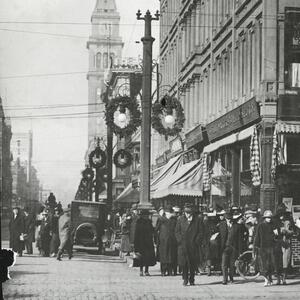
Back in Denver, the Daniels and Fisher business continues to flourish, and the company prepares for expansion by purchasing two more real estate sites on Arapahoe Street and the corner of Sixteenth and Arapahoe Street. This would give Daniels and Fisher and 266-foot frontage along Sixteenth Street.
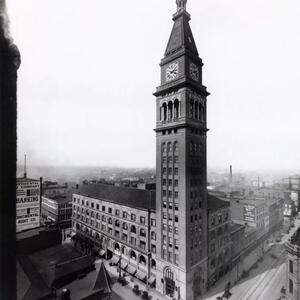

The giant main entrance of the new store would be right at the corner of Sixteenth and Arapahoe. Daniels wanted to build an impressive tower in this location to serve as a artistic and creative advertisement for the store. This intensely tall structure would also stand as a beacon to draw customers into the department store.
After spending so much time in Europe exploring the mesmerizing renaissance building designs, Daniels became fascinated with this architectural style and wanted this to be represented in the impressive tower.
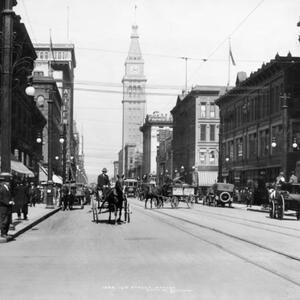
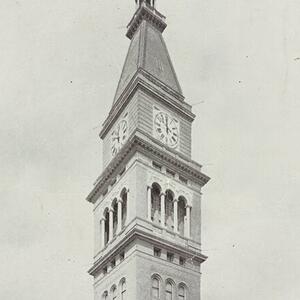
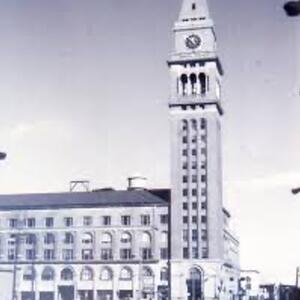
The tower was designed by Colorado architect Frederick G. Sterner. The tower was inspired and modeled from the St. Mark's Bell Tower in Venice, Italy. This tower in Venice had recently collapsed and was being rebuilt, and this was big news at the time.
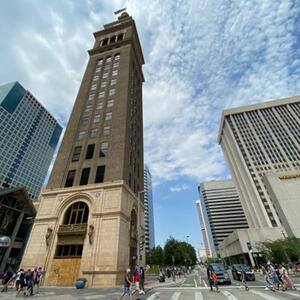
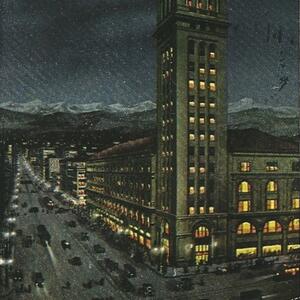
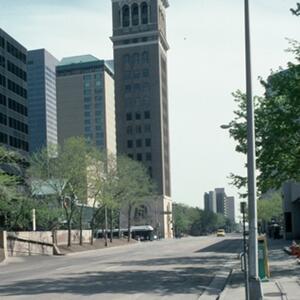
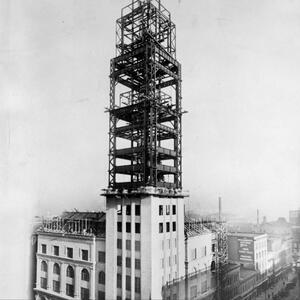
Construction of the tower took place between 1910 and 1911. In May 1910 the existing buildings at the real estate sites were torn down to make room for the expansion of Daniels and Fisher. The tower, along with the enlarged and remodeled department store, opened in 1911.
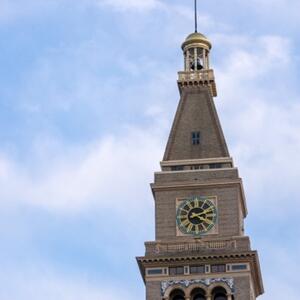
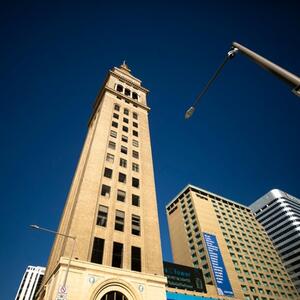
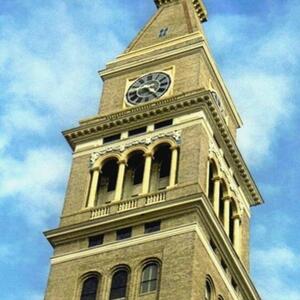
The clock tower was Denver's first skyscraper. In fact, the tower was actually well-known for being the tallest building west of the Mississippi River at the time. The tower is 325 feet tall. The tower held this title for a solid 40 years before a taller structure was created in the 1950s. The tower could be seen for miles. For many, the clock tower became a definitely symbol for the city. The tower’s bell would chime at the top of every hour.

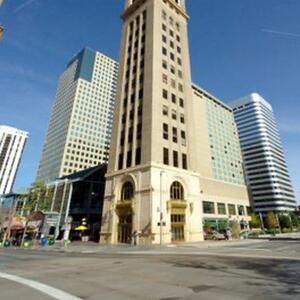
The attached Daniels and Fisher department dry goods store had roughly nine acres of space, so the tower itself did not need to have any commercial functions. This structure’s floors were used for employee lounges/breakrooms/lunchrooms, an in-house hospital and school, and the store manager’s offices. The twentieth-floor observation deck attracted about 1,500 people a day during the summers.
Time passed by and as the city evolved the Daniels and Fisher departments store was no longer a thriving business in Denver. Daniels and Fisher lost its spot at the top due to poor management and merchandising, proximity to Larimer Street’s skid row, and the rise of new shopping hot-spots in other parts of the city.
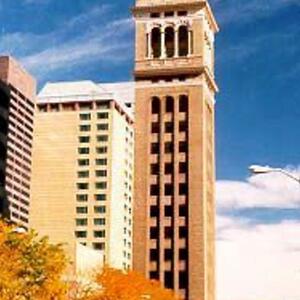
In 1953, the real estate developer William Zeckendorf, the owner of the company Webb and Knapp, acquired a particular interest in the Daniels and Fisher company. He aspired to move the store to his new development at Courthouse Square (a.k.a. Zeckendorf Plaza), which needed an anchor tenant. After several sales and mergers, the Denver-based May Company (later becomes Macy’s) combined with Daniels and Fisher to create May-D&F. Zckendorf’s company, Webb and Knapp, bought the existing Daniels and Fisher building on Sixteenth Street, and in 1958 May-D&F moved to Zeckendorf’s development at Courthouse Square.

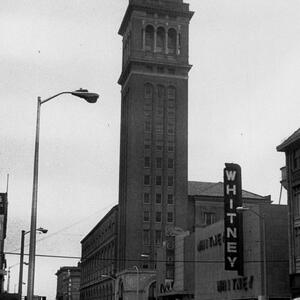
There was now a vacant 400,000-square-foot building on Sixteenth Street that took up half a block of downtown Denver and included a replica of a Venetian tower. What could be done with such a thing? William Pierson, the radio show owner, used the tower as a signal transmitter in the 1960s, but otherwise the building was caught up in a mess of financial problems and ownership confusion. Different parts of the building were owned by different companies, and some of the land underneath the building was still owned by the heirs of John Alkire, who had originally leased it to Daniels and Fisher in 1909.
Both the old department store building and the clock tower were threatened to be demolished as part of the 1960's Denver Urban Renewal Project (DURA). The project called for the demolition of most buildings in a twenty-seven-block parcel stretching from Cherry Creek to Twentieth Street and from Curtis Street to Larimer Street. The Daniels and Fisher building stood almost exactly in the center of the project’s proposed swath of destruction.
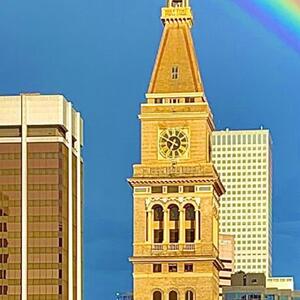
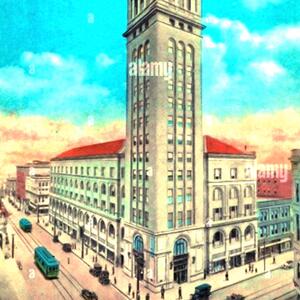
By 1969, DURA had acquired the entire Daniels and Fisher complex, but in the meantime the vast scope of the Skyline project had spurred the city’s preservationist community to action. The Denver Landmark Preservation Commission was able to convince the city council to declare the Daniels and Fisher Tower a landmark, and soon after that the tower was listed on the National Register of Historic Places. These historical designations helped spare the tower, but DURA had no intention of saving the rest of the department store, which was demolished in 1970–71.
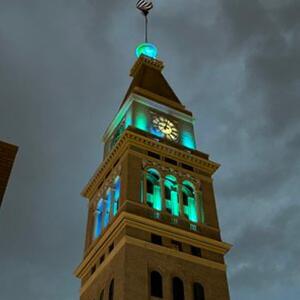
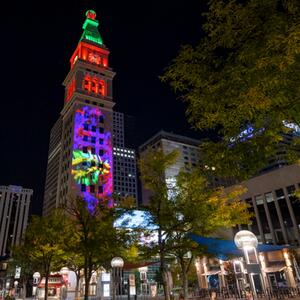
DURA did a terrible job of maintaining the tower during the demolition and rebuilding process of the old department store space. Some in Denver thought the easiest solution would be to tear down the tower as well, but preservationists prevailed.
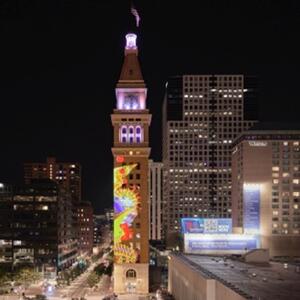
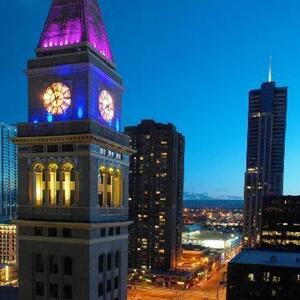
By the end of the decade a plan was in place for developer David A. French to renovate the tower into office condominiums. French also designed multiple other known Denver buildings. French bought the building from DURA for just $72,000 and spent $3.5 million remodeling the interior into 16 office units. Interior work started in 1980 and was finished a year later, but French ran out of funding before he could repair the tower’s exterior.

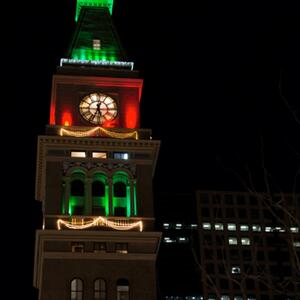
By the 1990s the clock tower’s exterior was in bad shape. Tenants Richard Hentzell and Michael Urbana launched an extensive renovation effort with the help of several State Historical Fund grants totaling more than $500,000. Nearly every major part of the building was restored: the exterior, the entrances, the lobby, the Seth clocks, the observation deck, and the top/roof. The decade-long, $5 million project was completed in 2006.
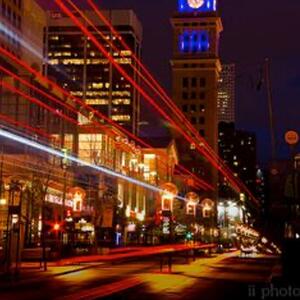
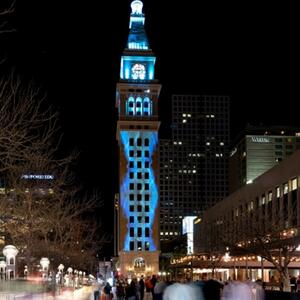
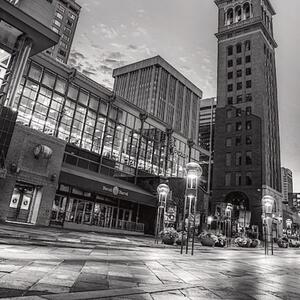
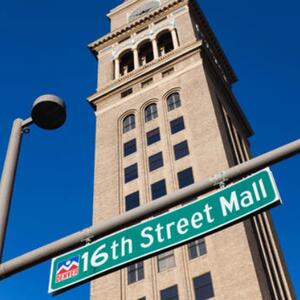
Today the tower continues to house mostly office condominiums as well as an events venue on the upper floors and a cabaret in the basement. Members of the public can access the tower’s observation deck in April as part of Doors Open Denver or arrange private tours through Clocktower Events. Standing near the center of the Sixteenth Street Mall, this architectural gem remains a beloved Denver landmark. Many consider it a symbol of the city’s progress and innovation.
Fun Facts
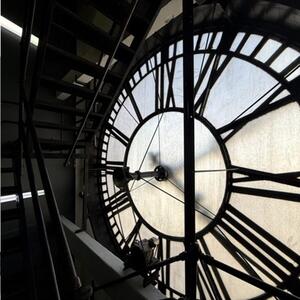
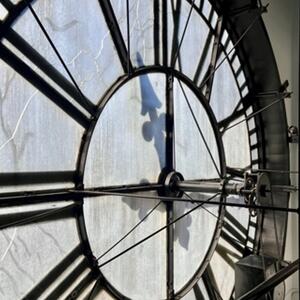
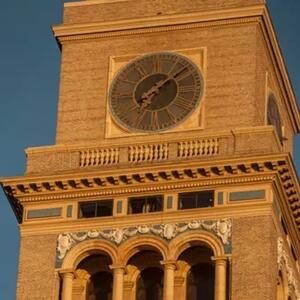
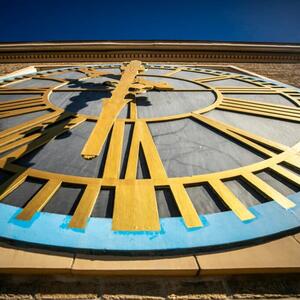
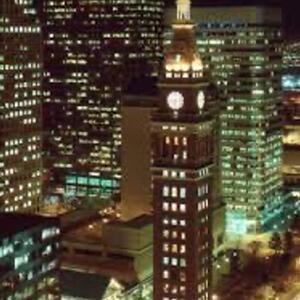
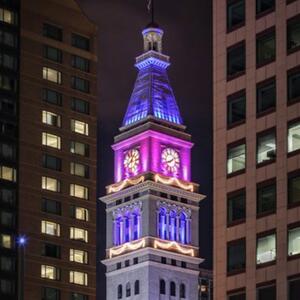
¯ The tower has clock faces on all 4 sides
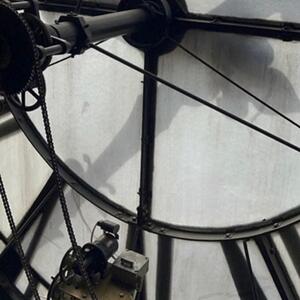
¯ The hour hand is 8 feet long, the minute hand is 6 feet long
¯ Red 'scars' can still be seen today, on the west side of the tower, where the clock tower used to be connected to the 5-story department store
¯ A 2.5-ton (5,500 pound) bell occupies the top 2 floors of the structure
¯ The tower is 21 stories high
¯ The structure has a steel skeleton, is faced with blond brick, and has extensive terracotta trim
¯ The upper portion of the tower features a unique observation deck
¯ The clock faces are 16 feet in diameter
¯ The Denver clock tower was designed to be a few feet taller than the original tower that was being rebuilt in Venice – at the time this prompted the Denver Times to joke that Venice was actually building a smaller copy of Denver’s tower
¯ The tower’s foundation required the excavation of a twenty-four-foot hole and was poured separately from the rest of the building
¯ The bell at the top of the tower has an inscription that reads: “Presented to the Daniels & Fisher Realty company by William Cooke Daniels and Cicely Cook Daniels, 1911”
¯ The bell was manufactured by the McShane Bell company in Baltimore and is six feet in height and 5.5 feet in width
¯ The clapper for the bell weighs 150 pounds and is connected to an electric motor, which rang the bell each hour back in the day
References
1) https://historicdenver.org/story-trek/daniels-and-fisher-clock-tower/
2) https://coloradoencyclopedia.org/article/daniels-and-fisher-tower
3) https://en.wikipedia.org/wiki/Daniels_%26_Fisher_Tower
4) https://www.denverclocktower.com/about
5) https://www.historycolorado.org/location/daniels-fisher-tower
6) https://www.westword.com/news/photos-inside-downtown-denver-clock-tower-building-40824563/
7) https://www.clocktowertours.com/
8) https://www.littlehiccups.net/2024/12/daniels-fisher-clock-tower-denver.html