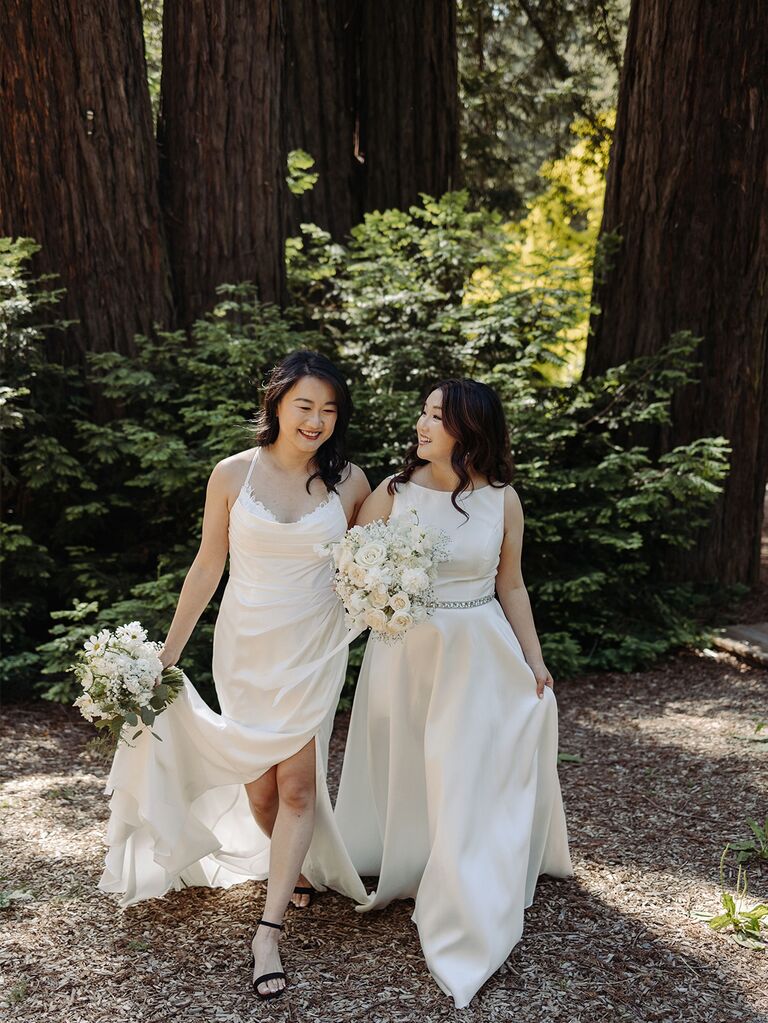


These dazzling duos are the definition of relationship goals.
Updated Jan 21, 2025See What the Average Wedding Dress Cost Is *Before* You Shop
Drumroll, please.

Photo: Getty,Design: Ashley Detmering

If you've watched Say Yes to the Dress, you've probably seen episodes in which a to-be-wed arrived with an unlimited budget. But have you thought about how that could've skewed your perception of the average wedding dress cost? The reality is that many nearlyweds have a bridal gown budget that fits their wants and needs. To help you determine yours, we're revealing proprietary data from The Knot along with expert knowledge from Yuliia Lobachova, the creative director and founder of Ricca Sposa, a Ukrainian brand that specializes in bridal and evening wear, and Alyssa Hoersten, the designer and founder of Alyssa Kristin, a bridal shop based in Chicago. With their top-notch advice, we break down the answers to some of the most common questions concerning wedding dress prices and offer shopping tips you don't want to miss.
Want more wedding stats? Check out the average wedding cost so you have all the information you need as you plan your celebration.
At a Glance
- The average cost of a wedding dress is about $2,100, according to The Knot 2026 Real Weddings Study, which surveyed 10,474 US couples married in 2025.
- Key cost drivers for wedding dresses are the fabric composition and sourcing, design elements and labor, alterations and additions, construction, the retailer location and the wedding dress brand's reputation.
In this article: Average Wedding Dress Cost | Cost Factors | How the Cost Was Calculated
What's the Average Cost of a Wedding Dress?
The average cost of a wedding dress is about $2,100, according to The Knot Real Weddings Study, which surveyed nearly 10,474 US couples married in 2025. The average wedding gown cost accounts primarily for off-the-rack wedding dresses and made-to-order styles, as just 19% of last year's female survey participants wore custom-made attire. But how much are wedding dresses for couples spending in the low, middle and high ranges? To-be-weds in the lowest budget tier paid about $1,200, those in the middle budget tier paid around $2,000 and those in the high-end budget tier paid roughly $3,200.
FEATURED VIDEO FROM THE KNOT
Remember, shoppers aren't paying all this money up front. According to Lobachova: "Most retailers and designers require a deposit to confirm the order. This deposit typically ranges from 30%–50% of the total cost and covers the initial expenses for materials, labor and production." The remaining balance is usually due at the time of pickup. "Some designers and boutiques may also offer installment plans to provide more flexibility," Hoersten adds.
Factors That Impact Wedding Dress Prices
Key cost drivers for wedding dresses are the fabric composition and sourcing, design elements and labor, alterations and additions, construction, the retailer location and the wedding dress brand's reputation. Also part of the reason why wedding dresses are so expensive: where the gown is produced and high demand for certain styles because of wedding dress trends. Once you become familiar with what influences the cost of your future wedding dress, use The Knot Budget Advisor. With the tool, you'll be able to see what real couples typically spend in your wedding location, get pricing estimates, education on setting a budget and much more. Now, check out what these industry experts have to say about what influences wedding-frock pricing.
Fabric Composition and Sourcing
Luxury materials can increase the price of attire, like with 100%-silk items versus satin. Because the process of creating silk is much more labor-intensive, the wedding gown fabric comes at a higher cost. "At Ricca Sposa, we work with materials such as European lace, silk satin, Italian mikado and layered tulle, all of which have increased in cost over the past few years," Lobachova says. These fabrics are chosen not only for their beauty, but for how they move, photograph and hold structure throughout a long wedding day."
"One of the biggest drivers for the average price of a wedding dress is the increase in wedding tariffs and rising shipping costs across nearly every material used to make a wedding dress," Hoersten explains. "Depending on the fabric, trims and components, brands are paying anywhere from 15–50% more on inputs alone, and that increases compound quickly."
Design Elements and Labor
The addition of wedding dress embellishments means designers will have to spend more time and attention to create the gown, which will come at an extra cost. "Some gowns have intricate beading, embroidery or 3D floral appliqués, which require skilled artisans to spend hours—sometimes weeks—perfecting each design," Lobachova explains. "Each bead, pearl or crystal is placed with precision, adding to the exclusivity of the dress."
Alterations and Additions
Wedding dresses typically come in a fixed set of sizes. That means, alterations are often necessary to achieve the proper fit. The cost of wedding dress alterations isn't included in the wedding dress average cost, but it does increase the overall amount that couples end up paying for their attire.
In addition to alterations, custom additions can also be attached to gowns for an additional cost, like adding a bustle to a dress. "Many soon-to-be-weds choose dresses with detachable elements, like overskirts, sleeves or capes, that allow them to transform their look from ceremony to reception," Lobachova says. "While these design details add versatility and value, they also add to the overall cost, contributing to the gradual increase in the industry average."
Construction
Another thing that contributes to the average cost of a wedding dress is the way the different parts of a wedding dress come together. Or, simply put, its structure. "Complex designs with built-in corsets, boning or multilayered skirts demand meticulous craftsmanship, making them more labor intensive and expensive," Lobachova adds. Whether the construction of the dress can be seen by the naked eye or not, it can also impact the price.
Boutique Location
The wedding dress average price also varies by the location and region. For weddings in 2025, spend in the Mid-Atlantic was about $2,200, while the average wedding dress cost in the Midwest was $2,500. The Knot stats also indicate that individuals tend to spend the least—around $2,000—if it's a dress for a hometown wedding, while those who hosted international destination celebrations spent an average of $2,900 on their look.
Brand Reputation
When you're thinking about your wedding budget breakdown, you need to think about brand surcharges. "In other words, a wedding dress designer's positioning and reputation can heavily influence pricing, with luxury brands often commanding increased markups regardless of production methods," Hoersten says.
How The Knot Calculated the Average Cost of Wedding Dresses
The Knot 2026 Real Weddings Study captured responses from 10,474 US couples married between January 1 and December 31, 2025; respondents were recruited via email invitation from The Knot and/or WeddingWire membership throughout the year 2025. Respondents represent adult couples from all over the country with various ethnicities, income levels, races, ages (18+), sexual orientations and gender identities. To provide the most comprehensive view of 2025 wedding industry trends, this report also includes statistics on weddings from ad hoc studies conducted throughout the year, among both engaged and newlywed couples. In a typical year, The Knot Worldwide conducts research with more than 100,000 couples, guests and wedding professionals globally.
Additional reporting by Sofia Deeb and Sarah Hanlon.


