


Spice things up with these steamy flicks.
Updated Oct 14, 2024Considering Getting Legally Married Before the Wedding? Here’s What to Know
Getting legally married before your wedding might sound unconventional, but for some couples, it’s a smart and practical choice. Ahead, experts explain why couples do it and how to navigate the logistics.

Photo: Stocksy

More and more couples are getting legally married before their wedding day—and for good reason. Whether it's to simplify paperwork, accommodate a destination celebration or handle legal logistics in advance, making your marriage official early can take some pressure off the big day. Before you get started, explore The Knot Vendor Marketplace to find officiants, venues and other trusted professionals who can help bring your plans to life.
Ahead, experts explain how to get legally married before your wedding, plus the practical and emotional factors to consider. From the pros and cons of getting legally married before the wedding to an overview of the entire process, here's what to know before you say "I do" on paper.
In this article: Can You Get Legally Married Before Your Wedding? | Reasons to Get Married Before Your Wedding | Pros of Getting Legally Married Before the Wedding | Cons of Getting Legally Married Before the Wedding
Plus: How to Get Legally Married Before the Wedding
Can You Get Legally Married Before Your Wedding?
According to Leah Weinberg, a lawyer for wedding professionals, couples can legally marry before their wedding day and still hold a ceremony later. "It's honestly kind of nice because you can have the exact type of ceremony you want at the wedding without worrying about the legalities or signing paperwork afterward," she tells The Knot. "Practically speaking, the legal part of a ceremony is such a small portion that no one even has to know you handled it ahead of time."
FEATURED VIDEO FROM THE KNOT
Reasons to Get Married Before Your Wedding
"Why do people get married before their wedding?" is a fair question—and one that more couples are asking. Some choose to make their marriage legal before their ceremonial wedding day for practical or logistical reasons. While it might sound unconventional, getting legally married early can simplify paperwork, ease travel stress and ensure everything goes smoothly—especially for couples planning celebrations at some of the best destination wedding venues.
To Simplify Marriage License Paperwork
According to Kona, Hawaii-based destination wedding planner and former attorney, Kate Hickey of Sunshower Weddings, one of the most common reasons to get legally married before the wedding is to avoid having to apply for and file a marriage license in a jurisdiction other than where you live. For international destination weddings in particular, she explains, the process of getting legally married abroad can be extremely frustrating and time-consuming.
Emphasizing the potential complications, she says, "I've even seen international wedding paperwork get messed up to the point where couples need to get remarried, legally, at home after the wedding." For that reason, many couples choose to handle the legal paperwork at home first and save the celebration for later—whether that's a symbolic ceremony abroad or a reception after a destination wedding with friends and family upon their return.
So Couples Can Stay Physically Together
"Another rationale that I rarely see talked about involves all the careers where being married allows couples to stay physically together," Hickey says. For example, she notes that couples in the military, physicians during residency, academics and those in government or diplomatic careers all benefit from being legally married to their partner. For these couples, she explains, "getting legally married before the wedding day is what enables them to actually build their lives in the same place."
Health Insurance
Health insurance benefits tend to be a "pretty popular reason" to get legally married before the actual wedding day, Weinberg says. "If you're legally married and your spouse has health insurance coverage, you're able to get coverage under their policy."
Tax Purposes
Some couples decide to get legally married early for financial or tax reasons. Filing jointly can sometimes provide benefits for couples, such as lower tax rates or greater deductions, depending on their situation.
Immigration
For couples where one partner is from another country, getting married before the wedding can help with visa or residency applications. In these cases, making the marriage legal sooner can simplify the immigration process and allow the couple to live together legally while planning their celebration.
Pros of Getting Legally Married Before the Wedding
Getting legally married before your wedding ceremony can offer both peace of mind and practical advantages. From easing wedding-day stress to unlocking important legal and financial benefits, there are several reasons couples may choose to make things official a little earlier.
Benefits and Privileges
Once you're legally married, you're entitled to all the benefits that come with being spouses under the law. As previously mentioned, this includes healthcare coverage—but also social security benefits and, of course, spousal privilege in legal matters. "As a spouse," Weinberg says, "you also have automatic inheritance and decision-making rights unless there is a will or other directive in place that instructs otherwise."
FOR YOU

Are Wedding Bathroom Baskets Really Necessary?
We have the checklist you need so you don’t miss a thing.
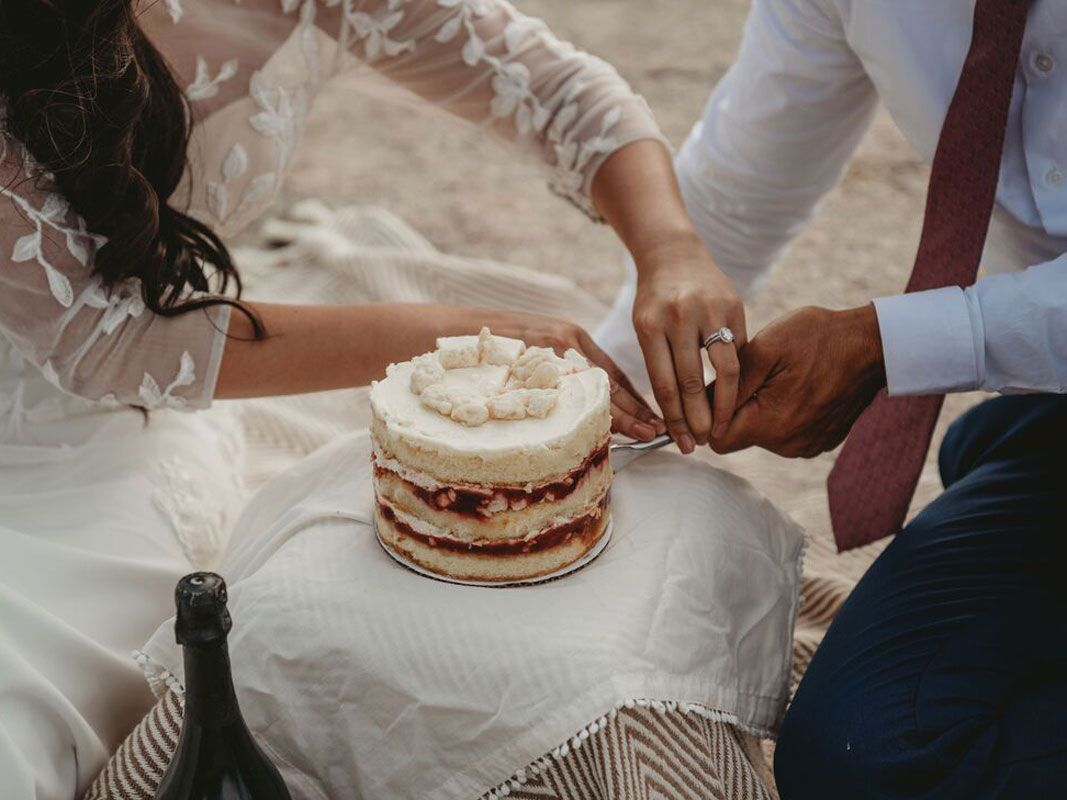
26 Beautiful Wedding Cake-Cutting Sets Worth Buying
Utensils that are as sweet as the dessert.

Exactly How to Find a Wedding Cake Baker
These tools and tricks will make the research process sweet.
Peace of Mind
Getting legally married before the wedding can provide peace of mind on the day of the actual wedding. What's more, without the pressure of handling legal paperwork or coordinating signatures, couples can focus fully on the celebration—being present with their guests and enjoying the moment rather than worrying about formalities.
Financial Planning and Flexibility
Weinberg notes that another practical reason some couples choose to get married before the wedding is that they want to be married but don't yet have the financial ability to host their wedding celebration. Beyond that, becoming lawfully married in advance can open the door to shared financial planning—like combining accounts, qualifying for loans together or beginning the process of buying a home. It can even make travel and insurance arrangements easier if you're getting legally married before a destination wedding.
Cons of Getting Legally Married Before the Wedding
Just as one of the biggest pros of getting legally married early is gaining access to important benefits, those same legal ties can also come with potential complications. "A legal marriage matters for things like taxes, property rights, insurance, immigration and healthcare decisions," Hickey says.
From a legal standpoint, Weinberg echoes this, noting, "Once you are legally married, if you ever decide to part ways, unwinding that legal relationship can be complicated and messy." She also encourages couples to fully understand how marriage affects ownership and finances before signing a marriage license. "It's important to know what the default property ownership rules are in your state," she says. "For example, in community property states like California, your spouse is entitled to one-half of all property acquired during the marriage unless you have an enforceable agreement in place to the contrary."
Finally, marriage can also impact certain government or disability benefits. Weinberg advises that anyone with these types of considerations speak to an attorney beforehand to fully understand how getting legally married could affect their eligibility or financial situation.
How to Get Legally Married Before the Wedding
If you've decided to make your marriage official before your wedding day, the process is usually straightforward—but it does take a bit of preparation. From obtaining your marriage license to choosing your officiant and filing the paperwork, here's what to know about making it legal before you celebrate.
1. Understand Your State and Local Marriage Requirements
While the general requirements for getting legally married are similar across the US, the specifics vary by jurisdiction, which means "the process to get legally married varies pretty widely," Hickey says.
Weinberg adds that some states or cities have additional rules couples should be aware of. "Some places require that the marriage license be obtained within a certain amount of time before the ceremony—sometimes as little as 24 hours—and there may also be restrictions on how far in advance you can pick up your marriage license," she explains. "Other jurisdictions may require your officiant to be registered locally."
Couples should also budget for the marriage license cost, which varies depending on the specific state or county. Also, some places charge extra for certified copies, while others may waive fees if you complete premarital counseling or meet specific residency requirements. For to-be-weds going this route, it can help to review an elopement checklist to make sure every legal and logistical detail is covered.
2. Choose Your Officiant and Ceremony Type
Once you understand the requirements, you'll need to determine who can legally perform your ceremony. In most jurisdictions, this includes judges, justices of the peace, religious leaders or individuals who've been ordained. That said, some states require officiants to register locally before the ceremony, so it's important to read up on the requisites ahead of time.
If your goal is simply to make the marriage legal, many couples opt for a quick courthouse wedding. Others may prefer a private signing with an officiant and witnesses before their larger celebration.
3. Complete and File Your Marriage License
After the ceremony, the marriage license must be signed and officially filed to make your marriage legal. In most cases, the officiant is responsible for submitting the signed license to the appropriate county or city office, but couples should confirm this step to ensure nothing gets overlooked.
Depending on your state, you may receive your marriage certificate automatically in the mail or need to request a certified copy. It's also a good idea to order several copies in advance if you plan to change your name or update records with employers, banks or insurance providers.


