

Spice things up with these steamy flicks.
Updated Oct 14, 2024What is a Lehenga? A Primer on Indian Bridal Attire
Who wears one, what part it's made up of and where to buy.

Illustration by Manjit Thapp for The Knot

Indian weddings are packed full of cultural customs and ceremonial rites—and the wedding fashion is a large part of these traditions. Typically, Indian and Pakistani brides wear a lehenga for the wedding ceremony, but what is a lehenga? How does it differ from a saree? Who else wears traditional attire?
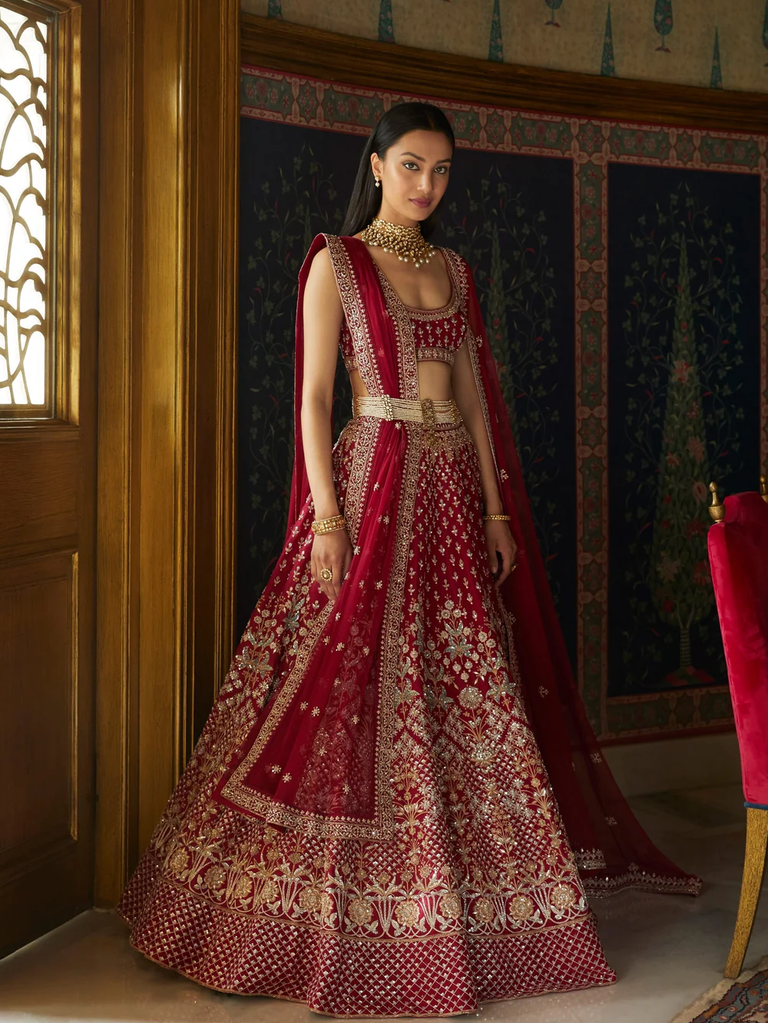
In short, a bridal lehenga consists of three parts: the skirt, the blouse and the dupatta. (You may also see this type of Indian wedding attire referred to as a lehenga choli, which is the official name for the full look, while lehenga actually refers to the skirt component.) Lehengas are often as intricate and symbolic as the ceremonies themselves, with meaning imbued by the colors, embroidery and motifs of each design.
FEATURED VIDEO FROM THE KNOT
Rupa Vora is the founder of Chicago-based retailer Studio East6, which offers curated collections of wedding lehengas from India's top designers. With her help, we break down the parts of a lehenga, symbolic colors, where to shop and more.
In this article: What Is a Lehenga? | Who Wears Lehengas to a Wedding | Bridal Lehengas | Wedding Guest Lehengas | FAQ
What Is a Lehenga?
A lehenga is a traditional Indian outfit worn by women for celebrations like festivals and weddings. It's made up of three parts—the skirt, the blouse and the dupatta shawl—and is sometimes referred to as a bridal lehenga choli.
Parts of a Lehenga
"A lehenga consists of three main components," Vora explains. The parts should be worn together to complete the full lehenga choli.
- Lehenga skirt: "This is usually a long skirt that may be embroidered, embellished or pleated," Vora says. Lehenga skirts are always ankle- or floor-length, and usually voluminous with either a flared or A-line silhouette and circular hem.
- Blouse: The blouse is the top portion of the wedding lehenga. There is a lot of variety in the blouse: It can be long or short sleeve or sleeveless, cropped high or low, sweetheart, square or high neck; the options are endless.
- Dupatta: The dupatta is a swath of fabric worn draped over one shoulder or across as a shawl. "This has been optional in modern day," Vora notes; however, the most traditional weddings still require it as a sign of modesty and respect.
Cultural Lehenga Styles & Significance
Every lehenga is embedded with meaning; over the centuries, various regions across India and its neighboring territories and countries have developed specifications that set their lehengas apart. Here are a few of the most common you may encounter.
- Kashmiri lehenga: Kashmir is a territory administered by India, and fabrication is of paramount importance here: Lehengas are often crafted from velvet, heavy brocade or the richest silk, and embroidered with aari work using a hooked needle.
- Punjabi phulkari lehenga: Punjab is a region in the far north of India, and phulkari is a specific type of embroidery that originated there. It is all about florals: Vibrant threads are used to sew floral patterns onto the fabrics of this type of lehenga.
- Gujarati lehenga: A Gujarati wedding lehenga is among the most colorful you will find. Its skirt is often pleated and features vibrant embroidery alongside shiny details—think small circular mirrors sewn across the fabric. The style is specific to Gujarat, an Indian state in the northwest.
- Rajasthani lehenga: Lehengas that come from the north Indian state of Rajasthan are known for their gota patti embroidery. The applique technique was derived here and is done using gold or silver metallic threads. Though Rajasthan borders Pakistan, the two regions' lehengas differ slightly in color, with the former's being more vibrant.
- South Indian lehenga: A South Indian lehenga is maybe the most prevalent or top of mind when considering what an Indian wedding dress looks like: These are often rendered in the traditional bridal color—red—with embroidery in gold or silver zari thread. South Indian lehengas are often made from silk or silk blends.
- Eastern Indian lehenga: Bengali lehengas are often red, yellow or shades of saffron. In addition to the intricate embroidery that lehengas from other regions are known for, some Bengali and East Indian lehengas are made from jamdani, a unique Bangladeshi fabric handwoven with traditional motifs (rather than having the motifs embroidered on top of other fabrics).
- Pakistani lehenga: A Pakistani bridal lehenga is similar to an Indian lehenga thanks to the countries' close proximity and overlapping traditions (a Pakistani wedding also has similarities to an Indian wedding). However, though lehengas are made up of the same three pieces, in Pakistan, they often provide more coverage across the arms and midriff for a more modest look. Pastels are popular in Pakistani bridal, alongside the more vibrant colors of Indian lehengas.
- Fusion lehenga: The term fusion indicates a modern lehenga, one in which the bride may have taken liberties to personalize or modernize her look. "Modern lehengas could include elements like cape dupattas—or ditching the dupatta—ruffles, metallics and Western cuts, shorter tea-length skirts or pockets and practical tailoring," Vora says. Fusion brides may opt for lighter-weight fabrics or a range of colors outside the traditional red and white.
Who Wears a Lehenga to a Wedding?
"Lehengas can be worn by anyone: the bride, bridesmaids, family members and guests," Vora says. "The formality, embellishment and color palette usually reflect their role in the celebration; brides opt for highly ornate, heavy designs, while guests may wear more playful, lighter designs."
Bridal Lehenga Styles
"Bridal lehengas tend to be heavier, with richer fabrics like silk, intricate hand embroidery and colors like red, maroon, cream or gold," Vora says. Even within the Indian bridal lehenga category, though, there are subcategories by culture, region or event; the bride typically has looks for the Haldi or mehendi, the Sangeet, the wedding ceremony and the reception.
Red Bridal Lehenga
"Red is the traditional bridal color," Vora says. "It symbolizes prosperity, fertility and new beginnings." A red bridal lehenga is often seen at the wedding ceremony itself, when the bride is quite literally stepping into her new life.
White Bridal Lehenga
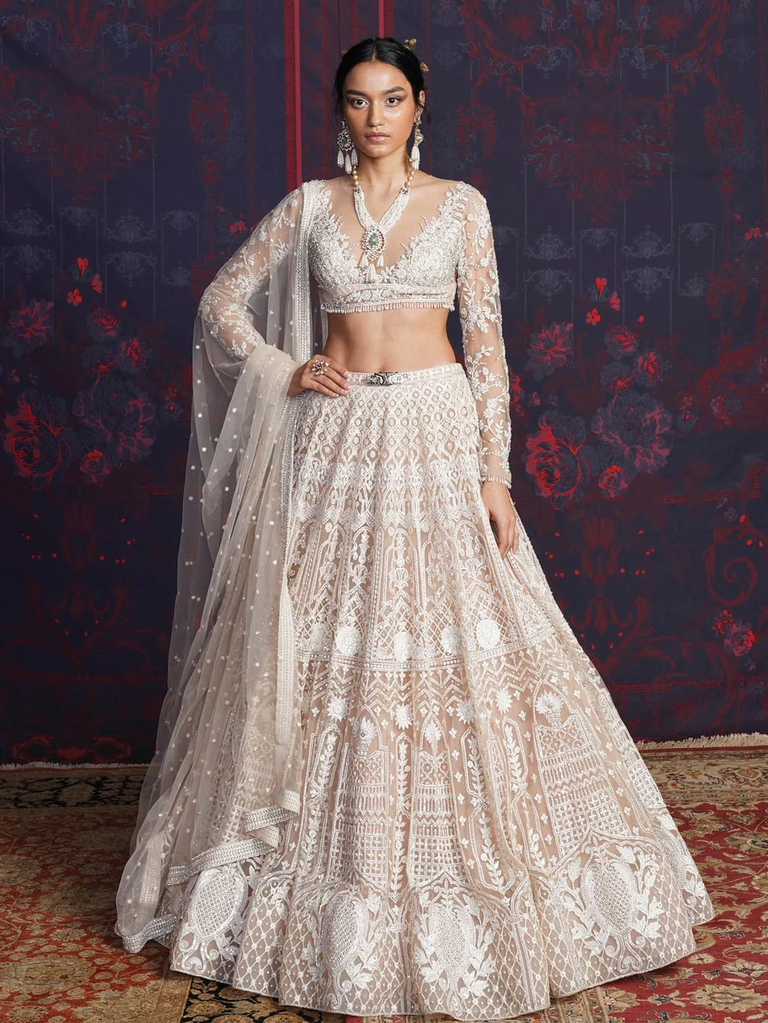
"White was historically associated with mourning in Indian culture, though now modern brides have embraced it as chic and minimalist, especially in Western-fusion weddings," Vora says. Today, you may see a bride wear red for the ceremony and change into a white bridal lehenga or fusion dress for the reception. White is also favored by Muslim brides.
Other Popular Bridal Lehenga Colors
Vora notes that green is another popular bridal lehenga color, symbolizing fertility and new life. Yellow is popular in certain regions and commonly worn for the Haldi or mehendi events prewedding (there are usually three days of events to dress for in Indian wedding traditions); pastels and lighter hues are also becoming more popular for modern Indian brides.
Wedding vs. Sangeet Lehenga
The Sangeet is a prewedding event, typically held a day or two before the ceremony. It's full of life and joy, with choreographed dances and the coming together of families. Its fashion reflects this vibe. "The wedding lehenga is typically heavier, more traditional and symbolic—often in red or other auspicious colors," Vora says. "The Sangeet lehenga, on the other hand, is more fun, often in brighter, bold colors like hot pink, yellow or electric blue, and designed for movement and dancing."
Where to Buy a Bridal Lehenga
Many Indian brides—even if they're hosting their wedding at home in America—will have their wedding attire made in India, or travel there to source fabrics and Indian wedding jewelry. Others turn to well-known Indian designers and labels, much like Western brides turn to bridal designers. Anita Dongre, Sabyasachi Mukherjee, Falguni Shane Peacock, Seema Gujral and Manish Malhotra are some of the most prominent. For an in-person shopping experience, Chicago's Studio East6 carries many of these labels and more; brides can also shop curated collections online at Maya Prêt-À-Porter and Kynah.
Lehenga for Wedding Guest
At Indian weddings, it isn't just the bride who wears an ornate lehenga; mothers of the couple, Indian wedding bridesmaids and even guests are invited to dress along cultural lines as well. While Indian wedding guest attire does include lehengas, the bride should still be allowed to stand out. "Guest lehengas are often lighter, more playful in color and less ornate and heavy," Vora says. "Think florals or contemporary pastels." Guests might also opt for lehenga-inspired attire: colorful draped dresses or pants-and-tunic looks can work beautifully.
Where to Buy a Wedding Guest Lehenga
Wedding guests may not want to spend quite as much as the bride on their attire; online retailers such as Kalki Fashion, Indya and Pernia's Pop-Up Shop offer colorful lehengas at reasonable price points. In addition to stunning lehengas, Studio East6 also offers a cool collection of lehenga-adjacent dresses in its Wedding Edits section that would be perfectly appropriate. Renting a wedding guest lehenga is also an option; All Borrow offers a wide collection of lehengas to rent by occasion. Etsy is also a stellar source.
Wedding Lehenga FAQ
An attire category with so many intricacies and unique regional specifications naturally inspires some questions. Here, we answer a few frequently asked ones.
What is the difference between a lehenga and a saree?
We know that a lehenga is a three-piece ensemble with a blouse and skirt. "A saree is a single piece of fabric—typically six yards—draped around the body and worn with a blouse and petticoat," Vora explains (in fact, the 6 in her company's name refers to this six-yard length). "Lehengas are typically easier to wear and move in, while sarees require more draping skill and offer a classic, timeless silhouette."
How much does a lehenga cost?
Much like Western wedding dresses, the cost of wedding lehengas is all across the board, and brides (and guests) can find looks that fall within their specific budgets. High-end designer lehengas by the likes of Anita Dongre or Falguni Shane Peacock can extend upward of $8,000 to $10,000; mid-range and still beautifully ornate wedding lehengas can fall into the $1,000 to $2,000 category. For guests looking to spend less on Indian wedding attire, online retailers offer lower-end (but perfectly workable) options around $100 to $500, with outliers in both directions.
Can I wear a lehenga to an Indian wedding if I'm not of Indian heritage?
A lehenga for a wedding guest, no matter their heritage, is definitely appropriate. "It's not only appropriate but often encouraged!" Vora says. "Wearing a lehenga is a beautiful way to honor the culture and have fun with it." There are a few things to look for and avoid, of course. "Colors like black are normally not worn to the religious or wedding ceremony itself, as they historically represent bad omens," Vora expands. "Ask the couple if they have any theme, dress code or color preferences."


