






Spice things up with these steamy flicks.
Updated Oct 14, 2024What is Shapewear? 12 Styles Explained
Plus, what to look for, when to wear it, and all your other burning questions, answered.

Illustration: Natalie Romine

Whether you're shopping for your wedding dress or simply scrolling Pinterest for everyday outfit inspiration, you've probably heard a lot about what shapewear to pair with it. But what is shapewear? On the surface: It's a first-layer garment that helps shape, sculpt and smooth targeted areas of the body such as your tummy, butt or legs. But its uses go deeper than that. "Great shapewear helps you feel more confident, polished and secure in any outfit, whether it's a wedding gown, a casual dress, or jeans and a fitted top," says Betsie Larkin, the founder and co-CEO of shapewear brand Honeylove. Simply put: The best shapewear offers a major confidence boost (oh, and it can even help with posture).
Of course, there are some definite need-to-knows: What does shapewear do? How to flatten the lower belly (or hips or legs) with shapewear? What materials and fabrics are best? Here, we break it all down, from the different types of shapewear to the mechanisms that make it work.
In this article: What Is Shapewear | How It Works | Related Terms | Types | FAQ
What Is Shapewear?
In short, shapewear is a type of first-layer garment that defines, sculpts and smooths your body under clothing. Often, people turn to it for special occasions—their wedding day or a red-carpet gala gown—but many types of shapewear can be worn under everyday clothing, too. "At Honeylove, we believe the purpose of shapewear isn't to hide your body, it's to support it," says Larkin (and we agree). "It should smooth, lift and contour your natural shape, not squeeze or suffocate." There are different types of shapewear for different sculpting goals and outfits; we'll break it all down below.
FEATURED VIDEO FROM THE KNOT
How Does Shapewear Work?
"Shapewear works by offering targeted compression and structured support in key areas like the core, waist, hips and thighs," Larkin explains. "We design our garments using a mix of high-compression and flexible zones, so you get sculpting exactly where you want it without feeling restricted."
There are different fabrics, tools and support mechanisms used to achieve different goals through shapewear: boning to cinch the waist, spandex and elastane to lift the butt, and so on. Some more examples? "Honeylove's signature performance doubleknit fabric is layered with performance-grade panels to smooth the tummy and cinch the waist, while our 'boost bands' subtly lift and shape the rear without flattening it," Larkin explains. "Breathable mesh and bonded seams create a seamless finish under clothes and ensure comfort for all-day wear. Different fabrics and construction techniques allow us to create support where needed, and flexibility where you want to feel that release and move with complete freedom."
Related Shapewear Terms to Know
Before we dive into the different types of shapewear, what to look for and how to buy shapewear, there are a few important terms to get acquainted with.
Gusset
The gusset has two meanings—and uses—when it comes to shapewear. The first is for hygiene: A cotton gusset is the small strip of fabric in the crotch (you're familiar with this from underwear) that keeps your sensitive areas from touching the clothing itself. A lot of shapewear styles, especially those with which you wouldn't wear underwear, have a cotton gusset; it prevents chafing and keeps everything nice and clean. Secondly, a gusset can refer to an opening or flap at the crotch in shapewear, used to make bathroom trips easier; especially with full-body shapewear, you don't want to have to strip all the way down to use the bathroom.
Boning
Boning refers to the solid strips inserted into shapewear to hold it in place and help suck you in. It's named for its historical roots: In the olden days, these strips were made from whalebone and sewn into corsetry. Later, they were steel (sharp and uncomfortable), and today they are largely made of spiral steel or more sustainable, flexible and comfortable plastic composites. You'll find boning in corsets, waist cinchers and some other tummy-flattening shapewear styles. It has its place, and its pros and cons, naturally. "Boning can offer dramatic shaping and posture support, especially for formal wear or bridal looks," Larkin says. "Traditional boning can be uncomfortable or even dig into the body. At Honeylove, we've developed flexible, hidden boning that molds to your body while still giving structure—so you not only get the smoothing effect without the poking, but it comfortably stays in place and never rolls down. If you're wearing shapewear for long hours or under a delicate gown, look for flexible boning or support panels that contour without discomfort."
Compression
You'll see this term used a lot in shapewear descriptions, and there are varying levels; it has to do with, quite literally, how much pressure a garment—through fabric, boning or other features—places on certain areas to shape and sculpt. Lighter compression is best for slip shapewear and anything serving as that liner layer below a dress, while maximum compression is ideal for pieces like waist cinchers, designed to sculpt your form. Compression is often infused strategically to target key areas like the tummy, hips or thighs.
Types of Shapewear
Now that you've got some keywords, let's dive in. Here are 12 of the most common types of shapewear garments that you'll find on the market—and what to look out for when shopping for each.

Design: Natalie Romine
Corset
What it does: A corset is designed to sculpt and define the waist. "It typically uses boning and lace-up or hook closures to create a cinched, hourglass effect," Larkin says. "While historically rigid and restrictive, modern corsets range from dramatic waist trainers to more flexible shaping pieces designed for special occasions."
When to wear it: "Corsets are best reserved for short-term wear under formal wear, bridal gowns or red carpet looks—moments where you want extra definition and posture support," Larkin says. They are less ideal for everyday or prolonged use than other, more flexible modern shapewear pieces. Notably, there is a new trend of corsets (and some other types of lingerie) being worn as the shirt itself.
What to look for: Because corsets are so restrictive, you'll want to look for elements that make them more comfortable, such as flexible boning. "Avoid overly stiff corsets that restrict breathing or dig into the body, especially if you'll be wearing them for more than an hour or two," Larkin says. "A good corset should sculpt your waist while still allowing you to sit, move and breathe comfortably."
Shop corset shapewear: Bare Necessities | Honeylove
Waist Cincher
What it does: A waist cincher is all about giving you that snatched look in the middle, pulling in the belly and waist to accentuate the curves of your hips and bust. Most waist cinchers use ultra-strong fabrics for the highest levels of compression; they're a more modern take on corsets.
When to wear it: If you're wondering, "Does shapewear actually work?" start with a waist cincher, and you'll likely notice the difference immediately. When paired with a bodycon dress, especially, your waist will appear smaller—but waist cinchers can also be worn with high-waisted pants and a top, form-fitting dresses of all kinds, jumpsuits and more.
What to look for: Most waist cinchers are made from thick stretch fabric and have boning in the front, back or both. SKIMS' version has a front zipper (designed to appear invisible under clothes), making it considerably easier to get in and out of.
Shop waist-cincher shapewear: SKIMS | Spanx
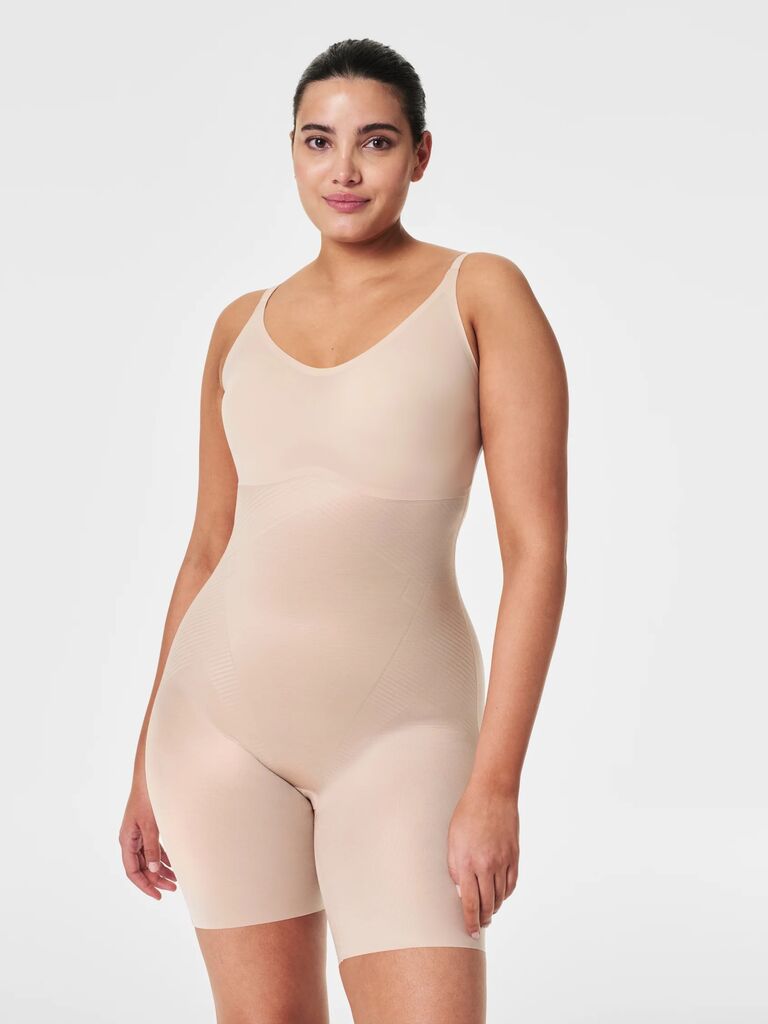
Mid-Waist Shaper Shorts
What it does: Shaper shorts offer targeted compression from the core or waist to the upper leg; some even come with booty-lifting technology. For example, "Honeylove's MidWaist Shaper Shorts are designed to sculpt the waist, smooth the tummy and eliminate thigh chafing—all without flattening your natural curves," Larkin says.
When to wear it: Wear shaper shorts with form-fitting dresses (just make sure the hem is at least a couple of inches longer than the shorts), or with tight pants that call for smoothing over the butt and thighs.
What to look for: "Look for targeted compression zones for tummy control and seamless legs to avoid visible panty lines," Larkin says. "A cotton-lined gusset is a must to eliminate the need for extra layers and provide seamless construction so that it stays invisible under clothes."
Shop mid-waist shaper shorts: Victoria's Secret | Leonisa
Full-Coverage Shaper Shorts
What it does: Shaper shorts are designed to smooth out the thighs and lower torso specifically, aiming to smooth cellulite that might show through a tight dress or give the lower half a seamless hourglass shape. Full-coverage shaper shorts extend higher than mid-waist versions, emphasizing tummy compression as well.
When to wear it: Wear shaper shorts under high-waisted pants or form-fitting skirts or dresses, especially those with a low back that rule out the ability to wear a full shapewear bodysuit.
What to look for: Look for core compression and booty lifting. Honeylove's SuperPower Short is one of its most popular products and has "boost bands" designed to define the butt.
Shop full-coverage shaper shorts: Honeylove | Yitty
Open-Bust Bodysuit
What it does: This type of shapewear controls and compresses pretty much everything except the bust. "Open-bust bodysuits offer sculpting from the midsection through the hips and thighs while giving you full control over your bust support," Larkin says. "Targeted compression zones smooth the tummy, contour the waist and smooth the back side of your body without flattening your natural curves."
When to wear it: Reach for open-bust shapewear with any outfit that you need to wear a specific bra with, such as those with plunging necklines, wrap dresses or low-cut tops. "It's also a great option for postpartum support or under structured garments where bra choice is key," Larkin says.
What to look for: Adjustable straps are important for fit with this type of bodysuit, especially when working around various types of bras. "Avoid garments with overly rigid seams, thin fabrics that roll or bunch, or shapewear that compresses the bust area unintentionally," Larkin says. "A properly designed open-bust style should enhance your shape, not restrict it."
Shop open-bust bodysuit shapewear: Honeylove | Shapellx
All-in-One Bodysuit
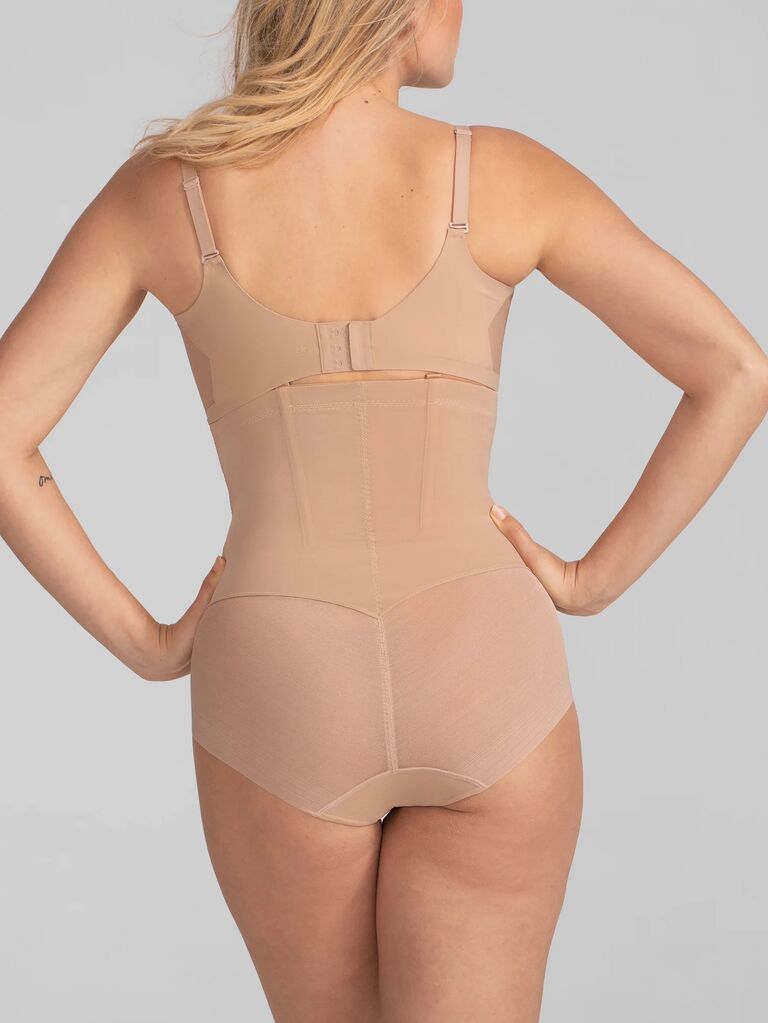
What it does: When it comes to shapewear, an all-in-one bodysuit is the best of all worlds. It has a built-in bra, full coverage and compression of the tummy and waist, back smoothing effects and upper leg shaping. Its goal is to create an overall smooth look across the body.
When to wear it: All-in-one shapewear is best for fuller coverage dresses and 'fits as the shapewear itself covers a lot of the body, but you can look for ones with specific modifications, such as Honeylove's low-back bodysuit.
What to look for: Adjustability is key here, especially if you typically wear different sizes on the top and bottom. Some bodysuits can be adjusted at the bra straps, the back and more. Also, look for an adjustable crotch and gusset; you'll need access to use the bathroom because taking the entire bodysuit off would be quite a production. And, since so much of your body will be covered, medium compression is ideal: "Strong enough to sculpt, but flexible enough to move with you," Larkin says.
Shop all-in-one bodysuit shapewear: Honeylove | Spanx
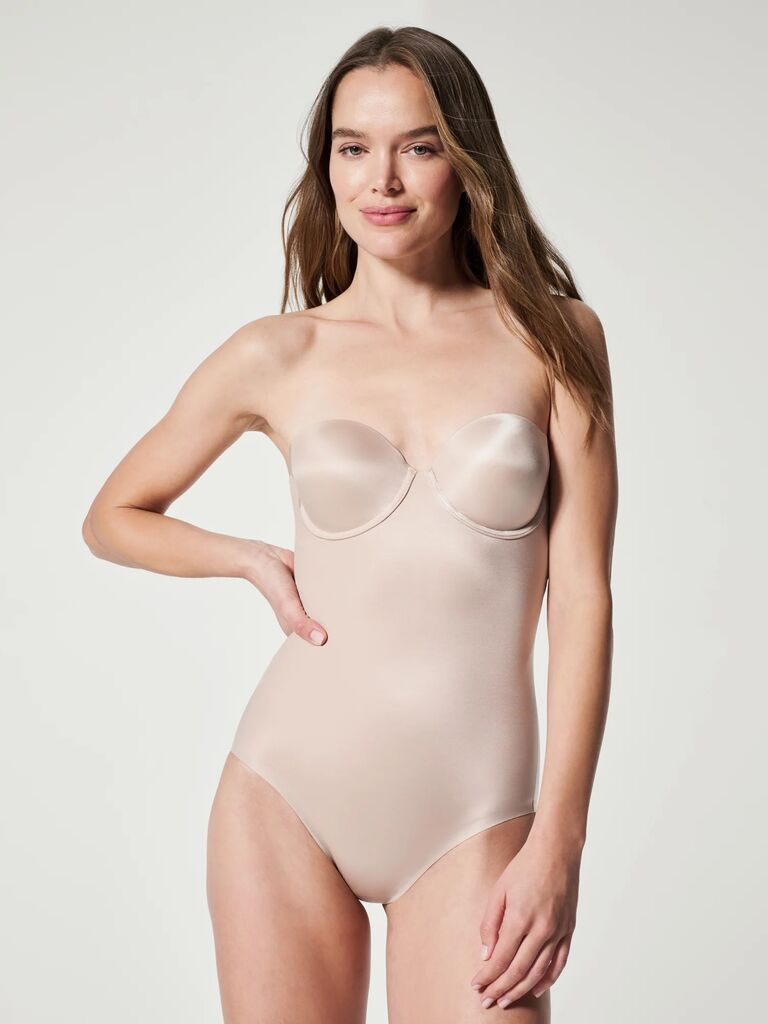
Strapless Bodysuit
What it does: "A strapless bodysuit is a full-body shaper that provides core and lower-body sculpting with built-in bust support, without the need for straps," Larkin says. "It's designed to create a smooth, contoured silhouette under strapless or off-the-shoulder styles, offering discreet shaping while staying invisible under skin-baring cuts."
When to wear it: Unlike the all-in-one style, a strapless bodysuit lacks bra straps and so can be worn with strapless jumpsuits or dresses of any kind (especially those that call for a nice back-smoothing effect), from summer frocks to bridal gowns. "A well-designed strapless bodysuit helps lift and support the bust, define the waist and smooth the hips and thighs, all while staying in place," Larkin says.
What to look for: "Look for structured bust support without underwire, a low back or convertible design and grip-lined edges that prevent slipping," Larkin says. "Avoid styles with stiff boning that can dig in or fabrics that roll, pinch or lose elasticity after a few wears."
Shop strapless bodysuit shapewear: Spanx | SKIMS
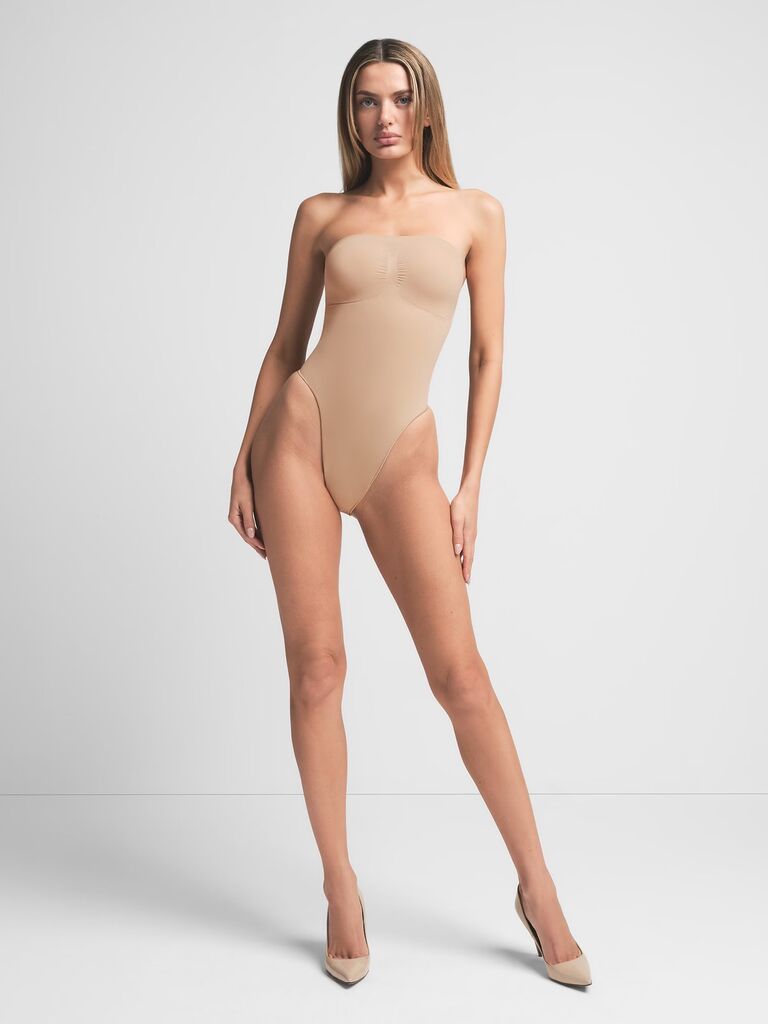
Strapless Thong Bodysuit
What it does: A strapless thong bodysuit offers similar support to the strapless bodysuit above, minus the legs; it's designed to be worn with shorts or dresses that may otherwise show visible panty lines.
When to wear it: Thong bodysuits can be worn with pants, shorts, dresses, jumpsuits or skirts that call for no panty line and no straps—think strapless minidresses.
What to look for: Compare the width of the thong itself to that of your favorite pair of thong underwear; wider thongs can be more comfortable. Prioritize a cotton gusset since you won't wear underwear with this piece, and look for adjustable closures for ease in the bathroom.
Shop strapless thong bodysuit shapewear: Shapellx | SKIMS
Underbust Brief Shapewear
What it does: Underbust brief shapewear targets compression to flatten the tummy and cinch the waist; it can also offer an element of smoothing across the butt. Think of this as a waist cincher with underwear attached.
When to wear it: Wear this with tops or dresses you prefer a specific bra with, as there's no built-in bust support here. The tummy-shaping benefits can be seen across tight shirts and high-waisted pants or skirts.
What to look for: Briefs can extend all the way up to the bra line or stop midwaist, depending on where you are looking for the most compression. Consider the outfit you'll be wearing the shapewear with; for high-waisted shorts and a crop top, opt for the lower briefs, for example.
Shop under-bust brief shapewear: Yitty | Spanx
Underbust Thong Shapewear
What it does: Any thong shapewear is focused solely on the middle torso of the body, rather than offering any leg-smoothing effects; underbust styles are even more specific in their shaping as they stop at the bra line. Depending on the style you go for, these pieces might have similar results to a waist cincher or corset-style shapewear, with the attached thong helping to hold it all in place.
When to wear it: No need to save this type of shapewear for special occasions—you can use it for everyday wear as well. With pants, the taller coverage helps prevent a roll at the waist, and with dresses and shirts, it smooths lines across the middle.
What to look for: Look for seamless constructions to avoid any visible lines. Zippered styles will make this type of shapewear easier to get on, and hook-and-eye or snap closures at the bottom will make bathroom trips easier.
Shop under-bust thong shapewear: Shapellx | Maidenform
Shapewear Slip
What it does: "A shapewear slip is a smoothing undergarment designed to be worn like a slip dress, skimming the body from bust to thigh to create a seamless, sculpted silhouette under fitted dresses and skirts," Larkin explains. "It typically offers light to moderate compression, smoothing lines without adding bulk."
When to wear it: Slip on a slip beneath sheath or bodycon dresses—or with any unlined dress as a liner in itself (slips also help prevent fabric cling!). "It's a go-to for weddings, cocktail dresses or professional outfits where polish matters," Larkin says.
What to look for: "Look for a slip with graduated compression that smooths without flattening your curves, adjustable straps and no-slip hems that keep it anchored in place," Larkin says. "Avoid slips made with sheer or overly stretchy fabric that offers little support, or styles that ride up, roll or compress the bust too tightly."
Shop shapewear slip: Spanx | Commando
Strapless Shapewear Slip
What it does: Extending from the bust to mid or upper thigh, shapewear slips are designed to smooth out the entire midsection, including tummy, back and waist.
When to wear it: Slips are made for dresses rather than pants, but note that some do still connect between the legs with a hook-and-eye or snap closure. As the name indicates, this style is similar to the above but is best for strapless, asymmetrical one-shoulder or off-the-shoulder dresses.
What to look for: Decide if you want cups to support the bust or not; some styles have built-in underwire cups, while others are more seamless. Be sure to take the neckline into account, as well, opting for something with a plunge—rather than straight across the neck—for sweetheart styles.
Shop strapless shapewear slip: Commando | TC Fine Intimates
Shapewear FAQ
Still have questions? We don't blame you—there is a lot that goes into shapewear decision-making. Here, Larkin helps answer a few frequently asked questions.
Is shapewear bad for you?
Absolutely not—but there are right and wrong ways to utilize it. "We always recommend choosing your true size, not sizing down for more compression," Larkin says. "Shapewear should feel supportive, not suffocating. When designed thoughtfully, it's not only safe for daily wear—it can actually improve posture and core engagement."
Does shapewear help reduce belly fat?
If you're wondering can shapewear help you lose weight, the short (and only) answer is no. "Shapewear is not a weight loss tool—it doesn't burn fat or lead to long-term body changes," Larkin says. "But it can dramatically improve how your clothes fit by flattening and compressing the midsection, helping you feel more secure and supported in your outfit. The real transformation is in confidence and posture, not pounds lost."
(Note that waist cinchers are often confused with waist trainers. The latter is not actually shapewear but an adjustable compression piece designed to gradually reshape your waist; however, the jury is still out on actual results.)
Can you wear shapewear every day?
Shapewear can certainly be worn every day, but you'll want to ensure that it fits properly for this type of long-term wear. "In order to find the right size, take your measurements using a measuring tape and order the size that corresponds to your body," Larkin suggests. "Poorly made or overly tight garments can restrict breathing or digestion." (Honeylove uses breathable fabrics, flexible boning and adaptive compression zones so the shapewear moves comfortably with its wearer.)
Do you wear a bra with shapewear?
This depends on the shapewear you choose and the outfit you plan to wear over top of it. Some shapewear pieces have built-in bras and bust support; others feature open-bust silhouettes that allow you to wear the bra of your choice (and one that fits the cut of your top).
Are you supposed to wear underwear with shapewear?
Similarly to the above, the answer depends entirely on which type of shapewear you are wearing and what the outfit looks like—but usually, no, you don't need underwear (especially with thong shapewear). Look for pieces with cotton gussets to be worn as your first layer (bonus if the gusset can be separated for easy bathroom breaks). "If you are layering with your favorite bra or undies, make sure that they're smooth and won't create unwanted lines or bulk," Larkin notes.


