




"I like it when people say, 'How did it last so long?' I say, 'It's still going."
Updated Mar 04, 2025The Complete Guide to Aso-Ebi Attire for Wedding Guests
Plus, experts weigh in on how to choose your Nigerian wedding guest style.

Photo: Calenrose

If you're attending a Nigerian wedding, you're likely familiar with aso-ebi styles—if not, allow us to introduce you. Whether this is your first or fiftieth Nigerian wedding, it's hard to miss the colorful and glamorous attire traditionally worn by close family and friends of the couple. While Nigerian wedding guests are known to dress to impress, aso-ebi is more than just a fashion statement. The traditional Nigerian wedding attire is steeped in rich history and culture.
Executing aso-ebi takes months of careful planning. From choosing the color scheme to sourcing fabrics, aso-ebi wedding attire is a true labor of love. If you're not sure where to start, consider this your complete guide to everything you need to know about aso-ebi. From the origins of the tradition to how to choose aso-ebi wedding guest styles, we cover all of the basics. Plus, three experts share their insights on aso-ebi attire.
In this article:
- What Is Aso-Ebi?
- How to Choose Aso-Ebi Attire for a Wedding
- Aso-Ebi Styles for a Wedding for Men and Women
- Wedding Aso-Ebi Inspiration
What Is Aso-Ebi?
While there are many Nigerian wedding traditions rich in culture and history, one of the most easily recognized is the practice of aso-ebi. Aso-ebi, which translates to "family cloth," is the tradition of family and friends dressing in the same fabric to show solidarity and support during a wedding or event.
"[Aso-ebi] refers to attire that is coordinated by using the same fabric," Bisola Esiemokhai, owner and lead wedding planner of Event Design by BE, tells us. "The fabric is worn by a group of people to show unity, support or affiliation—especially during important celebrations like weddings, birthdays, funerals and cultural festivals. It's not just about fashion; it's a powerful visual statement of solidarity and connection. At weddings in particular, aso-ebi helps distinguish different sides of the family or groups of close friends, creating a colorful and communal atmosphere throughout the event."
FEATURED VIDEO FROM THE KNOT
While aso-ebi originated in Yoruba culture, the practice has become a widespread wedding tradition throughout Nigeria, as well as in other African countries. Wearing aso-ebi styles in Nigeria originated as a symbolic way to show support and unity during important life milestones, but has evolved to become an important fashion statement and cultural norm for Nigerian weddings. Although fashion is a big part of Nigerian weddings, the significance of aso-ebi styles extends beyond the clothing.
"Aso-ebi is more than just matching outfits—it's a visual love letter to the community," Damilola Okuboyejo, owner and creative director of By Dami Studios, explains. "It's how we say, 'I'm with you,' without speaking a word. Whether it's lace, ankara or richly embroidered fabrics, wearing aso-ebi is our way of showing up for one another. It's tradition, pride and celebration woven together. And honestly, there's nothing like the sight of a sea of coordinated styles moving in rhythm—it's Black joy and Nigerian culture at its finest."
How to Choose Aso-Ebi Attire for a Wedding
Executing aso-ebi requires meticulous planning and coordination, which is why we're here to help. From choosing the right color to sourcing fabrics, we've outlined everything you need to know about planning your African aso-ebi styles.
Colors
Choosing a color is an important first step in planning your aso-ebi wedding attire. Aso-ebi can be done in a wide range of colors; however, some popular choices include green, red, gold, purple and blue. You can select one color or go with an aso-ebi color combination. Many couples even choose to have different colors to signify different groups of people, such as family members, bridesmaids, groomsmen, etc. "At weddings in particular, aso-ebi helps distinguish different sides of the family or groups of close friends, creating a colorful and communal atmosphere throughout the event," Esiemokhai shares. If you're not sure where to start, we suggest making a Pinterest board or scrolling through Instagram or TikTok for inspiration.
Wedding guests who aren't given aso-ebi may be invited to wear a "color of the day." While by no means a requirement, this is a great way to honor the couple and participate in the wedding day festivities. Guests who aren't wearing aso-ebi are encouraged to dress to the nines, as Nigerian weddings are high-fashion affairs. Emeka Anyadiegwu, managing director of Obioma Fashion, specializes in luxurious and size-inclusive African wedding attire that's perfect for wedding guests. A general rule of thumb is that you can never be overdressed for a Nigerian wedding, so now is the time to embrace full glitz and glamor. "It has to be glamorous and you have to dress to impress," Anyadiegwu says.
Fabric
Once you've determined the color scheme for your Nigerian wedding attire, you'll want to begin researching your fabric options. Social media is a great place to discover reputable aso-ebi fabric vendors. Esiemokhai recommends 5 Yard Fabrics or Fabriq Star as her favorite places to shop for aso-ebi fabrics. Some common fabric options used for aso-ebi attire include lace, brocade and aso oke. "Aso oke is a handwoven fabric known for its luxurious texture, weight and visual richness," Esiemokhai tells us. "The name itself means 'top cloth' or 'prestigious cloth.'"
After you order your aso-ebi fabric, you can distribute it to your wedding guests, friends and family members so they can then work with a local tailor to create their wedding-day attire. Guests can work with their tailor to create their own custom aso-ebi design that fits their style. This allows all of the guests to coordinate, while still maintaining their individuality with their attire.
"Wearing aso-ebi is more than simply matching outfits—it's a deeply rooted gesture of support," Esiemokhai explains. "It also plays a practical role too: guests often purchase the fabric directly from the celebrants or their family, which helps offset event costs, which, as we know, can get very expensive. So, in a way, wearing aso-ebi is both symbolic and contributory. It tells the couple, or the family hosting the event, 'We see you, we support you, and we're part of this celebratory moment with you.'"
Styles
Aso-ebi dresses come in many different silhouettes and styles depending on the formality of the event. Close friends and family members are typically invited to wear aso-ebi wedding styles. Aso-ebi styles for bridesmaids often coordinate with the bride's aso-ebi bridal styles to create a beautiful and photo-ready look on the wedding day. While the practice of wearing aso-ebi has deep roots in Nigerian culture and history, modern aso-ebi attire blends contemporary style with tradition. Because aso-ebi is custom-made with a tailor, guests can get creative with their attire and create a one-of-a-kind look.
"When selecting an aso-ebi style for a wedding, it's important to factor in the tone of the event, the venue, the time of year, the tailor you are working with and the silhouettes and styles that will flatter your shape," Esiemokhai explains. "For a large or high-end wedding, it makes sense to go with more luxurious fabrics like lace or aso oke, styled into structured gowns with embellishments, beadwork, or dramatic silhouettes that match the grandeur of the event."
Timeline
Executing Nigerian aso-ebi style requires plenty of time to plan and coordinate. Experts suggest planning at least six months in advance of the wedding to ensure the guests and bridal party have enough time to get their attire ready. Sometimes fabrics can get delayed when shipping, especially due to tariff complications, so it's important to plan ahead and leave ample time for any hiccups along the way. The Knot Vendor Marketplace is a great resource where you can find experienced vendors who can help execute the aso-ebi style of your dreams.
Aso-Ebi Styles for a Wedding for Men and Women
Both men and women wear aso-ebi fashion for Nigerian weddings to create a beautiful and cohesive look on the big day. While these styles have modern fashion influence, many aso-ebi styles are rooted in traditional Nigerian wedding attire.
Women's Aso-Ebi Attire
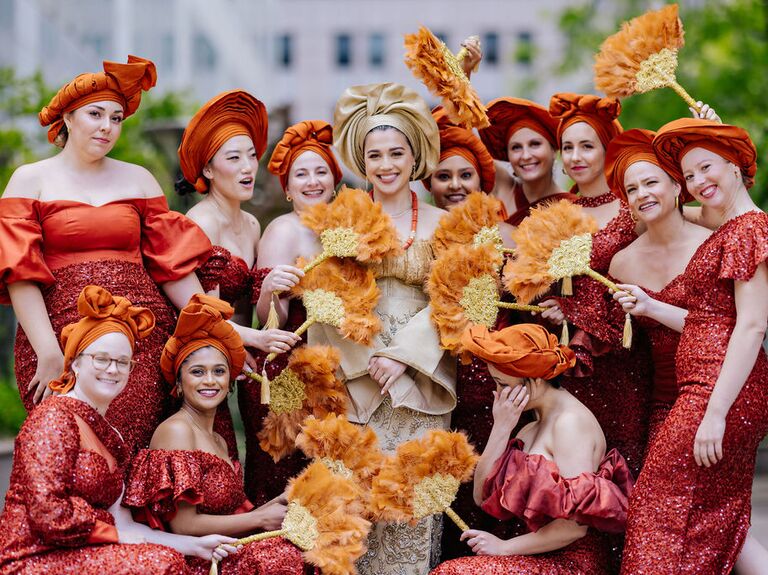
Most women opt for floor-length gowns for Nigerian weddings. These are typically either in fitted or mermaid silhouettes and are made of rich, elegant fabrics such as lace, brocade, beading or aso oke. Women may also choose a peplum top paired with a traditional wrapper, also known as iro and buba. "These are usually paired with a dramatic gele, which is the iconic Nigerian head tie women wear," Esiemokhai shares.
When styling your aso-ebi look, don't forget the importance of accessories. "Accessories can elevate any look, so even if you're working with a simpler fabric, thoughtful touches like a beautifully tied gele, a structured handbag or standout jewelry can make a big impact," Esiemokhai says. "Ultimately, the most memorable aso-ebi looks are those that balance cultural tradition with personal flair."
Men's Aso-Ebi Attire
The fashion fun isn't limited to women, as men also participate in aso-ebi fashion. They may be adorned in the same aso-ebi fabric as the women or in a complementary shade. Just like the women, men will receive an aso-ebi fabric that will be tailored into their own custom creation for the wedding day.
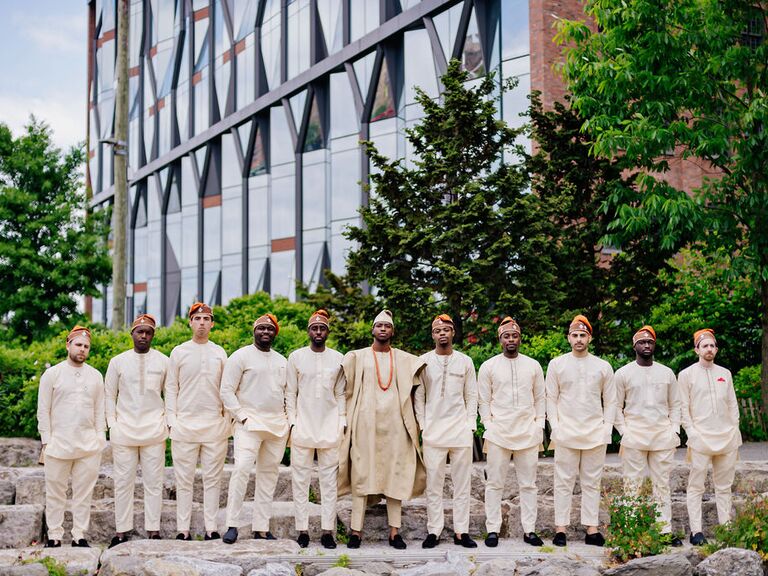
"Men, on the other hand, may wear agbada, kaftans, or buba (shirt) and sokoto (pants), styled in complementary colors, often topped off with a matching fila cap, Esiemokhai says. "While lace and embellished fabrics like aso oke are standard for formal events, simpler fabrics like Ankara are popular for more casual or semi-formal occasions. Regardless of the fabric or style, the goal is always to reflect the tone of the event while maintaining cultural expression."
Wedding Aso-Ebi Inspiration
Now that you're well-versed in aso-ebi, it's time to start planning! Sit back, relax and scroll through our top picks to inspire your aso-ebi wedding attire.

Photo Credit: Monika Gauthier Photography
,Attire: Le Trend Boutique

Photo Credit: Jackson Wedding Studios

Photo Credit: Rhphotoarts


