


"I like it when people say, 'How did it last so long?' I say, 'It's still going."
Updated Mar 04, 2025What Is Nigerian Bridal Wear? Different Looks, Explained
Each culture has its own take on traditional bridal attire.

Photo: Calenrose

Nigerian weddings are rich with cultural symbolism, color and life—and the bride's Nigerian bridal wear is a beautiful, fashion-forward reflection of it all. It's not just one look: Each subculture has its own variations, and each wedding includes a number of events for which the couple wears different outfits.
"The heart of the wedding is the traditional wedding ceremony—also called the engagement ceremony by the Yoruba culture, igba nkwu among the Igbo culture and fatiha in Hausa culture," explains Bisola Esiemokhaie, owner and lead planner and designer at Event Design by BE. "During this event, elders bless the union and the bride is called out to publicly affirm her consent to marriage. Each subculture in Nigeria has an iconic point that symbolizes the couple being married. For Igbo culture, it is during the palm wine ceremony; for Yoruba culture, it is the capping of the groom."
FEATURED VIDEO FROM THE KNOT
"The traditional ceremony kicks off the celebrations, followed by the Western-style 'white wedding.' Depending on the couple and their families, these events may take place on separate days or even within the same day," adds Akeshi Akinseye, the global luxury wedding and event planner and designer behind Kesh Events. "Attire is a major element of each event and reflects the couple's identity and roots. Traditional looks are often dictated by the bride's ethnic background, with families selecting fabrics and colors rich in symbolism. Brides wear attire representative of their specific culture, from intricately woven fabrics to elaborate coral beads or the iconic gele, depending on the tribe; for instance, an Edo bride may be adorned head to toe in coral beads, including crowns, necklaces and bangles, a regal nod to her ancestry."
Here, we break down some of the Nigerian wedding traditions and cultures, and how those translate to attire for Naija wedding gowns.
In this article:
- What Is Nigerian Bride Wear?
- Types of Nigerian Wedding Dresses
- Where to Buy Nigerian-Style Wedding Dresses
What Is Nigerian Bride Wear?
Nigerian traditional wedding dresses are made up of multiple parts: there are wrapped skirts, blouses, sashes, symbolic jewelry, gele headwraps and more. The combinations vary by subculture—we dive in deeper below—but all have one thing in common: Fabric and color play a large role in all Naija traditional wedding dresses. "Attire for the [traditional] wedding is full traditional dress aligned with ethnic identity: george fabric and coral beads for Igbo brides, aso oke for Yoruba brides, and modest silk or lace gowns for Hausa-Fulani brides," Esiemokhaie explains. (It isn't just the bride who adheres to these rules, either. "A hallmark of Nigerian weddings is aso-ebi, a selected color and fabric theme worn by guests to show unity and celebration," Akinseye says.) For color, "while there are no strict rules, colors carry meaning," Akinseye says. "Red often symbolizes love and strength; gold and champagne represent royalty and celebration. Some colors are chosen based on cultural beliefs, while others are selected purely for aesthetic or personal significance. Black is typically avoided in weddings."
The specific fabrics and details are symbolic, too. "Each culture within the Nigerian community has small details that are incorporated in their attire," Esiemokhaie says. "For example, the isi-agu fabric represents royalty, power and status within the Igbo culture. Igbo brides also tend to incorporate some type of wrap style for the bottom half of their attire. With so many subcultures and personal family traditions, a dress designer will guide the bride to create a design that reflects their style but also ties back to where they align culturally."
Types of Nigerian Wedding Dresses
Each subculture has a slightly different take on Nigerian wedding dresses, and then there's the white wedding to consider as well. Here we provide a little more about each style of Nigerian wedding attire.
Igbo Maiden Outfit

Photo: Quintessence Photography and Film
"Traditionally, an Igbo bride wears two to three outfits for the traditional wedding," Esiemokhaie says. "The first outfit is the maiden outfit, which represents her being single. This outfit is short and normally includes a fabric revered in the Igbo culture called isi-agu, which is adorned with a lion's head or a plaid fabric." Isi-agu traditionally comes in shades of red, royal blue, green or burgundy, and the bride completes her look with coral beads in her hair or a gele, the traditional Nigerian head tie.
Igbo Wedding Attire

Photo: Gee Q. Photos
For the traditional wedding itself, "an Igbo bride typically wears a beautiful blouse—often off-the-shoulder—a wrapper skirt called a george and layers of coral beads, including elaborate necklaces and headpieces," Akinseye says. "Color palettes often include red, gold or orange, though jewel tones are increasingly popular." The bride may change into a second outfit before the palm wine ceremony, that symbolic moment that makes the marriage official. "The second outfit is a floor-length gown that is more elaborate with isi-agu or lace fabric," Esiemokhaie says. "The bride's look is completed with elaborate coral beads worn as necklaces, bracelets and often a headpiece, symbolizing royalty and fertility. If the bride is not wearing coral beads in her hair, an intricately tied gele is worn." In these Naija lace gown styles for weddings, "modesty is generally respected, though styles differ," Esiemokhaie adds. "Igbo and Yoruba brides may wear attire that exposes arms, shoulders or midriff, depending on family preferences."
Yoruba Traditional Bridal Set

Photo: Montenegro Photography
"A Yoruba bride traditionally wears attire made from a luxurious fabric called aso oke, a richly woven handcrafted fabric," Esiemokhaie describes. "For a bride with a more traditional style, her outfit typically includes an iro (a wrapped skirt), a buba (blouse) and an ipele or iborun (sash) elegantly draped over one shoulder. Yoruba weddings are known for their vibrant colors, with the bride's attire typically coordinated with the groom's agbada, buba (shirt) and sokoto (trousers)." Adds Akinseye: "Matching attire is essential. The couple's look reflects their cultural roots and often signals their family's status and taste." Some Yoruba brides change into a floor-length lace dress during the dancing portion of the reception.
Yoruba Wedding Dress
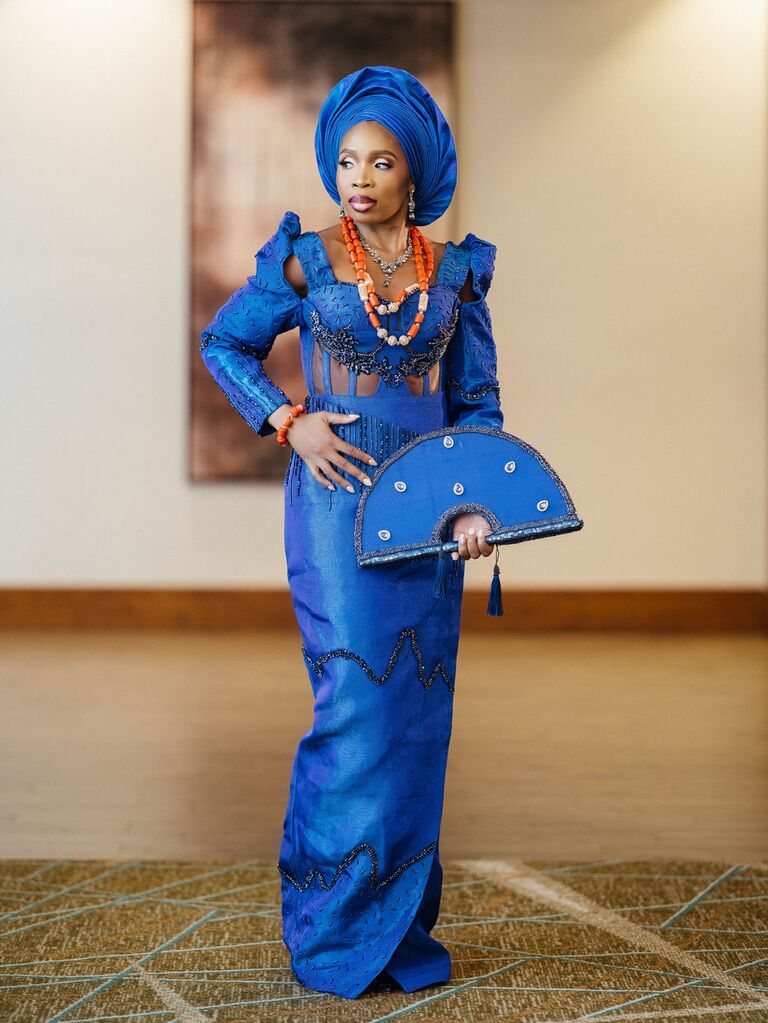
Photo: Samantha Clarke Photography
Rather than the traditional three-piece set, modern Yoruba brides often opt for one long dress, but still use the symbolic fabric. "For a more modern bride, she will use either aso oke or lace to create a floor-length dress in a style of her choice," Esiemokhaie says. "The bride also wears a gele and, for the traditional wedding, a veil is worn by the bride when she enters."
Hausa-Fulani Wedding Dress
"Hausa-Fulani brides favor modest, refined attire," Akinseye says. "They often wear long kaftans or abayas in luxurious fabrics with delicate embroidery. The silhouette is elegant, with long sleeves and high necklines, paired with a matching headscarf or veil." The Hausa-Fulani subculture is primarily muslim, so the bridal headscarf may be similar to a hijab in Islamic tradition. As for accessories, "jewelry tends to be minimal yet elegant, enhancing the bride's graceful appearance," Akinseye says. "A defining [element] is the intricate henna artwork applied to the bride's hands and feet days before the wedding."
White Wedding Dress
If the couple is also having a Western celebration after the traditional wedding, the bride might opt for a white wedding gown. While there are no strict specifications for this look, many Nigerian brides choose to blend their heritage and style. "A [white] look is often a statement gown: glamorous, elegant and sometimes dramatic," Akinseye says. "Brides might personalize their Western look with elements like aso oke sashes, African lace detailing or beaded accessories that nod to their roots." A Nigerian bride might also look to Nigerian designers, such as Esé Azenabor, whose statement styles are stunners for the white wedding. But there are no real requirements, and brides are welcome to follow wedding dress trends. "Brides typically choose a style that reflects their personal style," Esiemokhaie says. "The reception allows greater flexibility, and many brides opt for modern or glamorous looks that may reveal more skin."
Where to Buy Nigerian-Style Wedding Dresses
Many Nigerian-style wedding dresses are custom-designed, with designers, brides and their families working together on a vision that aligns with the culture, color palette and modesty levels of each individual wedding. Below, Esiemokhaie and Akinseye tap some of their favorites for custom and ready-to-wear pieces.
Kess Designs: This New York-based custom designer is a favorite of Esiemokhaie's. It offers some sparkly gowns online (looking at you, wedding guests!), but for bridal, customers can book a consultation to go all in on the custom process. If you're looking for one place to get both the Nigerian traditional bride dress and the white wedding dress, Kess does it all.
House of Deola: "Custom designer Deola Sagoe is a pioneer in Nigerian luxury fashion, fusing heritage with couture," Akinseye says. She specializes in Nigerian bridal attire, and also dresses bridesmaids and mothers of the bride and groom.
Fabriq Star: This Atlanta shop sells traditional fabrics like aso oke and lace, as well as aso-ebi fabric packages, and offers some ready-to-wear styles great for wedding guests. Brides can work with designer Ugo Oruada on custom Nigerian bridal attire.
Bimms24: This online retailer is "a popular source for Yoruba aso oke, gele and embellished sets," Akinseye notes. Based in Nigeria, the designer is also an expert in groom's attire and accessories, like the hand fan often carried by brides.
Etsy: For ready-to-wear pieces, take to Etsy. Sellers like Abuja-based Afri Luxe Boutique and highly rated African Ensembles offer Nigerian bridal attire in authentic isi-agu fabric, plus accessories, matching groom's attire, modern takes on tradition and more.


