

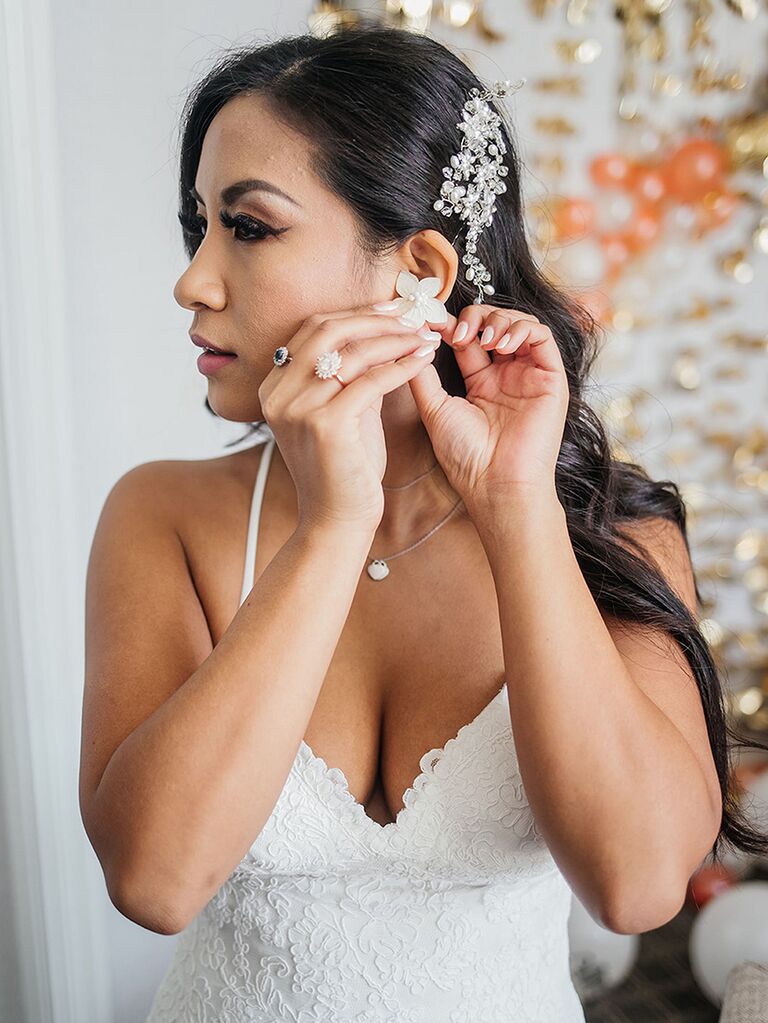
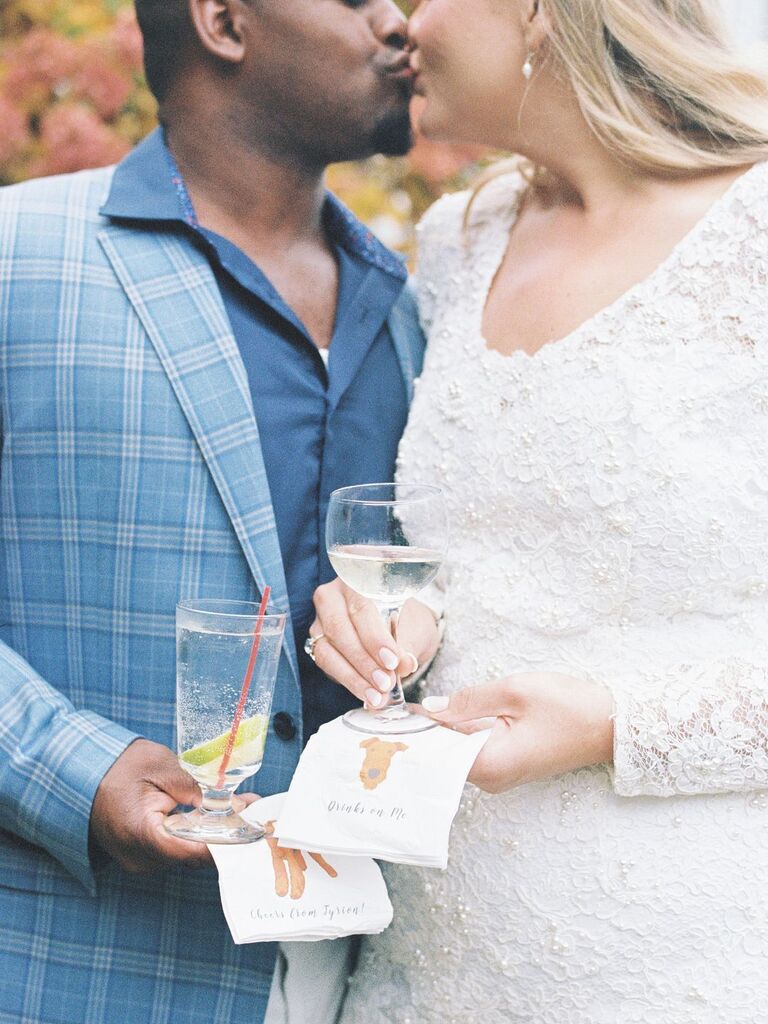
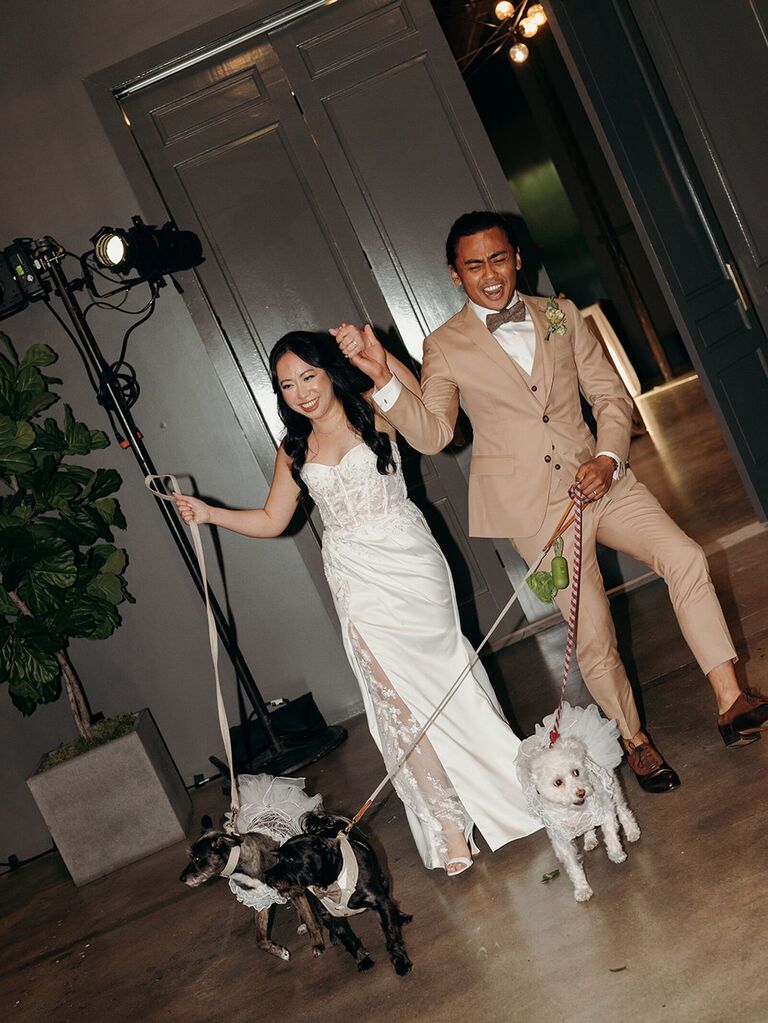


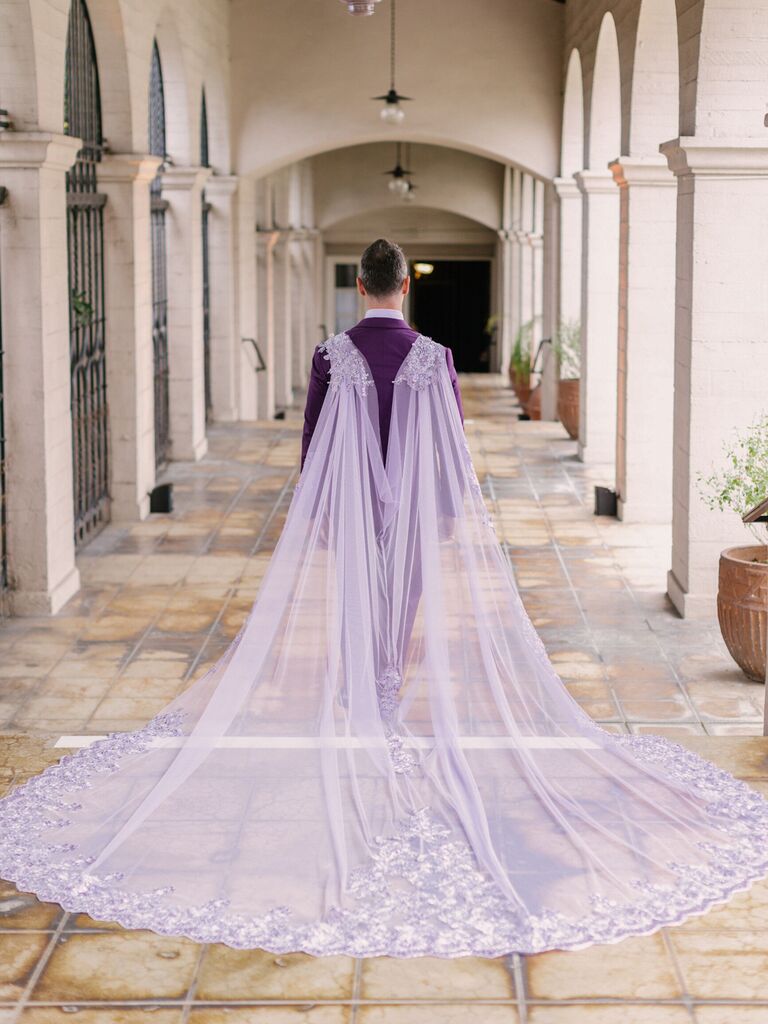


These dazzling duos are the definition of relationship goals.
Updated Jan 21, 2025What Is Lace and What Types of Lace Should Brides Know?
Here’s what you need to know before shopping for a wedding dress.

Photo: Getty

There are so many types of lace that are essential to wedding fashion. "Lace has a romantic, timeless quality that feels intrinsically bridal," says wedding dress designer Claire Pettibone. "It's almost like painting in cloth," she explains. In the same way that there are endless opportunities to combine paint colors, there are so many types of lace that can be mixed and matched to create looks for each unique bridal style. You have the dainty, elegant whisper of Chantilly lace, the bold, dramatic look of Alençon lace, and countless styles in between. "These pieces often become the centerpiece of our most intricate gowns," says Ilona Shramko, designer and founder of WONÁ Concept.
Shopping for a lace wedding dress means being confronted with innumerable options, each one more ornate than the last. Whether you're hoping to achieve a timeless bridal look or a laid-back boho vibe, understanding the different types of wedding dress lace is key to narrowing down the dress of your dreams. Below, we'll dive deeper into the world of lace wedding dress fabrics and break down some of the most common ones used in bridal gowns.
Psst: Once you've determined which type of lace you want in your wedding gown, you'll be ready to book an appointment at your local bridal salon using The Knot Vendor Marketplace.
In this article: What Is Lace? | Types of Lace | Bridal Lace Inspiration
What Is Lace?
Lace is a delicate fabric that features an open, web-like design. It is commonly used in wedding gowns and other bridal accessories. Lace-making dates back to 16th century Europe, when artisans began experimenting with different stitching techniques using silk thread. So, what is lace made of exactly? "Today, couture laces are often made from cotton or rayon blends, with nylon or polyester added for strength and flexibility," explains Pettibone. "Pure silk lace is rare now, as it's extremely fragile, but the same level of artistry remains."
FEATURED VIDEO FROM THE KNOT
"Lace can be machine-made, but the most exquisite pieces are handwoven or produced by traditional ateliers," says Shramko. Said ateliers, for the most part, exist in the very same regions where lace-making originated centuries ago. "The origin of particular types of lace still carries great significance—French and Italian lace is recognized worldwide for its heritage, quality, and artistry, and many brides value this tradition," she explains. This tradition has led Europe to become an integral part of the history of wedding dresses as well as the wedding fashion supply chain.
According to Pettibone, "most fine lace is created on Leavers looms, first invented in 1813 and later refined in the mid-1800s with Jacquard punch cards (an early form of computer programming). Each loom carries 12,000-50,000 individual threads woven into motifs and sheer backgrounds with depth and texture. Raschel machines, a modern alternative, produce lace more quickly and affordably, but Leavers lace remains the standard for couture because of its unmatched complexity and refinement."
6 Types of Lace to Know
"Names like Chantilly, Alençon, and Venise carry history and tradition, but today those terms are less about geography and more about technique," says Pettibone. Every atelier throughout the world uses a different technique to create lace, so naturally, the end results vary (in more ways than just ivory vs. white). Below are a few of the different types of lace you might encounter while trying on wedding dresses.

Photos: Getty,Design: Ashley Detmering
Chantilly Lace
Chantilly lace is one of the most common types of lace fabrics used in wedding gowns. It's known for its delicate, sheer appearance, which typically features an intricate floral pattern. It's incredibly lightweight, making it ideal for use on wedding gowns. Chantilly lace was first introduced during the 17th century in the city of Chantilly, France. During this time, it was made exclusively from ultra-fine strands of silk. Production has since spread to other parts of France, as well as Belgium, and you can now find Chantilly lace made from linen and synthetic materials, in addition to silk.
FOR YOU
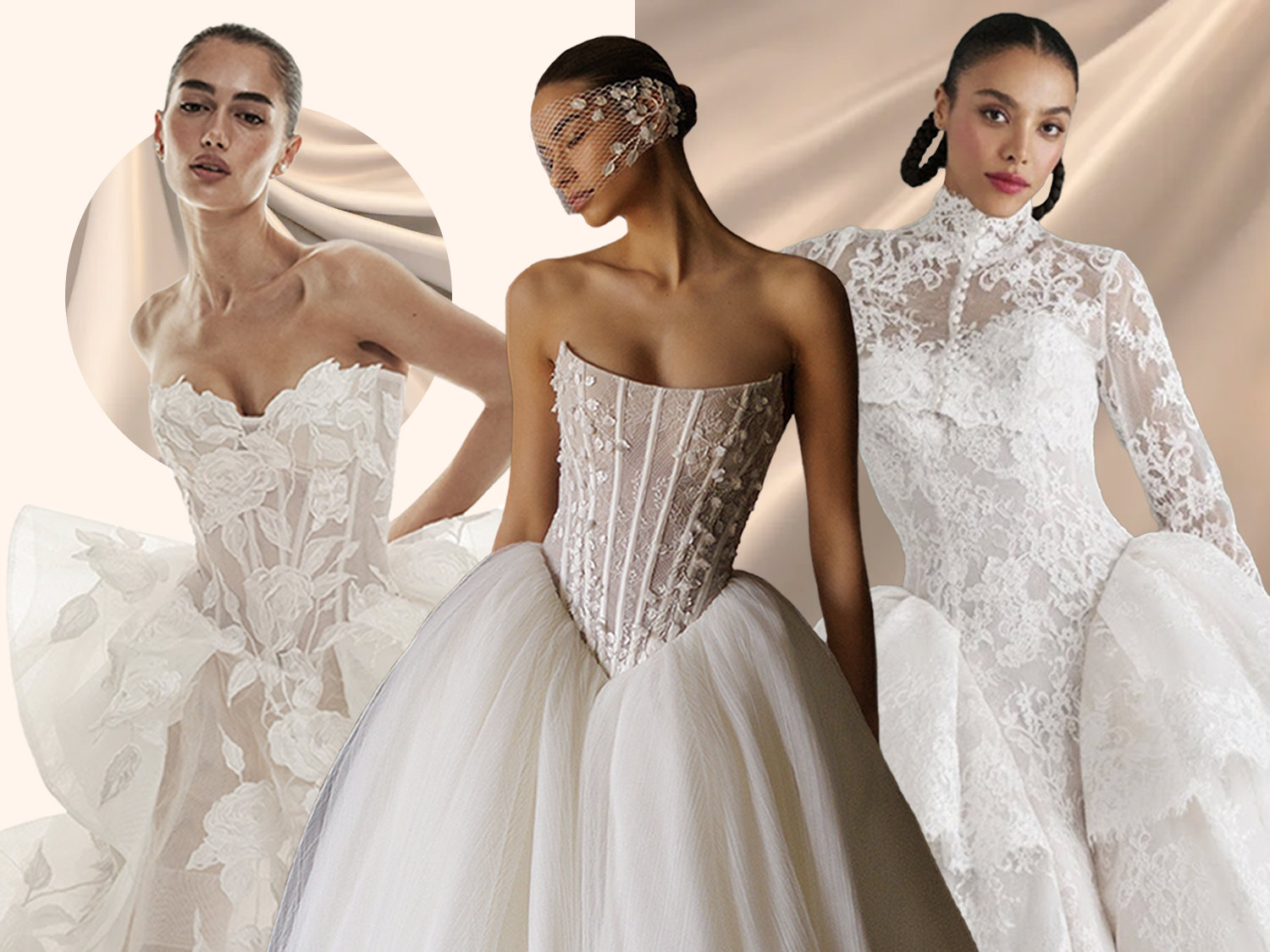
20 Viral Basque Waist Wedding Dresses to Shop Now
Get the latest scoop, and shop our top picks.
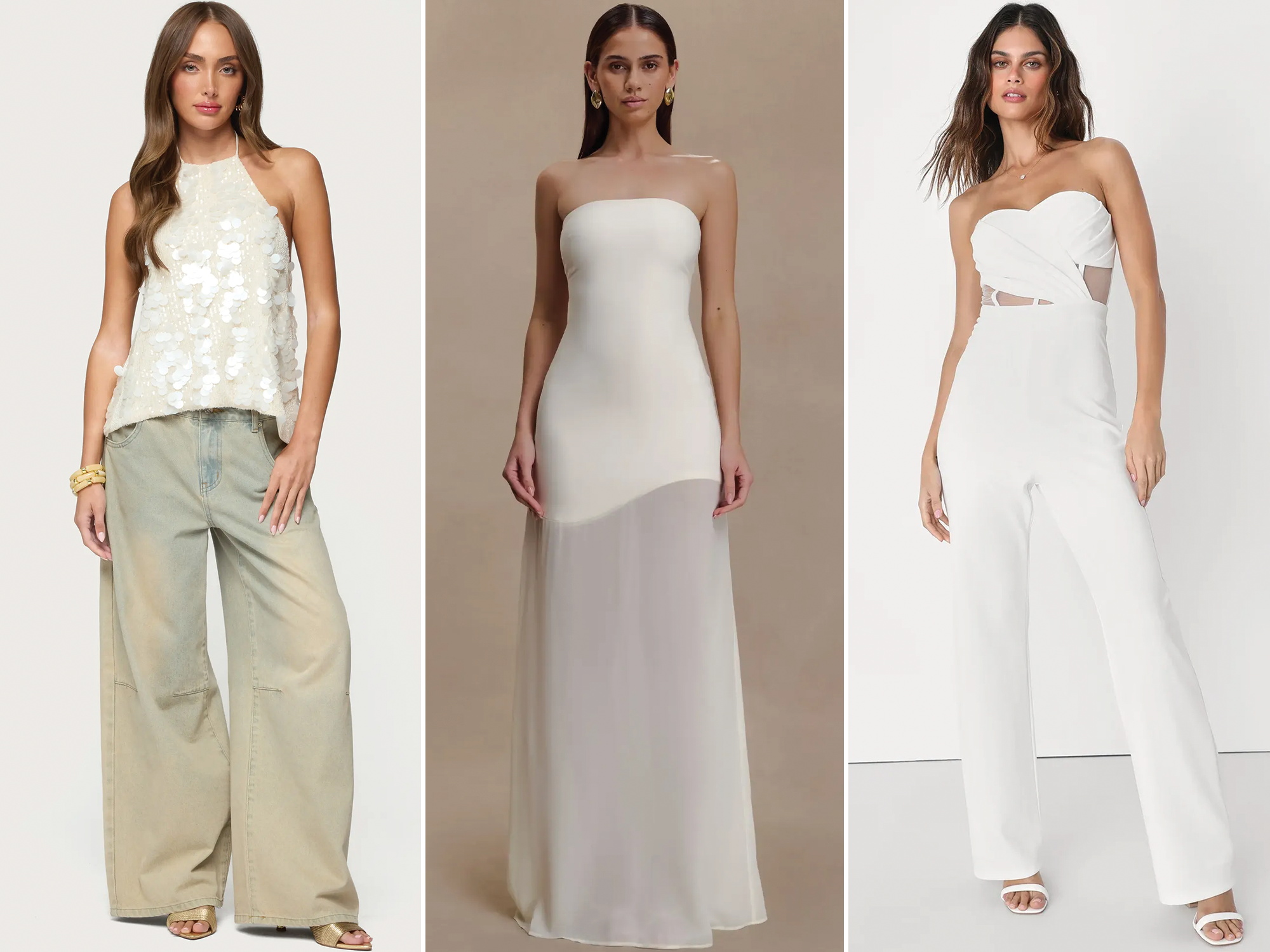
These Are the Best Bachelorette Outfits for the Bride
From sparkly going-out dresses to sets for shopping and brunching, our list has you covered.
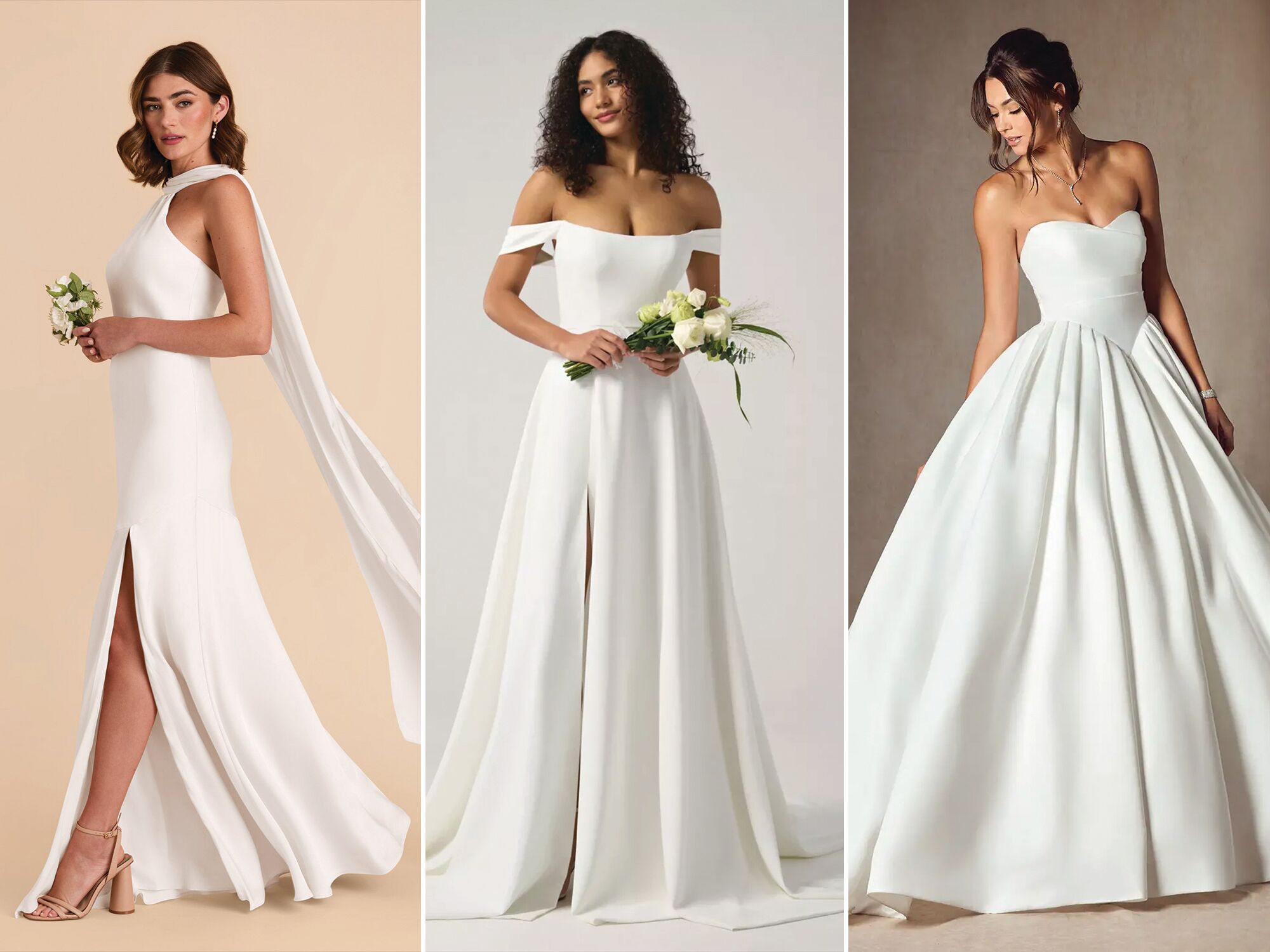
30 Inexpensive Bridal Gowns to Shop Now
You won’t believe us when we tell you the price tag on these stylish looks.
Lace vibe: Classic

Photo: Getty
Alençon Lace
Alençon lace, also known as alencon lace (without accent marks), or "Queen of Lace", is another type of fabric lace that is commonly used in vintage style wedding dresses. It features bold, opaque floral designs atop a sheer mesh background. The innovative technique used to make Alençon lace gives it a 3-dimensional look, similar to that of a floral appliqué. Because this process can be extremely labor-intensive, Alençon lace is one of the most expensive lace types, and is used almost exclusively in evening gowns and wedding attire. Since the 16th century, Alençon, France has remained the primary center of production for its namesake style of lace.
Lace vibe: Vintage

Photo: Getty
Venetian Lace
Venetian lace, or "Point de Venise", is a type of bridal lace from the island of Burano in Venice, Italy. Throughout the 17th and 18th centuries, it was seen as a symbol of status and wealth throughout Europe. Today, it is commonly used in wedding gowns and other accessories, like mantilla veils. Like Alençon lace, Venetian lace has raised scroll and flower patterns worked in relief. What differentiates the two, however, is that Venetian lace features open netting instead of a mesh background. Because of this, it is often layered over thicker fabrics, like crepe, on wedding gowns.
Lace vibe: Regal

Photo: Getty
Embroidered Lace
Embroidered lace is a type of lace fabric for dresses that is created when a decorative design is stitched directly onto a sheer base of tulle or mesh. It's often made by hand, allowing for virtually endless design options. Wedding gown embellishments, such as beads or sequins can also be worked directly into embroidered lace. While its origins are debated, embroidered lace is currently made in several regions throughout the world, including China, France, Italy and Switzerland, making it an important part of cultural fashion worldwide.
Lace vibe: Whimsical

Photo: Getty
Eyelet Lace
Eyelet lace is a type of fabric produced worldwide that has small holes or "eyelets" which come together to form a geometric or floral pattern. It combines the processes of cutwork and stitching to create a look that's distinct from other types of lace. The holes can either be cut out of the fabric, or burnt out using a laser (which is why eyelet lace is sometimes referred to as "laser-cut" fabric). Eyelet lace is usually made from cotton, so the combination of its lightweight feel and breathable holes makes it ideal for summer dresses, including beach bridal gowns.
Lace vibe: Beachy

Photo: Getty
Crochet Lace
Crochet lace is a type of fabric that is made by hand using a hook and thread. Similar to Venetian lace, it has a more airy, open design, so it is often layered over an opaque fabric when used in wedding gowns. Because this type of lace is made by hand, no two dresses that feature it are exactly alike. Their distinct motifs are what makes them beloved by bohemian brides.
Lace vibe: Boho

Photo: Getty
Bridal Lace Inspiration for Gowns, Veils & More
Wondering whether a lace wedding dress is right for you? Check out the examples below of different types of lace worn by real brides. If you see a style that catches your eye, you can simply click the heart in the top right corner to save it to your Favorites folder on The Knot App. Then, when you go wedding dress shopping, you can pull them up as examples to show your stylist.
Eyelet Lace Wedding Dress
Venetian Lace Wedding Dress With Long Sleeves

Photo: Our Story Creative
Chantilly Lace Wedding Dress
Embroidered Lace Wedding Dress
Alençon Lace Wedding Dress
Satin Wedding Dress With Lace Underlay
Black and White Lace Wedding Dresses
Chantilly Lace Bridal Shawl
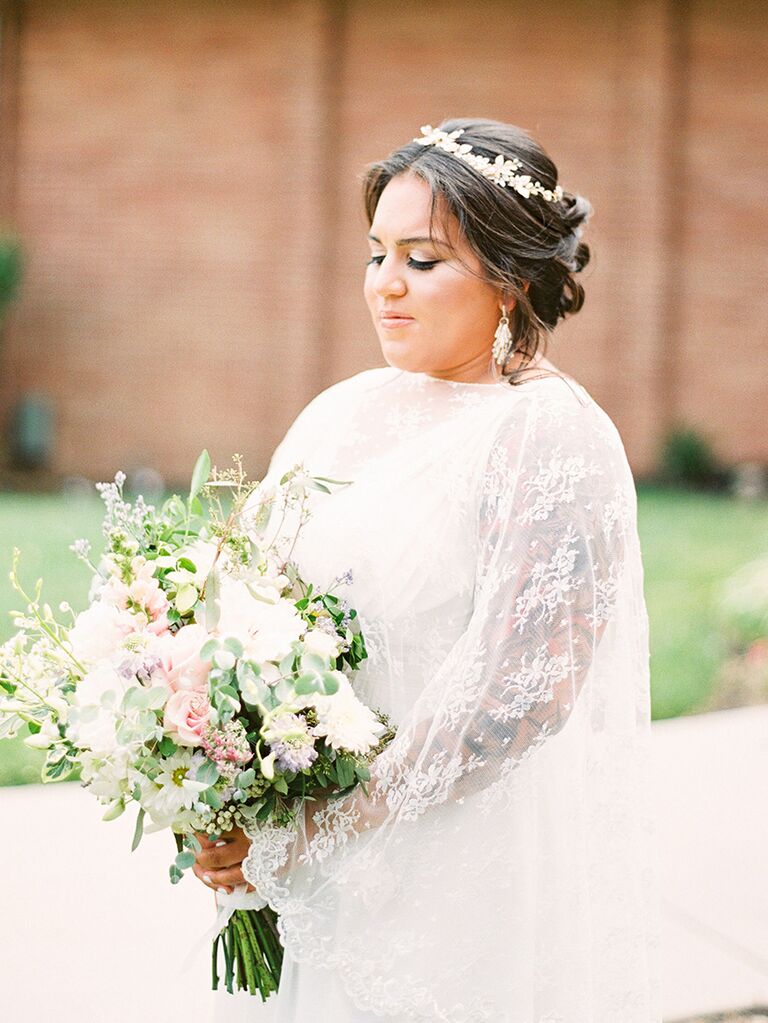
Photo: Maria Azcona Photography


