


Spice things up with these steamy flicks.
Updated Oct 14, 2024The Lowdown on Making a Seating Arrangement for Your Wedding
Get butts in seats—the right way.

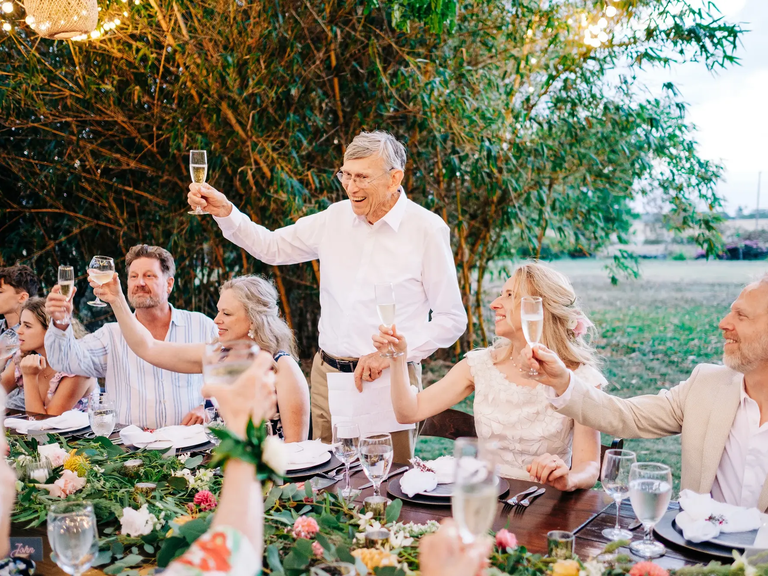
Photo: Nikki Daskalakis

Your parents are divorced, your last unattached friend is anti "singles" table and your bestie from summer camp doesn't know any other guests. Now what? It's time to make seating arrangements for your wedding. Maybe it seems too formal to you, or perhaps you just love the idea of folks selecting where to sit themselves. But in our experience, a seating chart is a must for weddings above 50 or so guests and a good idea for smaller events—it'll make things go a lot smoother. With a little tact, diplomacy and the expert-backed tips on wedding seating chart etiquette below, you won't have guests wishing for a round of musical chairs. Find out all the dos and don'ts of making your wedding seating arrangements (and when you can ditch them) below.
In this article: Wedding Seating Arrangement Chart Etiquette | Seating Arrangement How-to Guide | Seating Arrangement FAQ
What Are the Seating Arrangements at a Wedding?
Trying to figure out where to put all of your guests? We've got the answers to all of your wedding seating arrangement etiquette questions. BTW: You should add this wedding seating arrangement template to Your Favorites. Just click the heart in the top-right corner, then refer back to it whenever you need.
The Head Table
Before we settle on a wedding head table seating arrangement, let's define it: Planners often reference head tables, estate (or king's) tables and sweetheart tables, all of which are different, but can serve as table one, depending on your needs.
The newlyweds may sit at a long rectangular head table or round table at the focal point of the room or, alternatively, at a two-person sweetheart table—the choice is yours. "There's no right or wrong, and the decision often comes down to your unique personality and the feel you are going for at your reception," says Karese DeHaan of Detailed Floral Design in Temecula, California. "A head table generally seats the couple, their wedding party and often the wedding party's S.O.s. This can create a more energetic and fun atmosphere as the large group interacts. A sweetheart table will create a more romantic feel and designate a little time alone. This allows the wedding party to be with other guests they know and are closest to."
FEATURED VIDEO FROM THE KNOT
Classically, the groom sits to the bride's right and the best man sits to her left. The maid of honor sits to the groom's right. Depending on how large the table is, the other attendants can also be seated near the couple. Back in the day, spouses and significant others were relegated to different tables, but this tradition is now generally ignored. If you can only fit the honor attendants along with their dates at your table, do so. Seat remaining wedding party attendants and their plus-ones at another table.
"A head table can really be constructed in whatever way makes the most sense for the couple and who they want to sit with," says Jamie Chang of California-based Passport to Joy. "Table one could be the couple and their wedding party and their plus-ones, it could be the couple and their family or parents. There is no right or wrong way to construct the head table as long as it's created with everyone's enjoyment in mind."
Family Tables
The parents of the couple often sit opposite each other at a large family table, with grandparents, the officiant and other close friends. Another wedding reception seating arrangement idea is for the parents to head their own tables, with their close family members and friends. In the case of wedding seating arrangements for divorced parents, each parent may also host their own table, smoothly diffusing any awkwardness or discomfort.
The Rest of Your Guests
As for the rest of your wedding guests, should you put friends together or seat them with people they haven't met? While it may seem like a great idea to mix in a few new faces at each table (and it's totally okay to do so sparingly), remember that people are most comfortable when they know some of their dinner companions. Ashley Thompson of Ashley Creative Events in Las Vegas, Nevada, suggests to-be-weds "group your guest list in ways that will maximize the fun they have at the wedding! For instance, designate a table of college friends or work friends."
As you seat your guests, simply be considerate—there's no set protocol in this day and age for seating arrangements at a wedding reception. Don't seat couples across the table and separate them with an obstructive centerpiece. Not even your most gregarious friends will want to sit at a table full of strangers, so put acquaintances together when you can. If you have guests who don't know anyone, seat them near guests with similar interests. If you have a group of friends that can't fit at one table, split them down the middle and fill in each table with other guests. Whatever you do, don't leave one member of the crew out. And if you have no idea what to do with your parents' friends, let your parents and future in-laws arrange those tables. They'll be thrilled to be involved and this may keep them from trying to control the rest of your seating plan.
How to Make a Wedding Seating Arrangement Chart

Design: Natalie Romine
How to seat people at a wedding reception comes down to relationships and your venue's layout. If your wedding is going to reunite your college friend group, seat them together so they can catch up. If a friend is attending alone and won't know many people, put them at a table with strong conversationalists who will make them feel comfortable.
As she planned her own wedding, Leah Weinberg of Color Pop Events in NYC shares:"As soon as I sent out my invites, I started grouping guests into tentative tables and thinking of what groups folks would naturally fall in—my mom's family, my dad's family, work friends, college friends, family friends, etc. Then, as RSVPs came in, I was able to make modifications. But I had the bulk of the work done about two months before the day, so that made it a much less stressful task once I did have my final numbers."
Now that you're familiar with how to make seating arrangements for a wedding and the etiquette that goes with it, it's time to get going on making your wedding seating chart. Follow these steps:
FOR YOU

Your Guide to How Many People to Invite to a Wedding
Your perfect guest count is waiting at the end of this article.

Which Wedding Website Builder Is Right For You?
Compare the pros and cons of the most popular options on the market.
Your Wedding Website FAQ Page Should Look Like This
Here’s how to ensure your guests have all the info.
1. Get Started ASAP
"Don't procrastinate in preparing your seating chart," Natalie Good of A Good Affair in Tustin, California. "Often, this is where the drama comes out within families, so it's best to work on it early and hear your parents' requests so you have time to come to an agreement without the pressure of a deadline."
2. Check Out Your Venue's Floor Plan
Before creating your seating plan, it's a good idea to obtain the floor plan and make several copies. This way, you can experiment with different types of wedding seating arrangements before making your final decision. For example, older guests should not be seated too close to the music. Guests in wheelchairs or with other movement concerns should have clear and easy access to both the dance floor and the exit (and have their chairs removed in advance). Also, account for the needs of any differently-abled guests with sensory issues. Immediate family and wedding party members should be seated closest to the dance floor, as they'll need to easily participate in toasts, speeches, special dances and more.
Simultaneously, you should connect with your planner about the shapes of tables, their locations and the number of guests seated at each.
3. Consult The Knot Guest List Tool
The Knot Guest List Tool is your best bet when it comes to viewing a comprehensive list of your guests (and seeing who has RSVPed). Once this info is at your fingertips, you can start dividing attendees into categories to easily craft the seating arrangement for your wedding.
4. Divvy Up Your Guests
Start with the easy folks: yourselves, your wedding party and their dates, and your immediate family. Then move on to organizing guests into groups and clusters: extended family, college friends, childhood friends, adult-life friends, etc. These are flexible and should be unique to you as a couple (and might differ, depending on how much of a friend group you share).
If there are a few people who are hard to categorize, come back to them later once you see where you have space. Then, consider the personalities and potential common threads these guests could have with other tables and categorize them accordingly. Next, spatially place each complete table grouping, keeping in mind any special guest accommodations. Tip: Use a pencil and write lightly to make changes easily.
5. Stay Flexible
When in doubt, trust your instincts. And no matter how perfect your final seating plan seems, you'll undoubtedly receive at least one last-minute phone call begging you to change something to make a guest happy. Try to be accommodating, but don't let it stress you out. Chances are, after dinner, everyone will get up and mingle anyway.
Wedding Seat Chart Etiquette Frequently Asked Questions
From wedding seating arrangement ideas, to where to put single friends, to how to list names, we're going into even more detail below. Once you're through reading, you'll have all the tools to create a wedding escort card display that guides guests to a seat that suits them.
Do We Need a Seating Chart at a Wedding?
If the notion of traditional wedding seating arrangements still doesn't appeal to you, you could at least choose to designate who sits at the head table with wedding place cards and allow the other guests to seat themselves. Some couples opt to have a cocktail party or buffet with a few tables, so guests can alternate sitting and eating with sipping and mingling. If this is your plan, make sure your elderly guests have a place to rest, possibly even by designating a separate table for them using cards displayed in place card holders. Bottom line: We always recommend having a seating chart to avoid any wedding reception seating arrangement nightmares—it's easier for everyone in the long run.
What Size Should a Wedding Seating Chart Be?
You don't need massive architect-sized paper to compose your wedding reception seating arrangement chart—notebook-sized paper will do. And when it comes to how big a wedding seating chart should be when it's displayed on the day, your final escort card display or table assignment display can sit on the floor and stand five-feet tall like a special decor installation, or simply take shape as a three-foot-wide canvas resting on a table in a stand.
How Do We List Guests on a Seating Chart for a Wedding?
You can list guests on your wedding seating chart either alphabetically (with the table number noted next to each person's name) or by table, then alphabetically. You don't have to list wedding party seating arrangements on the seating chart, but you can, as "table one" if you'd like to clarify, for example, to your MOH's girlfriend that she'll be sitting up front with her S.O.
Should Our Wedding Seating Chart Be Alphabetical?
Listing the names on your wedding seating chart in alphabetical order—whether it's in one long list or split by table—makes it easy for guests to find their seats sooner, so while it's not necessarily required, it's recommended, especially for large groups.
Should We Seat All of Our Single Guests at the Same Table?
According to Thompson, "nix the idea of a 'singles' table. You may have been playing matchmaker behind the scenes to see if you could set your old coworker up with your cousin, but this may embarrass your guests or make them feel uncomfortable. Instead, you can sprinkle the singles in with their married or couple friends to give them a sense of comfort."
Where Should We Seat Young Children?
If young ones will be attending the wedding, a kids table is a good idea, so long as it's located near where the children's parents will be dining. Consider placing some coloring books and other activities at the kids table to keep youngsters entertained.
What Are Place Cards, Escort Cards and Seating Charts? Do We Need All Three?
You've got options when it comes to guiding guests to their seats. Place cards await guests at each table, designating their specific spots. They can be anything from a simple tented card to a tree leaf with gold calligraphy. Escort cards, on the other hand, are displayed near the entrance of the reception in alphabetical order. They usually include each guest's name and table number. Once at the table, guests usually select their own seats and mark them with the card.
Usually displayed alphabetically or by table in a pretty frame near the entrance of the reception, seating charts list your guests' names with their designated tables. Additionally, place cards may be used at each table to designate assigned seats, if you wish.
Additional reporting by Kim Forrest and Shyla Watson.


