


"I like it when people say, 'How did it last so long?' I say, 'It's still going."
Updated Mar 04, 2025From This Day Forward: A Look Into the Future of Weddings
Experts explore how nuptials may evolve in the next 30 years and onward.

COUPLE: STOCKSY; PEARL ILLUSTRATIONS: MARIANA RODRIGUES; ALL OTHER IMAGES: GETTY. COLLAGE BY TIANA CRISPINO

You know how the saying goes: "Something old, something new, something borrowed, something blue." Weddings are steeped in tradition, but we've also seen immense change over the last three decades. The next 30 years promise even more: more innovation, more intention, more creativity. Yet even as technology evolves, traditions change and trends fluctuate, the driving force behind the pomp and circumstance—love—will always endure. Here, we asked industry experts to explore what the future of weddings may look like, as well as what will likely never change.
Meet the Experts:
- Melissa Andre is the founder of Melissa Andre Design Co., a celebrity-and-influencer- trusted event-planning company based in New York, Miami, Los Angeles and London. Her clientele includes Victoria Beckham and Drake.
- Jennifer Bernal is the founder of House of Bernal, a maximalist floral-design com- pany in New York's Hudson Valley. She was named one of The Knot Ones to Watch honorees in 2025.
- Laura Held is the owner of Ida Rose Events, a luxury event-planning and design company based in Washington, DC. She has worked in event coordination and production since 2009. She planned the viral wed- ding of influencer Jaz Smith and Kevin Callari.
- Jordan Jeanty is the founder of Jordan Jeanty Studios, a boutique wedding film studio based in Dallas. He was named one of The Knot Ones to Watch honorees in 2023.
- Jamie Simon is the director and head of events for Banana Split, a London- based luxury event-planning company that opened in 1976. Its past clients include Sofia Richie and Elliot Grainge.
The Future of the Wedding Industry
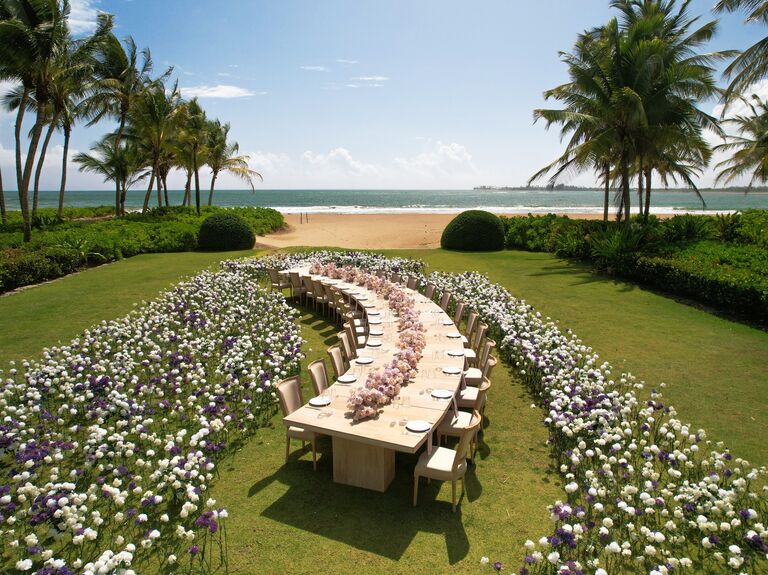
Photo: Courtesy of MadCo. Studio
Every event will depict a story.
In years past, many couples likely started their wedding planning by identifying a theme, like "classic," "glam," or "rustic boho." Eventually, these themes evolved into aesthetics, and in this decade aesthetics have turned into vibes. Looking ahead, experts say the next wave of event production won't be driven by an arbitrary word or phrase at all, but rather by each couple's unique story.
"If you try to force a narrative on something, it's not authentic," says planner Jamie Simon. "We spend time with our couples to understand what they're about. That sets the influence, and that's what makes events unique." During an era when exposure to ideas and inspiration is endless, the key to originality, he says, lies in each couple's individuality: "When people say, 'I want to do something that no one's ever done before,' we can do that, because your story is yours."
FEATURED VIDEO FROM THE KNOT
The beauty of storytelling through event production is that there are no guardrails or hard rules to follow. A wedding's story can begin with anecdotes from the couple's romance, memories from their first date, inspiration from their favorite movie or influences from their culture. Simon cites a client who had a lifelong adoration of Alice in Wonderland. To honor that, performers portraying eight versions of "Alice" welcomed guests to the reception, which also had a menu inspired by the childhood fairy tale.
Similarly, Laura Held planned a wedding for a Phantom of the Opera enthusiast complete with gothic candelabras, decor in hues of red and burgundy, and opaque white drapes that served as the backdrop for a projection of the bride's grandparents' wedding video on Super 8 film. These genres of highly stylized weddings are projected to become the norm, not the exception, in coming years.
Floral designer Jennifer Bernal says modern couples will have more freedom when it comes to choosing how to tell their story. "Thirty years ago, weddings were often guided by tradition, expectation and a relatively narrow definition of what was considered 'classic,'" she explains. "Today's couples are navigating a very different cultural reality: one shaped by diversity, global influence, social awareness and a desire to feel seen. Storytelling is not just trending, it's becoming the foundation of modern wedding design. Less interested in replication than in reflection, couples want their wedding environment to tell a story about who they are, where they come from and what they value."
Experiential weddings will immerse guests through atmosphere.
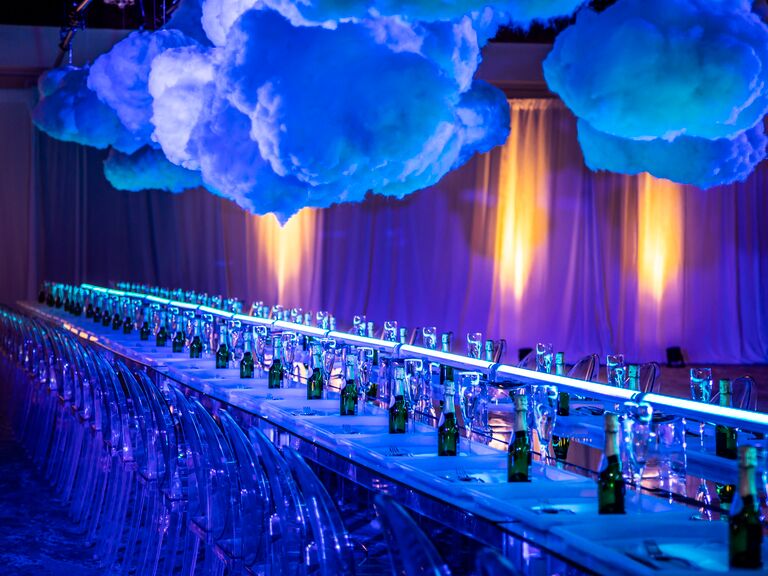
Photo: Courtesy of MadCo. Studio
While "personalization" has been a common wedding buzzword in recent years, the experts report that "immersion" is poised to take its place. "When clients reach out to us now, their inquiries are so different than they were even two years ago," says Held. "We see the words 'guest experience,' 'immersive' and 'fun.' There's a shift in what people are looking for."
But they warn there's a vast difference between an immersive wedding designed solely for shock factor and one created through a savvy-storytelling lens. "An event isn't immersive just because someone is spinning from the ceiling," says Simon. "That's just great cabaret entertainment." Adds Held: "There's a need to be entertained. But you can't entertain just to entertain. It has to have purpose and meaning behind it, or else it can feel inauthentic. Authenticity is going to be more important to weddings as the years go by."
Planner Melissa Andre says that throughout her nearly two-decade tenure in the events business, this shift toward curating a mood rooted in hospitality has been steadily on the rise. "The industry has moved from formulaic, tradition-heavy formats to highly personalized experiences driven by atmosphere and intention," she says.
To achieve authentic celebrations, the very first conversations couples have with their vendors pave the way. "Innovation starts early. We approach weddings much more like creative productions than one-day events," says Bernal. "That means integrating concept development, mood narratives, spatial planning and custom fabrication, rather than relying on preset decor formulas."
And she predicts clients will continue to gravitate toward decor that exudes personality and meaning: "I'm seeing a strong shift to immersive environments, like floral installations that wrap guests in the experience, rather than decorating isolated moments. There's also a move toward intentional maximalism: bold scale, layered textures, sculptural florals and color stories that feel expressive rather than restrained."
Remember, though, that immersive events don't necessarily require lavish decorations or an otherworldly venue. In fact, Held says, immersion has nothing to do with budget; instead it lies in the intention that drives decisions. "It requires a shift in focus on what the priorities are," she says. "Think about what kind of conversation you want to start with your choices."
Technology will enhance collaboration and artistry.
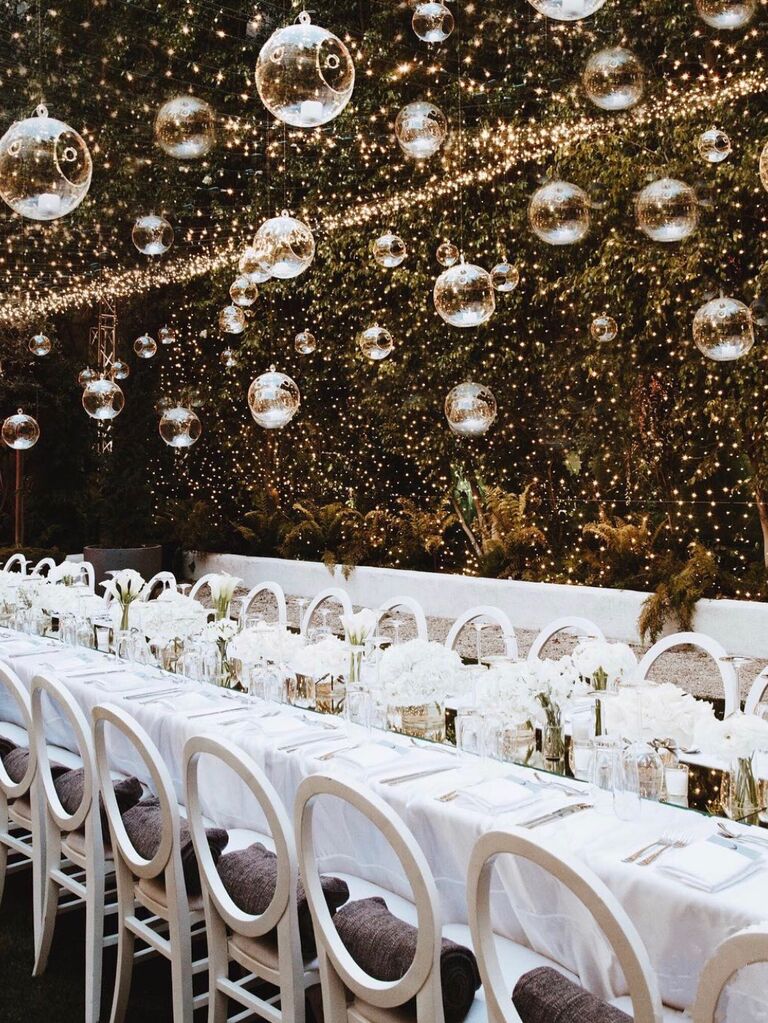
Photo: Courtesy of MadCo. Studio
We can't talk about weddings of the future without acknowledging the impact of technology. Widespread access to the internet and social media reshaped wedding planning in the 2000s, giving couples endless access to inspiration across countless mediums. Per Andre, the landscape we're evolving toward now will allow for even more innovation and creativity.
FOR YOU
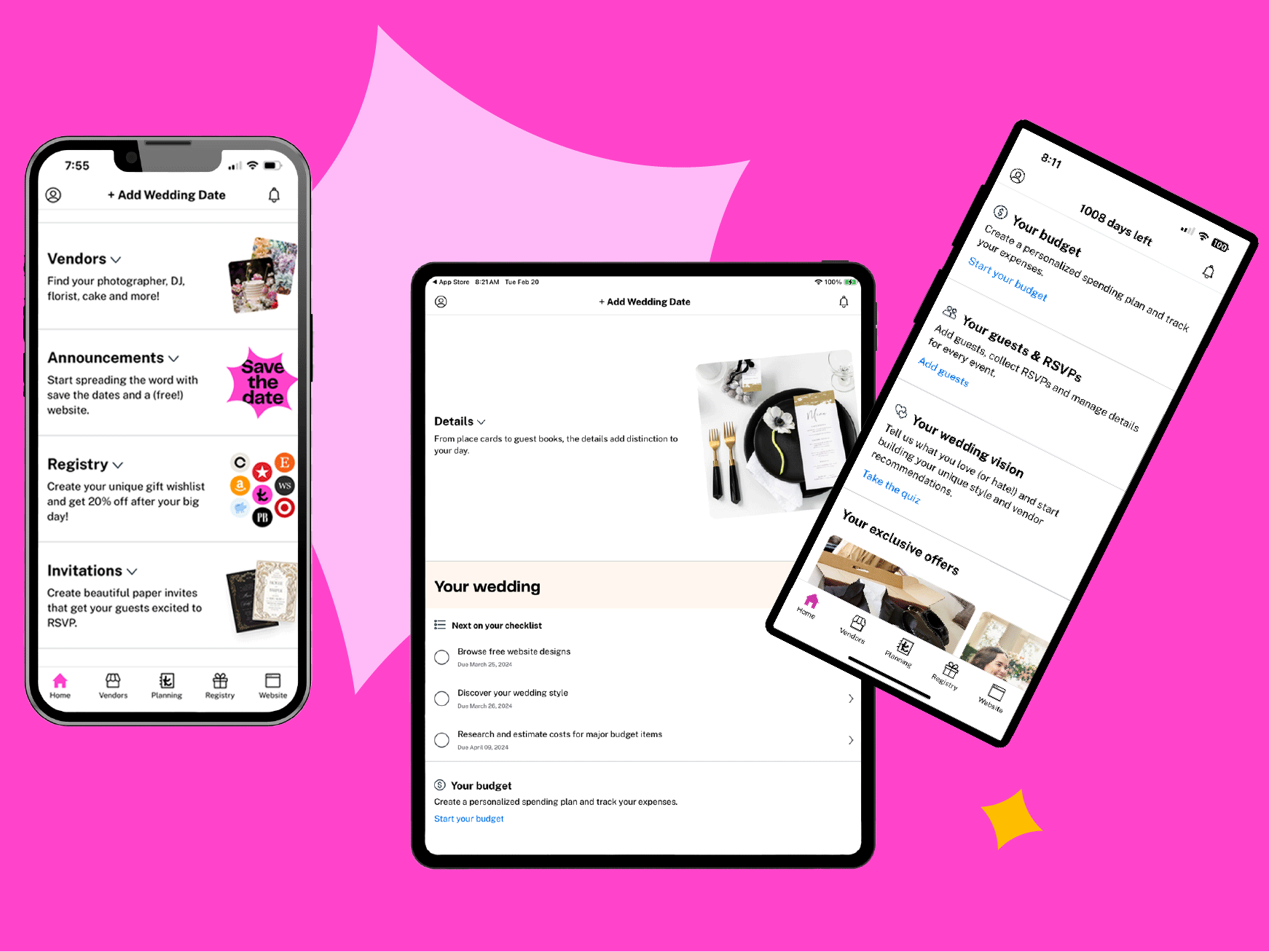
The Knot Wedding Planning App Every Couple Should Have
Get 24/7 help organizing your dream celebration.

Here's What to Do If a Wedding Vendor Cancels
The Knot has your back here, big time.

The Must-Haves for Your Wedding Day Emergency Kit
No stain, rip or smudge is a match for these little day-of heroes.
"Weddings are being informed by a global visual language, with couples pulling references from travel, fashion and design from all over the world, accessed through their social feeds rather than just the weddings they've attended," she says. Couples are also using technology to improve how they work with their vendors. According to The Knot 2026 Real Weddings Study, roughly 36 percent of engaged couples were using AI for wedding planning at the end of last year—a 225% increase in usage compared to 2023. Now, with more comprehensive planning tools and resources at their disposal, such as The Knot's recent integration into ChatGPT, couples can begin the process with a more educated background and time saved than was often the case in the past. "Younger generations are coming to us with more information right off the bat," Held explains. "Before we even have a conversation, we know exactly what they want, or can identify weak points and how we can support them."
Andre suggests that further technological advancements may simplify the minute details of wedding planning, guest care and logistics even more. Bernal concurs, pointing to the potential for new lighting capabilities, soundscapes, interactive storytelling elements and digital keepsakes that will "extend the experience beyond the event."
All that said, the pros agree that tech will never replace the humanity that's integral to wedding planning. "Empathy is our greatest strength when it comes to doing this job," says Held. "AI, technology and social media are helpful, but none of it replaces the value [vendors] provide."
Long-form content will document the complete wedding journey.
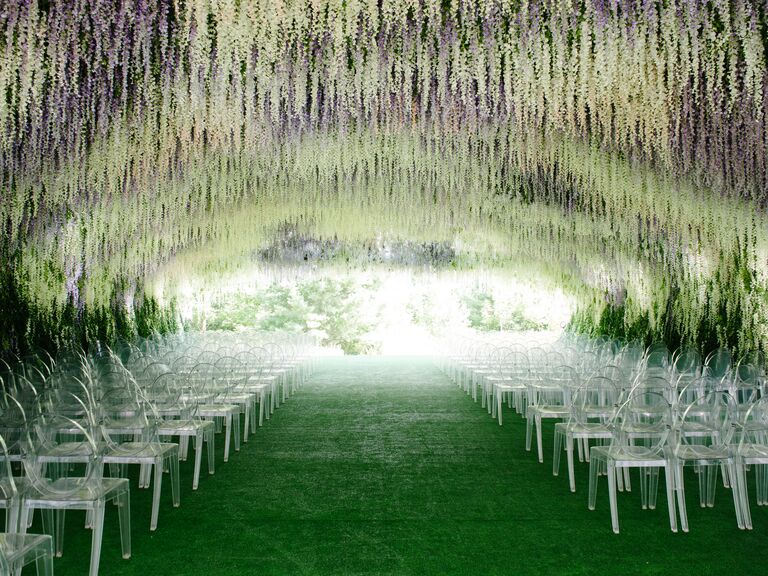
Photo: Courtesy of MadCo. Studio
Your parents may have had a hardcover wedding photo album or a VHS tape of their wedding day, demonstrating that the desire for content has always been there. It's just that the medium has changed. Within the last few years, wedding content creators have been among the fastest-growing vendor categories, serving as an asset to complement photographers and videographers. Apps like Instagram and TikTok have likewise fueled an increase in demand for short-form video material. In addition to digital galleries of wedding images, couples want movie trailers, iPhone footage and trend-worthy clips that can be turned into a digital scrapbook—either to post online or simply to savor in a camera roll.
But while this short, easily digestible style defines the current decade, videographer Jordan Jeanty foresees a preference for feature-length content that captures the entirety of a couple's wedding journey, from the hallmark moments to the smaller candid memories. "I see a move toward longer-format films that blend cinematic storytelling with real, unscripted moments," he says. "While social media has trained many of us to move quickly, younger generations are growing up consuming long-form streaming content."
Like the other experts, he also envisions a demand for wedding assets that feel both immersive and authentic: "Couples will want films that move fluidly between polished, cinematic moments and quieter, human ones where you feel like you're in the room." Many, including Bernal and Andre, also predict that weddings of the future will become longer, multiday affairs. As a result, Jeanty says, the content length will have to match. "The appetite for films that reflect the full scope of the experience has been quietly developing for years, and its moment may be arriving sooner than we think."
Nostalgia will continually cycle back into style.
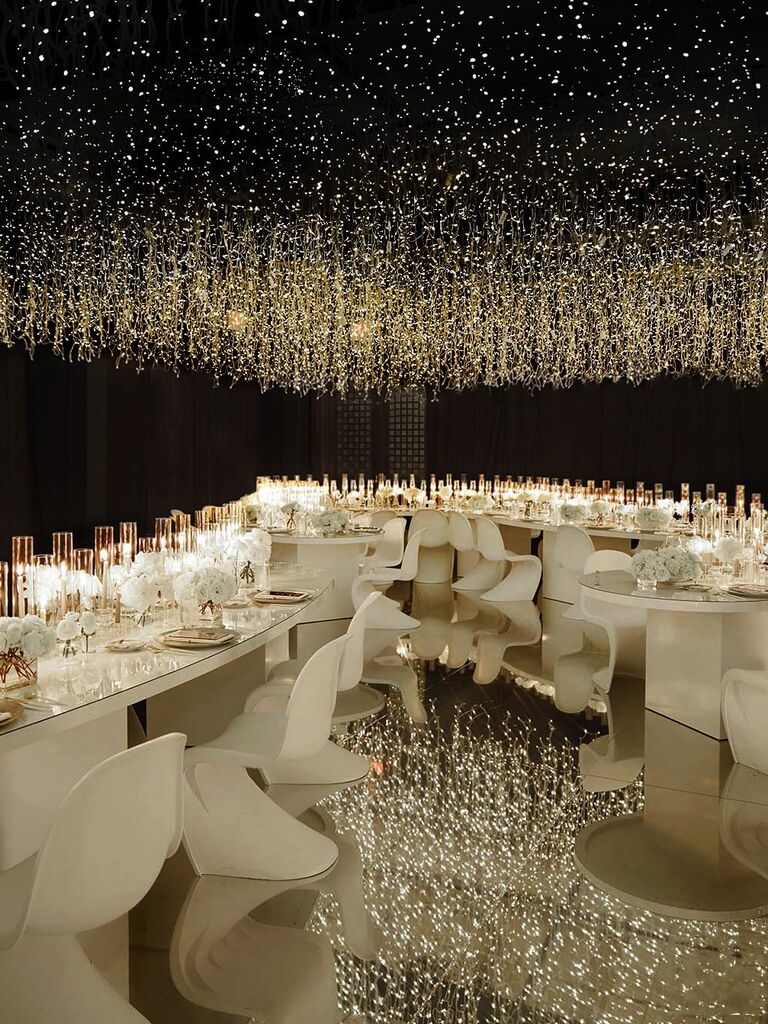
Photo: Courtesy of MadCo. Studio
There's no denying that many weddings to come will be groundbreaking feats of design and technology. But in an era when trend cycles move faster than ever, some couples may simply crave tradition. As we've seen with trends throughout the years, what's old always has the power to become new again. Vintage details that defined previous decades—like film photography and Lambeth wedding cakes—reemerged in the wedding zeitgeist in the 2020s, proving that nostalgia can sometimes outshine modernity. "You don't always need to reinvent the wheel," Simon says. "Some things are beautiful just because they are."
And while weddings of the future may look visually different from those of the past—never-before-seen experiences, weeklong itineraries driven by hospitality, decorative achievements that would never have even been possible in the 1990s—the core meaning will never waver. "Wedding trends come and go, but intention lasts," says Bernal. "When couples make choices rooted in who they are, rather than what they think a wedding should look like, the result is always more powerful, more memorable and more emotionally resonant."
So couples will embrace traditions that resonate while revamping (or completely removing) those that don't. And this sense of empowerment will continue to make nuptials more meaningful than ever before. "Anything done purely out of obligation will continue to fall away," says Andre. "Couples are increasingly thoughtful about what feels authentic to them, and that discernment is reshaping weddings into experiences that feel intentional rather than performative."
After all, a wedding isn't about the spectacle. Colors and decorations and performers and hors d'oeuvres may enhance the experience, but they don't take precedence over the most important detail: celebrating the beginning of a marriage with the people who matter most. "The core of all of this is bringing your nearest and dearest together in the same space to enjoy something together," says Simon.
Future Weddings Predictions
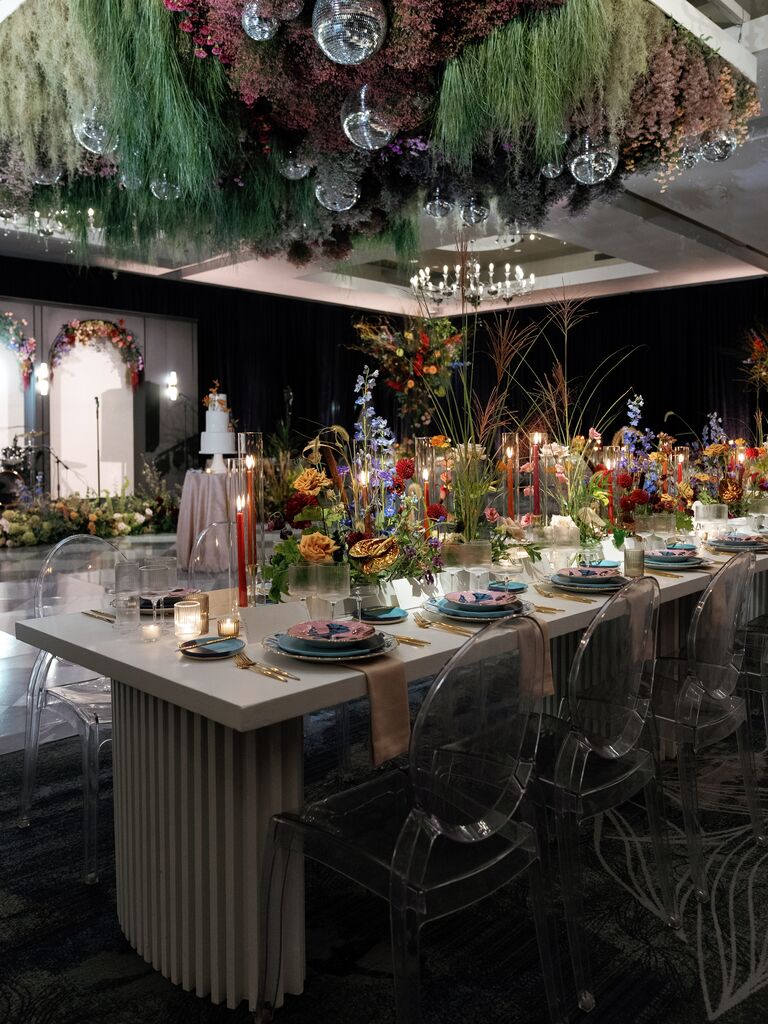
Photo: Nikki Daskalakis
,Photo: Courtesy of Ida Rose Events
While we can't foretell exactly what lies ahead, here's a look at what experts suggest could be in store for the next three decades of nuptials.
Weddings in 2030
"Weddings will feel closer to private club members' experiences or curated retreats than traditional events." —Andre
"Designing immersive experiences for your personality will take the cake." —Held
Weddings in 2040
"Immersive wedding films will blend cinematic storytelling with real, unscripted moments." —Jeanty
Weddings in 2050
"Perhaps we'll have robot waiters. When you ask for your Vesper martini, it'll be there in 30 seconds." —Simon
A version of this article first appeared in The Knot Magazine 30th Anniversary Issue in Spring 2026.


