



Spice things up with these steamy flicks.
Updated Oct 14, 2024An Expert-Backed Guide to the Most Common Wedding Veil Styles and Lengths
Welcome to wedding veil 101.

When it comes to shopping for your dream wedding day outfit, it's easy to neglect the accessories. After all, what's a wedding veil without the perfect gown to pair with it? That said, a great veil can have a huge impact on your bridal look, so having an understanding of the most common wedding veil styles and lengths will be a big help in pulling together your vision. Do you want something minimal and short that lets your dress shine? Something ultra-long, glam and reminiscent of a certain celebrity wedding veil? Or, perhaps a style that meets somewhere in the middle?
To help you figure it out, we're bringing you a guide to the different types of veils in inches, complete with shopping recommendations, expert advice on how to choose the right one and plenty of inspo photos (which you can "favorite" by clicking the heart in the top right corner, then revisit once you find a bridal salon near you). From statement-making cathedral lengths to short and sweet birdcage veils, we're covering it all in the guide below.
FEATURED VIDEO FROM THE KNOT
In this article: Veil Lengths | Short Veils | Midlength Veils | Long Veils | How to Choose
Wedding Veil Lengths Guide
If you thought shopping for wedding dresses was overwhelming, shopping for wedding veils might just make you think otherwise. According to Lucy Purves, founder of The French Wedding Veil, there's one major reason for this. "Veil lengths can be confusing, as naming conventions and measurements vary across brands," she says. That said, there are some ballpark measurements you can keep in mind as you shop in order to visualize what a specific veil may look like with your wedding gown.
Purves says the most popular wedding veil lengths among brides today are fingertip, floor and cathedral. "Each of these veil styles can be made as a single-layer veil, falling behind the head and shoulders, or as a two-layer veil with a shorter front section known as a blusher," she says. But beyond these three classics, you'll likely come across some other common bridal veil lengths. Ahead, we're breaking down the approximate measurements of each one.
Veil Lengths From Shortest to Longest
While the length of specific veil types can vary a few inches depending on the designer and style, the following measurements are great general guidelines to keep in mind while you shop.
- Birdcage veil length: 9"
- Shoulder veil length: 20"
- Elbow veil length: 25"
- Waist veil length: 30"
- Hip veil length: 36"
- Fingertip veil length: 42"
- Waltz veil length: 60"
- Floor veil length: 72"
- Chapel veil length: 90"
- Cathedral veil length: 114"
- Royal veil length: 120" and up
Veil Length Chart
Keep this wedding veil length guide on hand to guide you through the shopping process—just click the "favorite" button in the top right corner for easy access later.

Design: Natalie Romine for The Knot
Short Wedding Veil Styles
If short veils feel a little too vintage or strictly reserved for mini dresses, we're here to report that times have changed. In fact, short wedding veils dominated the recent Bridal Fashion Week runways in more ways than we can count. While they were certainly never out of style, their rise in popularity makes sense. Not only do they pair well with a variety of different wedding hairstyles and dresses, but they're also far easier to wear than weighty cathedral lengths. Whether you're looking for a style you can don all day with ease or simply want your dress to be the center of attention, a short wedding veil style might be just what you need.
1. Birdcage Wedding Veil
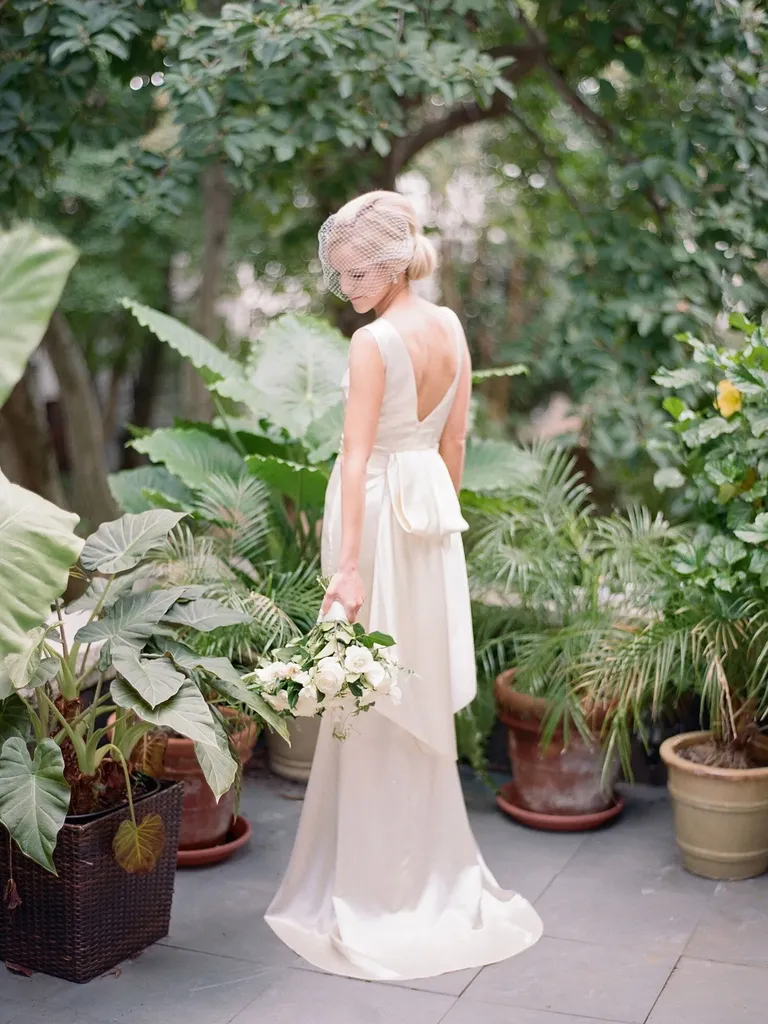
Reminiscent of styles worn in the 1940s and 1950s, the birdcage veil is a short piece of raw-edge netting or tulle that drapes slightly off-center on the side of the head. The super-short veil provides a distinctively retro effect and leaves the lower half of your face uncovered, making it an easily wearable accessory that you won't have to worry about lifting or pushing aside when it's time for the first kiss. Birdcage veils are sometimes attached to a headband or pillbox hat, adding even more charm.
Veil length: 9"
Editor picks:
- Best Headband Birdcage Veil: Jennifer Behr Tori Voilette Headband, $298
- Best Embellished Birdcage Veil: Twigs & Honey Pearl Adorned Birdcage Veil, $200
- Best Simple Birdcage Veil: Harriett Falvey Birdcage Veil, $127
2. Shoulder Wedding Veil
Made with lightweight fabric and a length that just brushes the shoulders, shoulder-length wedding veils (sometimes called flyaway veils) create an effortlessly airy and romantic effect. While a bit less formal than a veil that hits the floor, they still provide a traditional look and are a great option for brides that want a modern veil look or something less fussy. Shoulder veils are also ideal for letting dresses with intricate details truly shine—think busy embroidery and open backs.
Veil length: 20"
Editor picks:
- Best Bow Shoulder Veil: Gigi & Olive Ribbon Bow Veil, $90
- Best Simple Shoulder Veil: Alexandra Grecco Holly Veil, $148
- Best Pearl-Trim Shoulder Veil: BHLDN Mini Pearl-Trim Shoulder Veil, $158
3. Elbow Wedding Veil
As the name implies, these types of veils extend from the crown of your head down to your elbows. The shorter length makes them a great option for showcasing the skirt or train of your wedding dress while covering your shoulders and back. Elbow-length veils are also a good compromise if you like the look of a veil but don't want to risk snagging it or feeling restricted with your movements. Plus, they can keep your wedding veil cost on the lower end while still providing that bridal effect.
Veil length: 25"
Editor picks:
- Best Mantilla Elbow Veil: One Blushing Bride Chantilly Lace Mantilla Wedding Veil, $350
- Best Simple Elbow Veil: Azazie Talia Elbow Length Veil, $29
- Best Bow Elbow Veil: Twigs & Honey Bambi Veil, $268
Midlength Wedding Veil Styles
The sweet spot between short and long wedding veils, medium length veils are some of the most versatile styles. The longer length makes them appropriate for semi-formal and formal weddings, but you won't have to worry about accidentally stepping on the veil edge or picking up the fabric to walk.
4. Waist Wedding Veil
Waist-length veils are some of the most traditional in the midlength wedding veil category. Because they hit at the natural waist (the smallest part of your torso), they make a great counterpart to A-line wedding dresses and other waist-accentuating styles. While they feel more dramatic than shorter veils that hit at the elbows, shoulders or higher, their above-the-floor length means they're a breeze to move in and easy to wear from the ceremony to the reception and beyond.
Veil length: 30"
Editor picks:
- Best Horsehair Waist Veil: Richelle Waist Length Veil With Blusher, $35
- Best Polka-Dot Waist Veil: Gigi & Olive Mini Polka Dot Veil, $200
- Best Sparkly Waist Veil: Olivia Bottega Super Sparkly Wedding Veil, $130
5. Hip Wedding Veil
This veil length is a little less common, as most bridal shops and designers stick with the slightly shorter waist-length veil (around 30") or slightly longer fingertip-length veil (around 36"). That said, hip-length veils do exist and are often a great option for petite brides who find the average fingertip-length veil to feel a bit too long. As with the other styles in the midlength veil category, this length is a perfect blend of functional yet still formal.
Veil length: 36"
Editor picks:
- Best Ruffle Hip Veil: Lulus Lalith White Tulle Ruffled Veil, $55
- Best Lace Hip Veil: Azazie Amelia Lace Hip Length Veil With Blusher, $35
- Best Unique Hip Veil: Mestiza Elisa Bow Veil, $225
6. Fingertip Wedding Veil
A very common veil length, this wedding veil style extends to your fingertips when your arms are resting by your sides. It pairs well with ball gowns and A-line dress silhouettes that get wider at the bottom. "It's subtle and adds a graceful finish without overpowering the dress," says Purves. "It's a popular choice for brides who want something light and minimalist." For added dramatic effect, we love the idea of pairing a fingertip veil with other bridal hair accessories, like a flower crown or sparkling barrette.
Veil length: 42"
Editor picks:
- Best Simple Fingertip Veil: Lulus Forever Promise White Tulle Veil, $49
- Best Lace-Trim Fingertip Veil: Paris by Debra Moreland Persephone Lace-Trim Fingertip Veil, $407
- Best Floral Fingertip Veil: Artemis Bridal Gisele 3D Floral Veil, $150
7. Waltz Wedding Veil
The waltz wedding veil is the longest option before you enter floor-length veil territory, making it the most formal-feeling of the midlength wedding veils. It falls somewhere between the knees and ankles, which means you won't have to worry about tripping over it, and hence the name, it's perfect for going straight from cocktail hour to the dance floor without the need to change.
Veil length: 60"
Editor picks:
- Best Embroidered Waltz Veil: Whichgoose Embroidered Tulle Flower Veil, $140
- Best Satin-Trim Waltz Veil: Ofrenda Studio Boline Satin Trim Veil, $240
- Best Simple Waltz Veil: Lulus Forever Promise White Tulle Pearl Veil, $49
Long Wedding Veil Styles
Envision the scene of a veil trailing along the ceremony aisle or draped dramatically down a grand staircase for portraits. If these sound like your idea of iconic wedding moments, then a long veil is for you.
8. Floor Wedding Veil
If you want a wedding veil that's long but not necessarily cascading behind you for a few inches, the floor-length wedding veil is your match. Unlike a chapel or cathedral veil, this style gently touches the ground and usually aligns with the hem of the gown. "The floor wedding veil provides a full-length effect without extending into a train, so it's perfect for brides who want elegance but also ease of movement," says Purves.
Veil length: 72"
Editor picks:
- Best Embellished Floor Veil: Lulus Bountiful Love White Pearl Tulle Long Veil, $48
- Best Vintage-Inspired Floor Veil: Blossom And Bluebird Juliet Cap Veil, $191
- Best Lace Floor Veil: For Love & Lemons Ava Veil, $419
9. Chapel Wedding Veil

Photo: Kaitlyn Luckow
The chapel veil is a semi-formal veil style that hits the floor and extends a few inches behind your gown. It's often worn in combination with a chapel wedding dress train that's roughly the same length. If you want to add oomph without resorting to a longer veil, look for a chapel-length veil that has a blusher or embellishments, such as beading, sequins or lace.
Veil length: 90"
Editor picks:
- Best Pearl-Trim Chapel Veil: BHLDN Pearl Trim Chapel Veil, $315
- Best Ruffle Chapel Veil: Bridal By Valeria Ruffle Wedding Veil With Blusher, $122
- Best Lace-Trim Chapel Veil: The French Wedding Veil Ensemble Wedding Veil, $900
10. Cathedral Wedding Veil
When it comes to wedding veils, very few are more dramatic and formal than the cathedral length. "They sweep far beyond the gown's hem to create a statement-making train, ideal for grand venues and traditional ceremonies," says Purves. Keep in mind that cathedral veils are high-maintenance—you'll need to have a bridesmaid on standby to help you spread out the fabric, and the veil will need to be carried when you walk around.
Veil length: 114"
Editor picks:
- Superlative: Azazie Maria Lace Cathedral Veil, $89
- Superlative: Enaura 3D Floral Cathedral Veil, $598
- Superlative: The French Wedding Veil Avec Toi Wedding Lace Veil, $1,050
11. Royal Wedding Veil
While the cathedral veil is commonly considered the longest option, there is a longer one. Enter: the royal wedding veil. Typically reserved for monarchs and the grandest of weddings, this veil length pools onto the floor for several (or dozens) of feet behind your dress. A few famous examples of royal-length veils include Hailey Bieber's embroidered veil, Priyanka Chopra's 75-foot veil and Princess Diana's veil that matched her 25-foot-long dress train. If you're looking to bring the drama or a have a chic staircase moment, this kind of wedding veil is unmatched.
Veil length: 120"+
Editor picks:
- Best Simple Royal Veil: Daphne Newman The Classic 2.0 Silk Tulle Wedding Veil, $1,120
- Best Lace-Trim Royal Veil: Bridal By Valeria Lace Trim Bridal Veil, $228
- Best Embroidered Royal Veil: One Blushing Bride Always & Forever Veil, from $900
How Do I Know What Types of Veils Go With My Wedding Dress?
Now that you have the lowdown on the different veil lengths, you might still want some guidance when it comes to choosing the right one for your dress. With the help of Purves, we're bringing you our top tips ahead.
Consider the silhouette and style of your wedding dress
"The key is that the veil should complement the gown, not compete with it," says Purves. To make sure this is the case, start by considering the silhouette, style and level of detail in your wedding dress. If the dress has a long train or full skirt, a longer veil—like a floor or cathedral length—will help balance the proportions of the gown and create a cohesive silhouette. "As a general guideline, if your dress has a train, the veil should be at least as long, if not longer, to maintain a visual harmony and balance," says Purves.
On the other hand, dresses with intricate details such as beading, lace or heavy embroidery often pair well with simple, sheer veils in plain tulle. "This keeps the focus on the dress and avoids visual overload," says Purves. "The exception is when you can match the lace on the veil to the lace on the gown, creating an intentional look."
Lastly, if you're wearing something sleek and minimalist, like a slip dress in a lightweight wedding dress fabric, Purves says you can go in either direction. "A fingertip-length veil keeps things clean and understated, while a cathedral-length veil adds contrast and drama," she says. "You can also play with more decorative elements, like lace trims or embroidery, to elevate the look."
Keep the wedding venue and season in mind
While your personal taste should certainly be a guiding factor in which type of veil you choose, it's important to keep your wedding venue and season in mind. "For outdoor ceremonies, shorter, lighter veils are more practical and less likely to be blown around. They're also perfect for civil ceremonies," says Purves. "For church weddings or formal settings, longer veils, especially with a blusher, feel more impactful."
Don't forget about color
It can be easy to overlook color when it comes to wedding veils, especially considering that they're typically some shade of white. That said, the color of your veil does matter. According to Purves, you should choose a shade that either matches or complements your wedding dress color. "At The French Wedding Veil, we use a soft natural white tulle that pairs beautifully with most silk and ivory gowns, while still working well with pure white," she says.


