




Spice things up with these steamy flicks.
Updated Oct 14, 2024The MD-Approved Guide to Addressing Doctors on Wedding Invitations
The answer doesn’t require a graduate degree.

Ask any married couple what one of the most tedious tasks of wedding planning was, and there's a good chance they'll answer, "addressing the invites." First, there's tracking down every guest's full name. Then there's sorting out specifics, like going beyond Mr. or Mrs. to addressing doctors on wedding invitations. Wedding invitation etiquette is steeped in tradition, and, depending on the guest's personal and professional affiliations, exactly how to address them can be carefully nuanced.
Luckily, The Knot Invitations makes choosing the invite easy—you can filter by design style, price point or colors, and you can forget worrying about addressing wedding invitations by hand. You'll quickly collect guest addresses, then pass them off for free envelope addressing.
But beautifully addressed and designed invites can't save you from wedding invitation mistakes. To save you from embarrassment, we asked the experts for their advice on how to address doctors on wedding invites. Etiquette experts weighed in with their official protocol, and a doctor offered their own personal perspectives.
In this article:
- How to Address a Doctor on a Wedding Invitation
- Addressing Doctors on an Envelope: Frequently Asked Questions
How to Address a Doctor on a Wedding Invitation
There are multiple ways to address your guests when mailing wedding invitations, but once you've chosen a format, it's best to stick to it for the entire guest list. "For example, if a couple is writing 'Mr. and Mrs. John Smith,' the couple would write 'Dr. and Mrs. John Smith' or 'Dr. and Mr. Smith,'" explains Elyse Stokes, stationer and owner of E Stokes Creations.
FEATURED VIDEO FROM THE KNOT
She notes that traditional etiquette would have the husband's honorific listed first, but when it's the wife who is the one and only doctor in the relationship, her honorific bumps to the first slot. Stokes says, "Her title would place her as the first addressed within etiquette norms. Within situations like these, title precedes gender identity."
Sarah Kelley, MD, echoes that etiquette. "Formal invitations like weddings usually arrive correctly; that is, I am listed first. I worked pretty hard for my MD, so I prefer it to be correct. My husband and I have different last names, so it reads as 'Dr. Sarah Kelley and Mr. Taylor Johnson.'"
She adds that sometimes that does take a calligrapher two lines to include both full names and, on less formal envelopes, like holiday cards, she doesn't mind if it says "Mr. and Mrs. Johnson" or even "The Kelley-Johnson Family."
"The one that makes me laugh is when someone writes 'Mr. and Dr. Taylor Johnson.' This one is definitely incorrect," Kelley says.
It's also considered correct wedding invitation etiquette to address all doctors the same. "Make sure that all guests who have the title 'Doctor' are addressed as such," Stokes says. "It doesn't matter if someone is an MD, DDS, has a PhD, etc. It's always most polite to address a doctor as such."
So you can focus on the important things, like the most on-brand wedding invitation suite must-haves for your celebration or whether or not to put a QR code on your wedding invitation, here's the quick guide to how to address a doctor (or two doctors!) on a wedding invitation.
Example of Sending an Invite From a Couple With One Doctor (Husband):
Dr. John Smith and Ms. Jane Williams
Example of Sending an Invite From a Couple With One Doctor (Wife):
Dr. Jane Williams and Mr. John Smith
Example of Sending an Invite From a Couple With Two Doctors:
Dr. John Smith and Dr. Jane Williams
Example of Addressing an Invite to a Couple With One Doctor (Husband):
On the outer envelope:
Dr. and Mrs. John Smith
On the inner envelope:
Dr. and Mrs. Smith
Example of Addressing an Invite to a Couple With One Doctor (Wife):
On the outer envelope:
Dr. Jane Smith and Mr. John Smith
On the inner envelope:
Dr. and Mr. Smith
Example of Addressing an Invite to a Couple With One Doctor and Different Last Names:
On the outer envelope:
Dr. John Smith and Mrs. Jane Williams
On the inner envelope:
Dr. Smith and Mrs. Williams
Example of Addressing an Invite to a Couple With Two Doctors:
On the outer envelope:
Dr. and Dr. John Smith
FOR YOU
Dr. John Smith and Dr. Jane Smith
On the inner envelope:
Dr. and Dr. Smith
Example of Addressing an Invite to a Couple With Two Doctors and Different Last Names:
On the outer envelope:
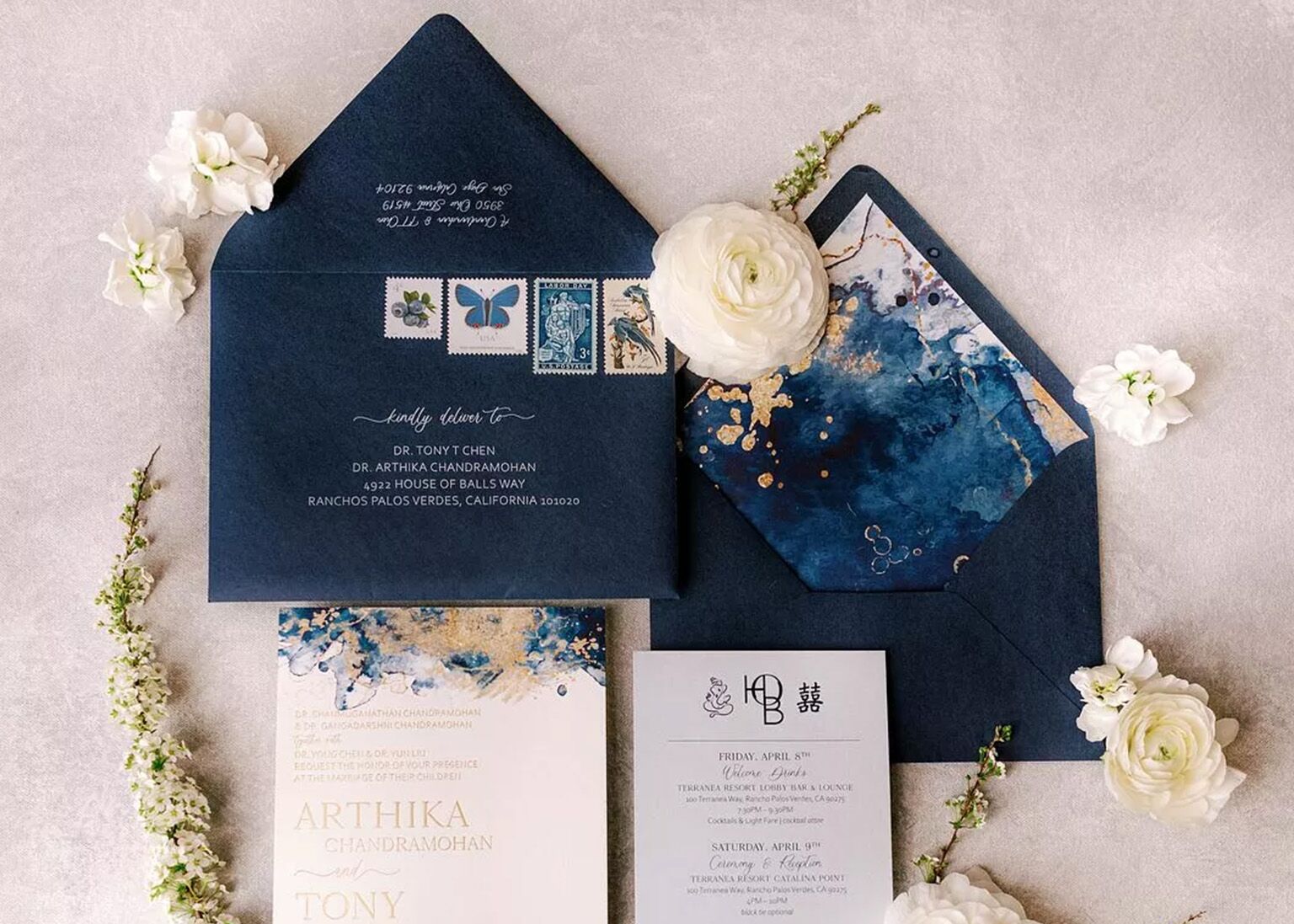
Dr. John Smith and Dr. Jane Williams
On the inner envelope:
Dr. Smith and Dr. Williams
Addressing Doctors on an Envelope: Frequently Asked Questions
From when to send wedding invitations to figuring out the right RSVP due date, there are countless questions that come up when you're sorting out the invitation situation (and countless wedding invitation mistakes that can be made!). However, here are a few of the frequently asked questions that are specific to addressing doctors on a wedding invitation.
And, whenever in doubt, Stokes has one essential piece of advice: "Always go for extra respect! That's a sure-fire way to make sure your guests feel seen, respected and an impactful way to show that you care and you're excited for them to join you on your big day."
Do You Abbreviate Doctor on Envelopes?
Do you spell out doctor on wedding invitations? Or should you use the short and concise "Dr.?" It depends on the format you've chosen to spell out all honorifics. Usually, it's best to abbreviate doctor just like you would any other title.
Stokes explains, "Unless my clients prefer to spell out 'Mister and Missus John Smith,' I wouldn't recommend writing out the word 'Doctor' since it wouldn't match the formatting style within the addressing process."
Does It Vary Based on the Type of Doctor?
When you think of a doctor, you may immediately conjure up images of a medical doctor in a white lab coat. But the doctor title extends to anyone who's earned a medical degree or a PhD, including dentists, psychiatrists, physical therapists, academics and others.
As Stokes recommends, anyone who's earned the title of doctor, whether they're an MD, DDS, PhD, DO or another type of doctor, deserves the same level of respect. Unless you've been told otherwise, it's best to address them all as Dr. This also extends to those who are in their residency or about to enter their residency—while they may not be practicing yet, they've already earned their degree.
Nick Leighton, etiquette expert at Were you raised by wolves?, backs up that perspective. "Etiquette fads come and go, but one rule that endures is the idea that people should always be addressed in the way they prefer," Leighton says. "So, if you know someone who has a PhD in Roman antiquity and they really like people to call them 'Doctor,' then by all means address them this way on the invitation envelope."
How Do You Address Couples Who Are Both Doctors?
When two doctors get married, the envelope will need a bit more space. So how do you address an invitation to married doctors? You can either treat it as you would a typical married couple, with "Dr. and Dr. John Smith," or you can use "Dr. John Smith and Dr. Jane Smith."
As a stationer, Stokes is partial to the lengthier option that uses both names. "I personally would recommend the latter just to create a bit of distinguished respect on the fact that Jane, in this case, also holds the title of doctor separately from her partner." She also notes that if the couple is not married or has maintained their separate last names, then both names should be spelled out completely.
How Do You Address a Couple When One Is a Doctor?
When just one member of the couple is a doctor, then the exact order and wording will depend on which member of the couple is a doctor and whether they have the same last name. If the doctor is the husband and they have the same last name, it could be "Dr. and Mrs. John Smith." If they have different last names, it would be "Dr. John Smith and Mrs. Jane Williams."
For a wife who is a doctor and her husband who shares her last name, it could be, "Dr. Jane Smith and Mr. John Smith." With different last names, it would be "Dr. Jane Williams and Dr. John Smith."
Same sex couples follow the same conventions. It could be "Dr. and Mr. John Smith" or "Dr. and Mrs. Jane Williams." If the couple has separate last names, then you would spell each out. For example, "Dr. John Smith and Mr. Mark Brown."


