


"I like it when people say, 'How did it last so long?' I say, 'It's still going."
Updated Mar 04, 2025What is Diamond Clarity and Why Is It So Important?
Experts explain how clarity affects a diamond's appearance and value.

When shopping for an engagement ring, you'll hear some technical jeweler terms thrown around that you may be totally unfamiliar with, leaving you with a lot of questions. One of those might be, "What is diamond clarity?" Clarity is one of the big 4 Cs of diamonds to look for when searching for the best diamond for you (the others being carat, cut and color), so it's definitely an important term to feel comfortable with. Understanding what diamond clarity is and how it will ultimately affect the ring you choose is essential to a thoughtful and intentional shopping process. Read on to find info straight from the pros.
In this article:
- Diamond Clarity Scale
- What is Diamond Clarity?
- What are Diamond Inclusions?
- How to Choose the Best Diamond Clarity
Diamond Clarity Scale

Design: Shelby Warwood for The Knot
The clarity of diamonds refers to how "pure" a diamond is based on the absence of natural features called inclusions and blemishes. The diamond clarity scale, put together by the Gemological Institute of America (GIA), is the global standard for diamond clarity grading and is what jewelers around the world use to determine a stone's clarity. Diamonds are evaluated under 10 times magnification and then given a clarity grade based on the number, size, relief, nature and location of characteristics.
"A diamond clarity scale tells you how visible a diamond's internal and surface features are under 10 times magnification," says Lauren Bellemare, jeweler and founder of L'Heritage Fine Jewelry. "Flawless stones are completely clean, while included diamonds have noticeable characteristics, sometimes visible without magnification."
The scale ranges from flawless to included. The more flawless a diamond is, the more expensive it's going to be. That said, a diamond with inclusions isn't necessarily a "bad" diamond. "Many diamonds have some level of blemishes and inclusions, but these might not be able to be seen without some sort of magnification," explains Lorraine Brantner, director of sales and service at James Allen. Below is an explanation of what each part of the scale means.
FEATURED VIDEO FROM THE KNOT
- Flawless (FL): There are no internal or external clarity characteristics that are visible under 10 times magnification. "This is rare and highly valuable," Brantner says.
- Internally Flawless (IF): There are no internal clarity characteristics, but there might be minor surface blemishes.
- Very, Very Slightly Included (VVS1, VVS2): If your diamond falls on one of these ranges, it means that there are very minor inclusions that are difficult to detect even when looked at under 10 times magnification.
- Very Slightly Included (VS1, VS2): There are small inclusions that are visible under magnification but are not easy to see with the naked eye.
- Slightly Included (SI1, SI2): This diamond has inclusions that are noticeable under 10 times magnification and may be visible to the naked eye.
- Included (I1, I2, I3): This diamond has inclusions that are obvious to the naked eye and can affect the diamond's durability and appearance.
What is Diamond Clarity?
Diamond clarity refers to the presence of internal and external imperfections (sometimes known as "clarity characteristics") in both natural diamonds and lab-grown diamonds. "If a clarity characteristic is located inside the diamond, it is called an inclusion, and when the characteristics are only on the surface of the diamond, they are called blemishes," Brantner says.
High diamond clarities (or more flawless diamonds) are rarer, while lower clarities can impact both the diamond's appearance to the naked eye and its ability to reflect light, ultimately affecting the overall value.
How Diamond Clarity is Determined
Diamond clarity is determined by gemologists from GIA, as well as the International Gemological Institute (IGI) and American Gem Society (AGS), using a standardized grading system. Diamonds are examined without magnification about eight to ten inches from the eye, and then examined under a 10 times loupe or microscope.
The gemologist sees what types of inclusions are present, then notes the size, number and location of them, explains Brantner. They also look at surface blemishes like scratches, nicks or polishing marks, which she notes usually have less of an impact on the overall clarity grade.
Why Diamond Clarity Is Important
The clarity of a diamond is something to take note of when engagement ring shopping because, according to Brantner, "it directly impacts the diamond's appearance, brilliance and value." If your goal is to find the most flawless, brilliant diamond, then you'll want to make sure you're getting a diamond with high clarity.
For some, clarity might be the most important of the 4 Cs of diamonds. Others may only be concerned with obvious or noticeable inclusions. "For the average consumer, what really matters is whether the diamond looks eye-clean—meaning no inclusions are visible without magnification," Bellemare says.
How Diamond Clarity Affects Price
Even though it is only one component of a diamond's overall grading, diamond clarity has a big impact on the cost of a diamond. Flawless diamonds are very rare, so the more flawless the diamond, the higher the price. Shoppers must determine whether carat weight, cut, color or clarity is most important to them when looking for a ring.
What are Diamond Inclusions?

Design: Shelby Warwood for The Knot
When talking about diamond clarity, you'll hear two terms: inclusions and blemishes. Inclusions are internal characteristics located inside the diamond. "They are essentially tiny flaws or 'birthmarks' that occur during the diamond's formation deep within the earth or in a laboratory setting," Brantner explains. They can be caused by things such as the presence of minerals (like dust), pressure or temperature changes while the diamond was forming.
FOR YOU
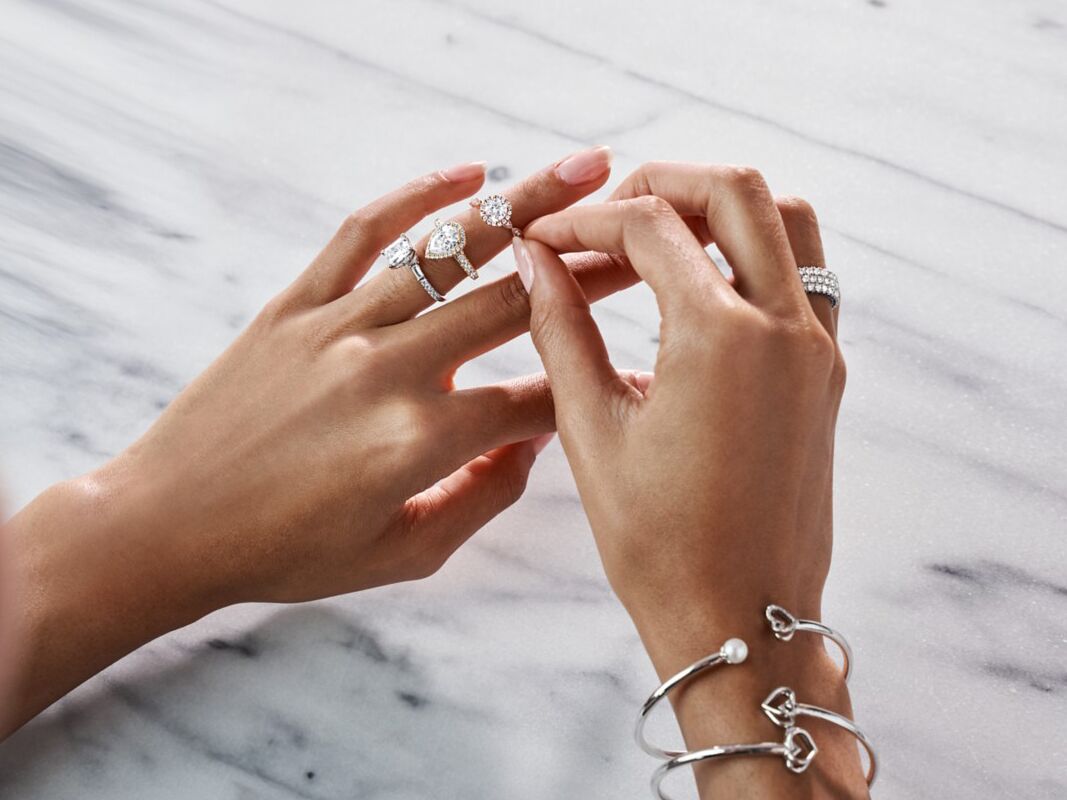
Why You Should Try on Engagement Rings Before Buying
Plus, our team's favorite try-on kits to shop from the comfort of your couch.

Your Complete Guide to Hidden Halo Engagement Rings
A hidden halo brings a bit of subtle (even secret) sparkle to a ring.
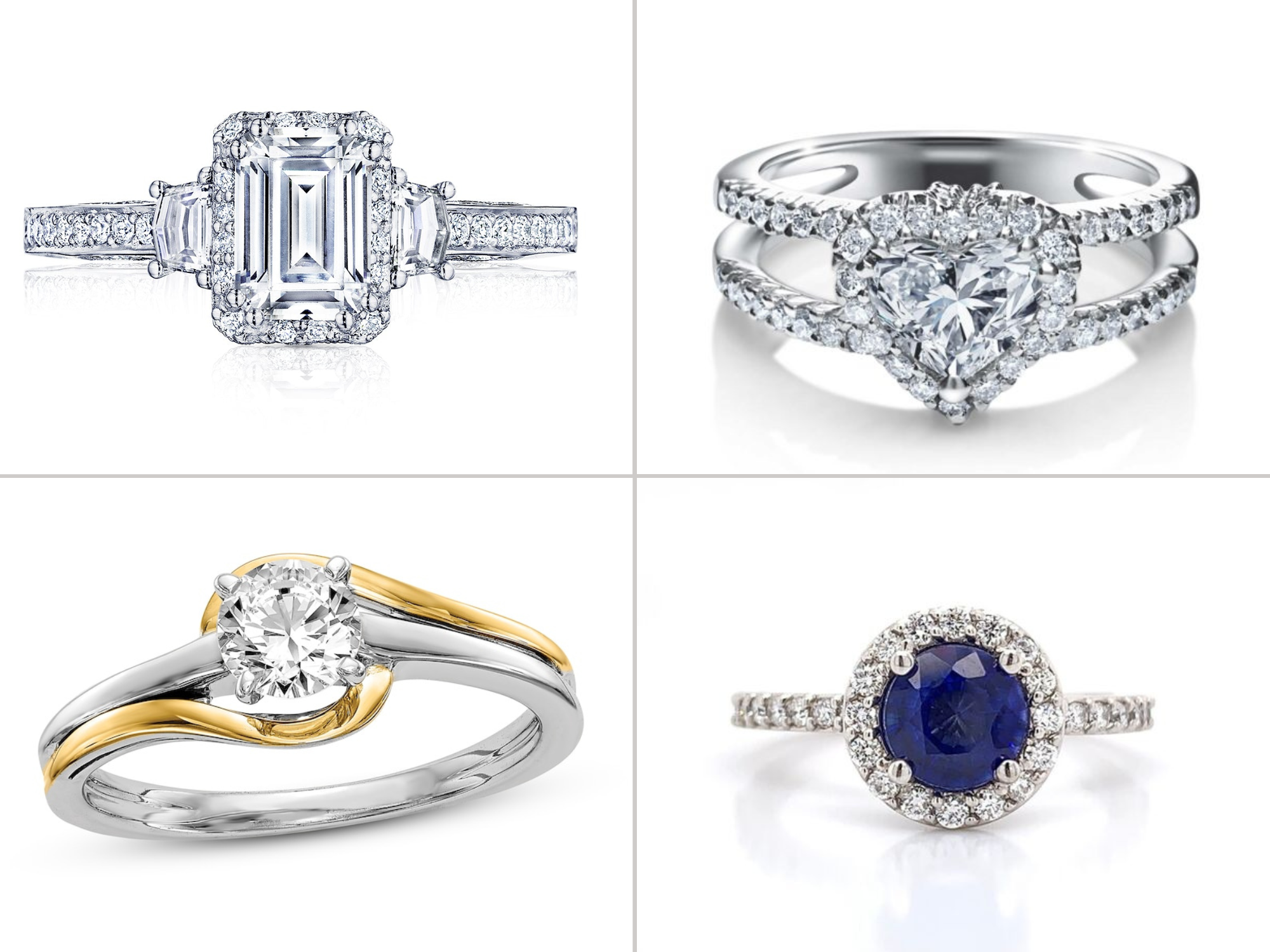
10 Best Jewelry Stores For Engagement Rings In Miami
Find your dream sparkler at one of these top-rated jewelry stores.
Blemishes, on the other hand, are external characteristics that can result from the cutting and polishing stages. "Blemishes are external, like scratches or polish marks on the surface," Bellemare says.
Types of Diamond Inclusions
There are a few different types of inclusions a gemologist might notice in a diamond. According to Brantner, these include crystals, feathers, needles, clouds, cavities, knots, beading, chips, twinning wisp, indented naturals, metallic inclusions and pinpoints. "Each has a different impact on appearance and durability," Bellemare notes.
Not all inclusions are created equally. Both Bellemare and Brantner recommend avoiding big cracks or feathers near the surface or dark inclusions right in the center of the stone. "Large feathers near the surface can compromise the durability of the diamond, making it more prone to chipping over time," Brantner says. Dark or large crystals can negatively affect the brilliance and reduce the quality, while cavities and chips can weaken the structure and make it more susceptible to damage.
If your budget means you need to allow for some inclusions, Bellemare says that tiny white pinpoints or inclusions near the edges are much less concerning and usually even invisible to the naked eye once the diamond is set.
Causes of Inclusions in a Diamond
Inclusions are generally caused by one or more different factors that occur as the diamond is being formed. According to Brantner, these factors can include the following.
- The presence of foreign materials: Foreign minerals and elements can become trapped in the crystal structure of a diamond as it forms, Brantner explains. These can result in a less transparent diamond and reduce the clarity.
- The growth process: If the growth process gets disrupted, that can result in inclusions such as feathers, twinning wisps or clouds.
- Gas or liquid traps: As a diamond is being formed, gases such as nitrogen or liquids can get trapped inside, resulting in bubble or gas inclusions.
- Changes in temperature or pressure: Diamond formation happens in extreme conditions of high pressure and heat. Any fluctuation in the pressure or temperature can result in inclusions such as stress cracks or feathers.
Visibility of Diamond Inclusions
Inclusions are not always as obvious as they sound—in fact, in many cases, they're only visible under magnification, not to the naked eye. Larger, darker inclusions, especially ones that are closer to the surface or center of the stone, are more likely to be seen without magnification, Brantner says. Clouds can also be easier to spot without magnification, especially if they give the stone a hazy look.
In general, Bellemare notes, diamond clarity grades of VS or higher have inclusions that are not visible to the naked eye, SI grades have some that may be visible if you look closely, and I-grade diamonds will generally have obvious inclusions that anyone can see.
How to Choose the Best Diamond Clarity
Ultimately, finding the best diamond clarity is dependent on your personal preferences and what is most important to you when it comes to your center stone. Objectively, you could say a flawless diamond is the best, but if you prioritize something like carat size or cut over clarity, then you might feel differently. That said, if your goal is to find a diamond with impressive clarity, keep the following tips in mind.
Consider What Is Most Important to You
Think about the 4 Cs of diamonds and decide which feels most important to you. You also need to consider your budget. A flawless or nearly flawless diamond will be considerably more expensive than one with inclusions, which is something to consider. "The sweet spot with clarity and budget for most customers tends to fall within VS1–SI1 and even some SI2 diamonds," Brantner says.
Work With a Trusted Jeweler
Working with a jeweler you trust is key to finding the right stone. Brantner recommends always making an appointment with a GIA-certified gemologist or expert who can help you make the right decision based on your priorities and budget.
Opt for the Right Setting
Setting style can affect the visibility of inclusions. "If a diamond is set in a prong setting (which exposes more of the diamond), you may want to choose a higher clarity grade to ensure no inclusions are visible at certain angles," Brantner says. On the other hand, something like a bezel setting will give you more wiggle room, since any inclusion near the perimeter can easily be hidden.
Keep the Cut in Mind
The cut of your diamond can affect the visibility of any inclusions. "For example, round brilliant cuts are the most popular because their symmetry and strong sparkle can help mask small inclusions," Brantner says. "Step cuts like emerald or asscher, which have larger parallel facets, show inclusions more easily."
Focus More on Eye-Visible Inclusions
If you don't have the budget for a flawless clarity diamond, don't stress—most consumers are ultimately interested in how the diamond looks to the naked eye. If this is you, Bellemare suggests focusing on looking for an eye-clean diamond where inclusions are not visible without magnification. "My advice is don't overpay for a grade you can't see," she says. "At the end of the day, trust your eyes—if the diamond looks beautiful to you, that's the clarity grade that's right."


